itnTV

VIDEO: One on One with Amy K. Patel, MD, American Association for Women in Radiology Immediate Past President

Breast Imaging | July 24, 2024

Don't miss ITN's latest "One on One" video interview with AAWR Past President and American College of Radiology (ACR) RAN and RADPAC Chair, Amy K. Patel, MD, discussing advocacy initiatives and innovations in artificial intelligence (AI) for breast imaging

Dr. Patel is a breast imaging trailblazer and radiology advocacy leader. In this video,  learn how radiologists can support key initiatives, ways AI is improving patient care, and more.

Related content:

Leaders from RadEqual and the AAWR Sign MOU, Solidifying Commitment to Advance Opportunities in Radiology

Technology Report: Artificial Intelligence in Radiology 2021

VIDEO: Integrating Artificial Intelligence Into Radiologists Workflow

Women's Health

Breast Imaging | July 24, 2024

Don't miss ITN's latest "One on One" video interview with AAWR Past President and American College of Radiology (ACR) RAN and RADPAC Chair, Amy K. Patel, MD, discussing advocacy initiatives and innovations in artificial intelligence (AI) for breast imaging

Dr. Patel is a breast imaging trailblazer and radiology advocacy leader. In this video,  learn how radiologists can support key initiatives, ways AI is improving patient care, and more.

Related content:

Leaders from RadEqual and the AAWR Sign MOU, Solidifying Commitment to Advance Opportunities in Radiology

Technology Report: Artificial Intelligence in Radiology 2021

VIDEO: Integrating Artificial Intelligence Into Radiologists Workflow

Breast Imaging | May 08, 2023

In addition to women with dense breasts, there are also other women for whom mammographic screening is not really enough, which is why research needs to continue in this field. Dr. Wendie Berg, a leading breast cancer specialist, talks with ITN about new research and advancements in breast imaging technology.

Dr. Berg, MD, PhD, FACR, FSBI, is Professor of Radiology at the University of Pittsburgh School of Medicine and Magee-Womens Hospital of UPMC, specializing in breast imaging. She is also the Chief Scientific Advisor to DenseBreast-info.org. A renowned expert, she writes and co-edits one of the leading textbooks on the topic, Diagnostic Imaging: Breast, currently in its third edition, and has co-authored over 120 peer-reviewed research publications.

Related Breast Density Content:

VIDEO: FDA Update on the US National Density Reporting Standard - A Discussion on the Final Rule

One on One … with Wendie Berg, MD, PhD, FACR, FSBI

Task Force Issues New Draft Recommendation Statement on Screening for Breast Cancer

Creating Patient Equity: A Breast Density Legislative Update

FDA Needs to Ensure that Information on Dense Breast Notifications are Clear and Understandable to all Members of the Public

AI Provides Accurate Breast Density Classification

VIDEO: The Impact of Breast Density Technology and Legislation

VIDEO: Personalized Breast Screening and Breast Density

VIDEO: Breast Cancer Awareness - Highlights of the NCoBC 2016 Conference

Fake News: Having Dense Breast Tissue is No Big Deal

The Manic World of Social Media and Breast Cancer: Gratitude and Grief

Related Breast Imaging Content:

Single vs. Multiple Architectural Distortion on Digital Breast Tomosynthesis

Today's Mammography Advancements 

Digital Breast Tomosynthesis Spot Compression Clarifies Ambiguous Findings 

AI DBT Impact on Mammography Post-breast Therapy 

ImageCare Centers Unveils PINK Better Mammo Service Featuring Profound AI 

Radiologist Fatigue, Experience Affect Breast Imaging Call Backs 

Fewer Breast Cancer Cases Between Screening Rounds with 3-D Mammography

Study Finds Racial Disparities in Access to New Mammography Technology

American College of Radiology (ACR) Launches Contrast-Enhanced Mammography Imaging Screening Trial (CMIST) in Collaboration With GE Healthcare and the Breast Cancer Research Foundation

Breast Density | April 14, 2023

It has long been said that a national reporting standard is needed in order to ensure all American women receive at least the same basic information regarding breast density, and a spotlight put on the importance of routine breast imaging. Dr. Wendie Berg, a leading breast cancer specialist, shares with ITN what is being done in the fight against breast cancer and the importance of this standardization in reporting for women.

Dr. Berg, MD, PhD, FACR, FSBI, is Professor of Radiology at the University of Pittsburgh School of Medicine and Magee-Womens Hospital of UPMC, specializing in breast imaging. She is also the Chief Scientific Advisor to DenseBreast-info.org. A renowned expert, she writes and co-edits one of the leading textbooks on the topic, Diagnostic Imaging: Breast, currently in its third edition, and has co-authored over 120 peer-reviewed research publications.


Related Breast Density Content:

VIDEO: Research and Advancements in Breast Imaging Technology

One on One … with Wendie Berg, MD, PhD, FACR, FSBI

Task Force Issues New Draft Recommendation Statement on Screening for Breast Cancer

Creating Patient Equity: A Breast Density Legislative Update

FDA Needs to Ensure that Information on Dense Breast Notifications are Clear and Understandable to all Members of the Public

AI Provides Accurate Breast Density Classification

VIDEO: The Impact of Breast Density Technology and Legislation

VIDEO: Personalized Breast Screening and Breast Density

VIDEO: Breast Cancer Awareness - Highlights of the NCoBC 2016 Conference

Fake News: Having Dense Breast Tissue is No Big Deal

The Manic World of Social Media and Breast Cancer: Gratitude and Grief

Related Breast Imaging Content:

Single vs. Multiple Architectural Distortion on Digital Breast Tomosynthesis

Today's Mammography Advancements 

Digital Breast Tomosynthesis Spot Compression Clarifies Ambiguous Findings 

AI DBT Impact on Mammography Post-breast Therapy 

ImageCare Centers Unveils PINK Better Mammo Service Featuring Profound AI 

Radiologist Fatigue, Experience Affect Breast Imaging Call Backs 

Fewer Breast Cancer Cases Between Screening Rounds with 3-D Mammography

Study Finds Racial Disparities in Access to New Mammography Technology

American College of Radiology (ACR) Launches Contrast-Enhanced Mammography Imaging Screening Trial (CMIST) in Collaboration With GE Healthcare and the Breast Cancer Research Foundation

Breast Imaging | December 13, 2021

Stamatia Destounis, M.D., FACR, chief of the American College of Radiology (ACR) Breast Commission, managing partner, Elizabeth Wende Breast Care, Rochester, N.Y., explains some of the key trends in breast imaging at the 2021  Radiological Society of North America (RSNA) meeting.

She discusses the trends of 3D mammography seeing rapid growth, adoption of synthetic 2D breast images from the tomosynthesis datasets, contrast-enhanced mammography, and breast MRI to help women with dense breast tissue. Destounis also discusses the use of artificial intelligence (AI) to help radiologists with finding what they needs with larger datasets in 3D mammography, and to help act as a second set of eyes.

Early in 2021, with the roll out of the COVID vaccines, one of the biggest headlines in radiology was that the vaccine can show false positives for cancer because it may cause inflammation of lymph nodes. Destounis explains this issue and how women's health centers have largely overcome this by asking patients about their vaccination status and planning imaging around the vaccination dates.

Related Breast Imaging Content:

COVID-19 Vaccine Can Cause False Positive Cancer Diagnosis

Help Spread Awareness of Potential COVID-19 Vaccine Imaging Side-effects

VIDEO: COVID Vaccine May Cause Enlarged Lymph Nodes on Mammograms — Interview with Constance "Connie" Lehman, M.D.

COVID-19 Vaccination Axillary Adenopathy Detected During Breast Imaging

VIDEO: COVID Vaccine Adenopathy Can Last Up to 10 Weeks — Interview with Yael Eshet, M.D.

VIDEO: Artificial Intelligence Trends in Medical Imaging — Interview with Signify Research

Technology Report: Artificial Intelligence in Radiology 2021

Find more RSNA news and video

Breast Imaging | March 26, 2021

Constance "Connie" Lehman, M.D., Ph.D., chief of breast imaging, co-director of the Avon Comprehensive Breast Evaluation Center at the Massachusetts General Hospital, and professor of radiology at Harvard Medical School, explains issues and suggested guidelines for women who receive the COVID-19 vaccine and need to get a mammogram. In the first three months since the vaccines have been released, there have been numerous case reports of the vaccine causing swollen lymph nodes. This is would usually raise a red flag for breast cancer, but is normal for many women receiving the vaccine as their body's immune system gears up against the virus. 

Lehman said cases reports of axillary adenopathy have been identified on breast imaging after coronavirus disease (COVID-19) vaccination and are rising. Lehman et al. proposed a pragmatic management approach in a recent article in the American Journal of Roentgenology (AJR).[1]

In the settings of screening mammography, screening MRI and diagnostic imaging work-up of breast symptoms, with no imaging findings beyond unilateral axillary adenopathy ipsilateral to recent (prior six weeks) vaccination, they report the adenopathy as benign with no further imaging indicated if no nodes are palpable six weeks after the last vaccine dose. 

For patients with palpable axillary adenopathy in the setting of ipsilateral recent vaccination, clinical follow-up of the axilla is recommended. In all these scenarios, axillary ultrasound is recommended if clinical concern persists six weeks after vaccination. 

In patients with recent breast cancer diagnosis in the pre- or peri-treatment setting, prompt recommended imaging is encouraged as well as vaccination (in the thigh or contralateral arm). The recommendations align with the ACR BI-RADS Atlas and aim to: 1) reduce patient anxiety, provider burden, and costs of unnecessary evaluation of enlarged nodes in the setting of recent vaccination, and 2) avoid further delays in vaccinations and breast cancer screening during the pandemic.


Related Medical Imaging of COVID Content:

COVID-19 Vaccination Axillary Adenopathy Detected During Breast Imaging

CMS Now Requires COVID-19 Vaccinations for Healthcare Workers by January 4

PHOTO GALLERY: How COVID-19 Appears on Medical Imaging

VIDEO: Imaging COVID-19 With Point-of-Care Ultrasound (POCUS) — Interview with Mike Stone, M.D.

VIDEO: Use of Teleradiology During the COVID-19 Pandemic — Interview with John Kim, M.D.

Find more radiology related COVID content 


Reference:

1. Constance D. Lehman, Leslie R. Lamb, and Helen Anne D'Alessandro. Mitigating the Impact of Coronavirus Disease (COVID-19) Vaccinations on Patients Undergoing Breast Imaging Examinations: A Pragmatic Approach American Journal of Roentgenology. 10.2214/AJR.21.25688



Artificial Intelligence | November 11, 2020

Artificial Intelligence (AI) is becoming more common place in radiology practices, and emerging technologies are providing radiologists with sophisticated detection software to aid their reading and provide support for a busy workflow. With the progression of AI technology, vendors must look not only at what AI can do for the radiologist, but how the radiologist and the technician interact with that technology –  the goal should be increasing accuracy while also positively improving workflow. GE Healthcare is working to improve radiology AI workflow in its Centricity Universal Viewer.

Three key opinion leaders offers their views on what is needed to make AI more valauble and accessible to radiologists. These include:

   • Amy Patel, M.D., breast radiologist, medical director, Liberty Hospital Women's Imaging, assistant professor of radiology, University of Missouri-Kansas City.

   • Prof. Dr. Thomas Frauenfelder, M.D., vice chairman and professor of thoracic radiology, Institute for Diagnostic and Interventional Radiology, University of Zurich.

   • Randy Hicks, M.D., chief executive officer, Regional Medical Imaging.


Learn more about the Centricity Universal Viewer in the VIDEO: How GE Healthcare’s Zero Footprint Remote Image Viewer Supports Clinical Care


MRI Breast | October 14, 2020

Professor Christiane Kuhl, M.D., director of radiology, University Hospital Aachen, Germany, explains how breast magnetic resonance imaging (MRI) can be used to clearly identify breast cancers in women with dense breast tissue. In women with dense breasts, it can be very difficult to detect many cancers on standard mammograms because the cancers and dense tissue both appear white. MRI can help clearly define tumors and identify which nodules are cancer and which are benign, which can help greatly reduce the need for biopsies.

Kuhl is an expert in breast imaging and breast MRI. She helped develop an a shortened MRI protocol that allows breast MR images to be created in 3 minutes or less, rather than standard protocols that can take up to 30 minutes. In the interview she shows patient case examples of standard mammograms and the MRI supplemental imaging for the same patient to show the hidden tumors. 

She also explains the differences between standard 2-d mammography, the current standard of care, and the newer 3-D mammogram tomosythnesis technology, breast ultrasound and breast MRI technologies.

Other video interviews with Dr. Kuhl:

VIDEO: Explaining Dense Breasts

VIDEO: The Impact of COVID-19 on Breast Imaging


Related Breast MRI Content:

Abbreviated MRI Outperforms 3-D Mammograms at Finding Cancer in Dense Breasts

VIDEO: Explaining Dense Breasts — Interview with Christiane Kuhl, M.D.

VIDEO: Use of Breast MRI Improved Cancer Detection in Dense Breasts in Dutch Study — Interview with Gillian Newstead, M.D.

Technologies to Watch in Breast Imaging

Screening MRI Detects BI-RADS 3 Breast Cancer in High-risk Patients

Rapid Breast MRI Screening Improves Cancer Detection in Dense Breasts

Breast MRI in Cancer Diagnosis
 

Coronavirus (COVID-19) | October 14, 2020

Professor Christiane Kuhl, M.D., director of radiology, University Hospital Aachen, Germany, explains how the COVID-19 (SARS-CoV-2) pandemic has impacted screening mammography and raised fears there will be a large increase in more advanced breast cancer cases in the near future as sizable numbers of women skip their annual exams this year. Kuhl also explains the COVID safety protocols most breast imaging centers are taking to limit any potential exposure to the virus from asymptomatic patients.

Other video interviews with Dr. Kuhl:

VIDEO: Explaining Dense Breasts

VIDEO: Use of Breast MRI Screening in Women With Dense Breasts


How COVID Has Disrupted Screening Mammography and The Urgency to Resume Screenings:

Breast Imaging in the Age of Coronavirus

Half of Breast Cancer Survivors Had Delays in Care Due to COVID-19

Insight on the Impact of COVID-19 on Medical Imaging

Delay in Breast Cancer Operations Appears Non Life-threatening for Early-stage Disease

Hologic and Sheryl Crow Begin Back to Screening Campaign

A Slow Return to Normalcy in Breast Imaging

Breast Density | October 13, 2020

Professor Christiane Kuhl, M.D., director of radiology, University Hospital Aachen, Germany, explains what it means to have dense breasts and how density can hide cancers in mammograms. She offers an explanation describing dense breast tissue and that this occurs in about half of women. Density is itself a risk factor for breast cancer and the fact that dense tissue hides cancers on mammography means that supplemental imaging is needed to accurately diagnose these patients and avoid false positives, or needless tissue biopsies. Breast ultrasound and breast magnetic resonance imaging (MRI) can be used to see through dense tissue to better identify cancers and avoid the need for many biopsies.

Other video interviews with Dr. Kuhl:

VIDEO: Use of Breast MRI Screening in Women With Dense Breasts

VIDEO: The Impact of COVID-19 on Breast Imaging


Related Dense Breast Content:

Breast Density Explained

Animation to Bring Clarity to Dense Breasts

Improving Clinical Image Quality for Breast Imaging

Breast Imaging in the Age of Coronavirus

Abbreviated MRI Outperforms 3-D Mammograms at Finding Cancer in Dense Breasts

VIDEO: Use of Breast MRI Improved Cancer Detection in Dense Breasts in Dutch Study — Interview with Gillian Newstead, M.D.

Technologies to Watch in Breast Imaging

Screening MRI Detects BI-RADS 3 Breast Cancer in High-risk Patients


Artificial Intelligence | February 06, 2020

ProFound AI is an FDA-cleared artificial intelligence (AI) system for reading 3-D breast tomosynthesis images. At RSNA19, ITN Contributing Editor Greg Freiherr spoke with iCad Chairman and CEO Michael Klein about the system, which has been clinically proven in a large reader study to produce an 8% average improvement in sensitivity, 7.2% average reduction in recall rate and 52.7% reduction in average radiologist reading time. 

Mammography | January 24, 2020

Imaging Technology News Contributing Editor Greg Freiherr interviewed Henry Izawa, vice president of modality solutions, Fujifilm Medical Systems U.S.A., Inc. about Fujifilm's latest innovations in mammography.

In this video, Izawa announces the latest imaging advancements available for the Aspire Cristalle digital mammography system with digital breast tomosynthesis, including S-View, a synthesized 2-D image reconstructed from DBT and other patient enhancements such as the comfort paddle to provide a noticeably more comfortable exam for the patient.

Watch the video to hear all about Fujifilm's updates.

To learn more, visit www.fujimed.com

Magnetic Resonance Imaging (MRI) | January 06, 2020

Karen Ordovas, M.D., MAS, professor of radiology and cardiology at the University of California San Francisco (UCFS) School of Medicine and a Society of Cardiac Magnetic Resonance (SCMR) board member, explains how cardiac MRI can help in women's heart disease and to better define complex congenital heart anatomy. She spoke at the 2019 Radiological Society of North America (RSNA) meeting. 

She specializes in cardiac and pulmonary imaging, and has particular expertise in using CT and MRI techniques in cardiovascular imaging and the differences of presentation in imaging between male and female cardiac patients. Ordovas is helping advance education around heart disease in women and bring great awareness of quality tools to diagnose heart disease and how heart MRI can help. She also is heavily involved in the use of heart MRIs for pregnant women, since there is no radiation,  and patients with congenital heart disease where detailed imaging of the complex anatomy is required.

The use of cardiac MRI in congenital heart disease is common in serial imaging of patients with Tetralogy of Fallot (TOF), one of the most common congenital heart diseases for which patients are referred for post-operative magnetic resonance (MR) imaging evaluation. In the past few decades, surgery has proved successful, but most patients require repeat imaging throughout their lives and MRI can offer more detailed soft tissue imaging without the use of radiation. 


Related Cardiac MRI Content:

VIDEO: Advances in Cardiac MRI Technology — Interview with James Carr, M.D.

Cardiac MRI Delivers Accurate Diagnosis for Frontline Chest Pain Evaluation

VIDEO: Dedicated Cardiac MRI Use at the Baylor Scott White Heart Hospital

Advantages and New Applications of Cardiac MRI

Will Cardiac MRI Expand?


Digital Radiography (DR) | January 03, 2020

At RSNA19, David Widmann, president and CEO of Konica Minolta Healthcare Americas, discussed innovation, stressing the importance of academic relationships. 

Breast Imaging | April 18, 2019

In a keynote lecture at the Society of Breast Imaging (SBI)/American College of Radiology (ACR) 2019 Symposium, Diana Miglioretti, Ph.D., dean’s professor of biostatistics at UC Davis Health, discussed risk-stratified breast cancer screening and its potential to improve the balance of screening benefits to harms by tailoring screening intensity and modality to individual risk factors.

Read the article "How Risk Stratification Might Affect Women’s Health"

Read the article "FDA Proposes New Rules for Mammography Reporting and Quality Improvement"

Watch the VIDEO: A Discussion on Proposed FDA Rules for Mammography Reporting

Mammography | April 15, 2019

Wendie Berg, M.D., Ph.D., FACR, chief scientific advisor to DenseBreast-info.org and professor of radiology at University of Pittsburgh School of Medicine/Magee-Women’s Hospital of UPMC, spoke with ITN Editorial Director Melinda Taschetta-Millane about some of the proposed amendments to the language being used for mammography reporting and quality improvement.

Read the article "FDA Proposes New Rules for Mammography Reporting and Quality Improvement"

Women's Health | March 25, 2019

Deborah Levine, M.D., professor of radiology at Harvard Medical School and vice chair for academic affairs in the Department of Radiology at Beth Israel Deaconess Medical Center, Boston, describes scenarios where magnetic resonance imaging (MRI) could be more useful than ultrasound in issues with the female pelvis.

Cardio-oncology | March 22, 2019

Magid Awadalla, MBBS, is an advanced cardiac imaging research fellow at Massachusetts General Hospital. He has been involved in an imaging study of cardiac changes from photon radiotherapy in breast cancer patients using serial cardiac magnetic resonance imaging (MRI). The radiotherapy beams used to treat breast cancer pass close to the neighboring heart, which can cause cardiac cell damage leading to issues like heart failure later on. He spoke on the topic of cardio-oncology at the American College of Cardiology (ACC) 2019 meeting.

Artificial Intelligence | March 13, 2019

At RSNA 2018, iCad showed how its ProFound AI for digital breast tomosynthesis technology might help in the interpretation of tomosynthesis exams. Rodney Hawkins, vice president of marketing for iCad, discusses how this technology can better help detect the cancer.

Related content:

Artificial Intelligence 2018: What Radiologists Need to Know About AI

RSNA 2018 Sunday – Improving, Not Replacing
Breast Imaging | January 11, 2019

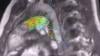
Supplemental screening with ABUS helps personalize breast care for women with dense breasts and offers advanced clinical confidence for radiologists. ABUS can play an important role in early diagnosis of small, node negative, invasive cancers. Hear from Georgia Giakoumis Spear, M.D., from NorthShore University HealthSystem in the Chicagoland Area of Illinois as she speaks with Lucas Delaney, general manager for ABUS at GE Healthcare. As an early adopter of ABUS, she discusses the clinical need and her results with ABUS. She also provides her impressions of the newly introduced Invenia ABUS 2.0, and demonstrates a case utilizing the coronal view.

See GE Healthcare Introduces Invenia ABUS 2.0.

Mammography | December 10, 2018

Stamatia Destounis, M.D., FACR, associate professor, University of Rochester School of Medicine, and attending radiologist, Elizabeth Wende Breast Care, explains the details of a new study showing the benefits of mammography in elderly women at the Radiological Society of North America (RSNA) 2018 annual meeting.

Brachytherapy Systems, Women's Healthcare | November 07, 2018

An interview with A. M. Niser Syed, M.D., medical director, radiation oncology and endocurietherapy, MemorialCare Cancer Institute, Long Beach, Calif. At the American Society for Radiotherapy and Oncology (ASTRO) 2018 annual meeting, he presented a study of 1,200 patients using a single session of intra-operative radiation therapy (IORT) using the Xoft X-ray emitting brachytherapy system. 

Radiation Therapy | October 29, 2018

Elizabeth Chabner-Thompson, M.D., MPH, radiation oncologist, Northern Westchester Hospital, Northwell Health, Mt. Kisco, N.Y., and CEO of Masthead, explains an FDA-cleared bra she designed for improved patient positioning of women undergoing radiation therapy. She spoke to ITN at the 2018 ASTRO conference


Breast Density | April 26, 2018

ITN Editorial Director Melinda Taschetta-Millane speaks to DenseBreast-info Executive Director JoAnn Pushkin as the website celebrates three years as an information resource on breast density for patients and providers. Pushkin also discusses the latest developments in breast density notification and screening guidelines.

Related Dense Breast Imaging Content: 

VIDEO: The Impact of Breast Density Technology and Legislation

High-Risk Clinic Arms Patients Against Breast Cancer

Greater Evidence, Payment Expansion Driving Tomosynthesis Adoption

Technology to Watch in Breast Imaging

The Transition to 3-D Breast Imaging


Women's Health | February 27, 2018

Fujifilm details its latest innovations in women's health including its ASPIRE Cristalle mammography system with digital breast tomosynthesis software option and its Synapse 5 PACS and VNA, enabling secure, easy-to-manage storage and access to the complete patient imaging record throughout the healthcare enterprise.

Breast Density | December 20, 2017

Nancy M. Cappello, Ph.D., executive director and founder, Are You Dense Inc. and Are You Dense Advocacy. Read the article “The Evolution of Breast Imaging Technology.” Watch the VIDEO “Implementing Advanced Breast Imaging Technology.” 

Mammography | December 06, 2017

Martin Yaffe, Ph.D., FAAPM, senior scientist, physical sciences/imaging research, Sunnybrook Health Sciences Centre, and professor of medical biophysics and medical imaging, University of Toronto, discusses how contrast-enhanced mammography can improve breast cancer detection at the 2017 Radiological Society of North America (RSNA) meeting.

Watch the VIDEO “What is New in Breast Imaging Technology,” with Stamatia Destounis, M.D.

Watch the VIDEO "Implementing Advanced Breast Imaging Technology," with Gerry Kolb, JD.

Breast Imaging | December 05, 2017

Stamatia Destounis, M.D., FACR, associate professor, University of Rochester School of Medicine, attending radiologist, Elizabeth Wende Breast Care, explains recent advances in mammography and dense breast imaging at the 2017 Radiological Society of North America (RSNA) meeting.


Related Breast Imaging Content:

The Evolution of Breast Imaging Technology.

VIDEO: Implementing Advanced Breast Imaging Technology.

VIDEO: Use of Breast MRI Screening in Women With Dense Breasts

Breast Density Explained

VIDEO: Explaining Dense Breasts — Interview with Christiane Kuhl, M.D.

Improving Clinical Image Quality for Breast Imaging

Breast Imaging in the Age of Coronavirus

VIDEO: Use of Breast MRI Improved Cancer Detection in Dense Breasts in Dutch Study — Interview with Gillian Newstead, M.D.


Women's Health | October 23, 2017

William Hall, M.D., radiation oncologist in the Department of Radiation Oncology at PeaceHealth St. Joseph Medical Center in Bellingham, Wash., discusses study results presented at theAmerican Society of Radiation Oncology (ASTRO) 2016. Video courtesy of Dr. Hall. You can read Dr. Hall's article on this topic, Breast Cancer Radiation Planning, here

Breast Imaging | July 28, 2017

Nancy Cappello, Ph.D., executive director and founder of Are You Dense Inc. and Are You Dense Advocacy, explains how a personalized breast screening program can improve cancer detection for women with dense breasts at the 2017 AHRA annual meeting in Anaheim. Read an article by Cappello “Fake News: Having Dense Breast Tissue is No Big Deal,”  or the article "Raising the Bar For Cancer Detection in Dense Breast Tissue."


Breast Density | January 09, 2017

Monica Saini, M.D., consultant medical director — ABUS at GE Healthcare, discusses the necessity for personalized breast care, and how Automated Breast Ultrasound (ABUS) helps meet the challenges of screening and diagnostic imaging of dense breast tissue. To learn more about Automated Breast Ultrasound, please visit gehealthcare.com/inveniaabus.

Women's Health | November 16, 2016

The purpose of this exploratory video roundtable is to examine the state of breast biopsies today and to communicate the current challenges and inefficiencies affecting personnel that perform these important procedures. The video roundtable posed key questions to Key Opinion Leaders from the Cleveland Clinic on obstacles they face when performing stereotactic-guided breast biopsies, and why it is necessary to consider the ramifications. The roundtable discussion was hosted by Imaging Technology News and was funded through a grant from Hologic Inc.

Also, see the related article, Room for Improvement in Women's Health, by Laura Shepardson, M.D.

Breast Imaging | August 16, 2016

Interview with Gerald Kolb, JD, president of The Breast Group in Bend, Ore. Kolb spoke at the 2016 AHRA meeting in Nashville about the challenges of multimodality breast screening, the need for more personalized screening programs and the impact of recent screening recommendations. Read about the lastest advances in breast imaging.

Breast Density | May 20, 2016

This year's keynote speaker, Nancy M. Cappello, Ph.D., founder and director of Are You Dense and Are You Dense Advocacy, Inc., expands on her keynote presentation "Why I Talk to Strangers About My Breasts."

Breast Density | May 20, 2016

Ernie Bodai, M.D., vice president, National Consortium of Breast Centers (NCBC), discusses breast density with itnTV. Read an article with related links about breast density.

Women's Health | May 20, 2016

Cary S. Kaufman, M.D., FACS, discusses best practices in breast centers at NCoBC 2016.

Women's Health | May 20, 2016

Barbara Rabinowitz, Ph.D., MSW, RN, founder of the National Consortium of Breast Centers, talks with ITN editorial director Melinda Taschetta-Millane during NCoBC's 26th annual conference, and addresses the very important topic of survivorship.

Women's Health | May 20, 2016

Kristie Bobolis, M.D., president elect and current chair of 2016 Planning Committee for the National Consortium of Breast Centers, discusses the role of genetic testing, how it is evolving, and how a physician best assess the high-risk patient.

Breast Imaging | May 20, 2016

Jennifer Gass, M.D., FACS, president, National Consortium of Breast Centers (NCBC), discusses the state of the breast imaging industry.

Subscribe Now