

News | Radiology Business
Scranton Gillette Communications’ Imaging Technology News (ITN) was recently named a 2018 Azbee Award finalist in five Upper Midwest Regional categories and two National categories. The annual Azbee Awards are hosted by the American Society of Business Publication Editors (ASBPE) to recognize editorial and design excellence in the business, trade and specialty press.
 March 08, 2018

News | Pediatric Imaging
March 8, 2018 – Children often find it difficult to remain still for magnetic resonance imaging (MRI) examinations, but ...
March 08, 2018 
News | Analytics Software
March 8, 2018 – Vital Images announced that its enterprise analytics solution, Vitrea Intelligence, will be deployed at ...
March 08, 2018 Sponsored Content
Sponsored Content
Videos | Radiology Business
Radiology departments have many different needs and face a wide variety of challenges that can impact their departments ...
November 11, 2025 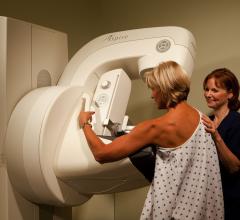
News | Mammography
March 8, 2018 – Fujifilm Medical Systems U.S.A. Inc., a provider of diagnostic imaging products with a comprehensive ...
March 08, 2018 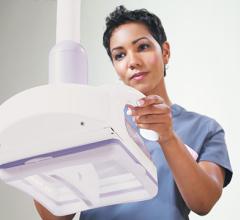
News | Oncology Diagnostics
March 8, 2018 – The current guidelines for mammographic breast cancer screening, which are based on data from primarily ...
March 08, 2018 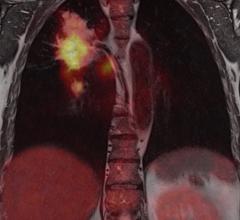
News | Oncology Diagnostics
March 8, 2018 – Doctors contemplating the best therapy for lung cancer patients may soon be able to predict the efficacy ...
March 08, 2018 Sponsored Content
Feature | Breast Imaging
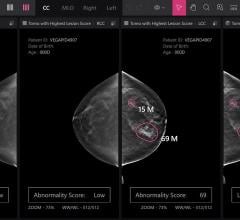
Despite decades of progress in breast imaging, one challenge continues to test even the most skilled radiologists ...
October 24, 2025 
News | Nuclear Imaging
As we get older, it's not uncommon to experience "senior moments," in which we forget where we parked our car or call our children by the wrong names. But currently there are no good ways to determine which memory lapses are normal parts of aging and which may signal the early stages of a severe disorder like Alzheimer's disease. In a study appearing March 7 in the journal Neuron, researchers report that data from high-resolution functional brain imaging can be used to show some of the underlying causes for differences in memory proficiency between older and younger adults.
March 08, 2018 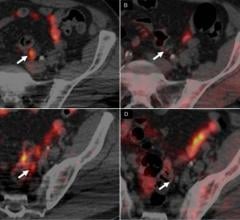
News | Prostate Cancer
An Italian study featured in the March issue of The Journal of Nuclear Medicine demonstrates that a novel nuclear ...
March 07, 2018 
News | Mammography
Turning 40 is a benchmark birthday for many women in the United States. While a pessimist might view it as a signal that ...
March 07, 2018 Sponsored Content
Sponsored Content
Videos | Radiology Business
Bayer Radiology’s Barbara Ruhland and Thom Kinst discuss how radiology departments can address the many different ...
October 09, 2025 
Feature | Contrast Media Injectors | Grand View Research Inc.
The global contrast media injectors market is expected to reach $1.4 billion by 2025, growing at a compound annual growth rate (CAGR) of 5.8 percent, according to a new report by Grand View Research, Inc., a research firm based in San Francisco. Rising demand for minimally invasive surgical procedures is a major factor expected to boost the market during the forecast period. These devices assist surgeons in accurate insertion of contrast agents with reduced human errors, thus increasing the accuracy and efficiency of surgical procedures. They play a crucial role in intra-operative computed tomography (iCT), intra-operative magnetic resonance imaging (iMRI) and interventional cardiology. Availability of advanced injector systems for diagnosis and intra-operative imaging has boosted adoption of these systems.
March 07, 2018 
Feature | Breast Imaging | By Jeff Zagoudis
In the world of breast imaging, digital breast tomosynthesis (DBT) is a relative newcomer, only being adopted into clinical practice in the last 8 years. The benefits of DBT, also known as 3-D mammography, are generally understood — improved cancer detection over traditional 2-D mammography due to the ability to scroll through different slices of the breast to see lesions undetectable in two dimensions. While the evidence for DBT has been mounting, new data reveal the technology has seen explosive growth in the last 18 months.
March 07, 2018 
News | Radiology Business
Fysicon announced its acquisition by Canon Medical Systems Corporation. Linda Elberse, CEO of Fysicon, stated: "Being part of a major player as Canon Medical Systems Corporation gives us the opportunity to cover all parts of the world with our innovative systems. Now Canon Medical has completed the image by adding Fysicon’s new developed hemodynamic monitoring system “QMAPP”, the sophisticated device management system “DataLinQ” and the cloud based image distribution software “EVOCS" and last but not least Fysicon's knowledge of connectivity and workflow management. Canon Medical is a strong brand name and a leading supplier, which will help us take the next steps into strengthening and growing our footprint in the global market. Furthermore we will keep developing new technologies and exploring new areas in the medical field together with our new parent company. We are very proud to have joined forces!”
March 07, 2018 Sponsored Content

Case Study | PACS
eHealth Saskatchewan plays a vital role in providing IT services to patients, health care providers, and partners such ...
February 03, 2025 
Moral ambiguities don’t often come into play in medical imaging. Forget what Dr. House says ad nauseam on the syndicated doctor show. Nobody does exploratory surgery anymore. Seeing inside the body noninvasively is … duh!
March 06, 2018 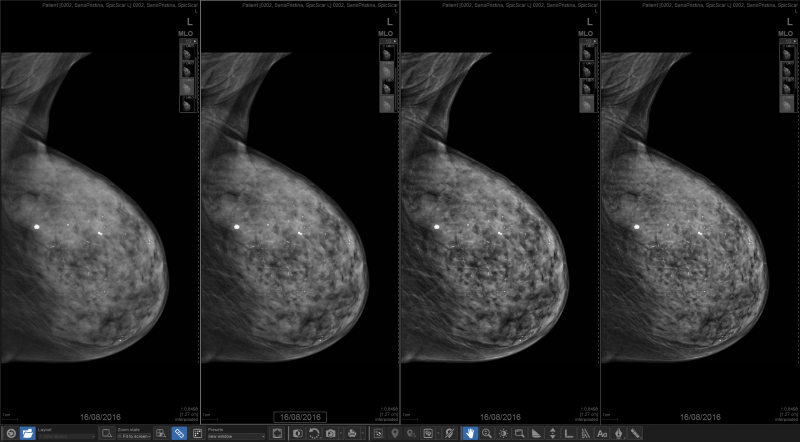
Feature | Women's Health | By Katherine Hall, M.D.
Technological advances — particularly the adoption of 3-D digital breast tomosynthesis (DBT) — are making it possible for earlier, and more accurate, detection of breast cancer. However, the transition to 3-D mammography is resulting in numerous challenges and concerns. DBT produces hundreds of images, compared to just four images typically associated with conventional 2-D digital mammography. As a result, radiologists find they require significantly more time to review and interpret each exam, reducing the number of patients they can see each day and increasing fatigue, which could potentially lead to missed diagnoses.
March 06, 2018 
Sponsored Content | Case Study | Mammography
Located in a spacious 25,000-square-foot facility on the Presbyterian Hospital of Dallas campus, Southwest Diagnostic Imaging Center is one of the largest freestanding imaging centers in the Dallas-Fort Worth area. Since 1985, the facility has provided thousands of patients from Texas and across the nation with the highest standard of service and a patient-centered approach to care.
March 06, 2018 
Sponsored Content | Case Study | Radiology Imaging
As one of the largest Catholic, not-for-profit healthcare systems in the United States, St. Louis-based SSM Health has expanded immensely over the years. So, too, has its ability to apply innovative imaging solutions that meet the needs of it growing patient base. One of the largest integrated delivery systems in the nation, SSM Health serves the comprehensive health needs of communities across the Midwest, with facilities in Illinois, Missouri, Oklahoma and Wisconsin.
March 06, 2018 
Feature | Proton Therapy | By Jeff Zagoudis
Proton therapy has experienced major growth in the last decade, but that growth seems to have slowed slightly in recent months. Market research firm MEDraysintell released a new report in January revising its projection for the number of proton therapy centers worldwide by 2030 down from 1,200 to 900. The company said that more than 50 proton therapy treatment rooms would need to be opened every year from 2018 to 2030 to hit the original projection of 1,200.
March 06, 2018 
Sponsored Content | Case Study | Contrast Media Injectors
The continuing search for advantages to improve workflow has radiology departments constantly searching for new solutions. While some, such as advanced operating systems and computer-aided diagnostics, can require a significant investment in terms of equipment expense or additional training, there is also a simple solution that can help healthcare professionals save steps in the administration of safe and effective care without added complication: prefilled contrast syringes.
March 06, 2018 
Feature | Enterprise Imaging | By Jeff Zagoudis
Physicians are struggling with too much of a good thing. They have never had so much information about their patients. But the data are scattered across multiple departments and across the enterprise. Finding relevant information can be like finding a needle in a haystack. Enterprise imaging is evolving to address the problem — to find and assemble relevant information so that accurate diagnoses can be made efficiently and effectively.
March 06, 2018 
Blog | Radiology Imaging
The global medical imaging devices market is expected to generate revenue of $46.65 billion by 2023, growing at a compound annual growth rate (CAGR) of 5.47 percent during the forecast period, according to the newly released study “Medical Imaging Market — Global Outlook and Forecast 2018-2023” from Research and Markets. The market research report provides in-depth market and segmental analysis of the global medical imaging market by product, distribution channel, material and geography.
March 06, 2018 © Copyright Wainscot Media. All Rights Reserved.

Subscribe Now