

Blog | Cybersecurity
Sooner or later, the bad guys are going to figure out that healthcare IT is where it is at — and that imaging has a key ...
 April 12, 2019
Feature | Breast Imaging
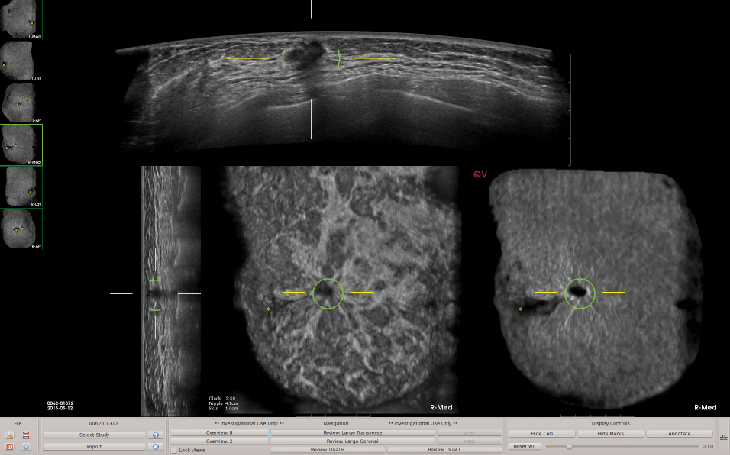
Imaging Technology News spoke with Bob Foley, vice president of sales and marketing of QView Medical, Inc., about the ...
April 12, 2019 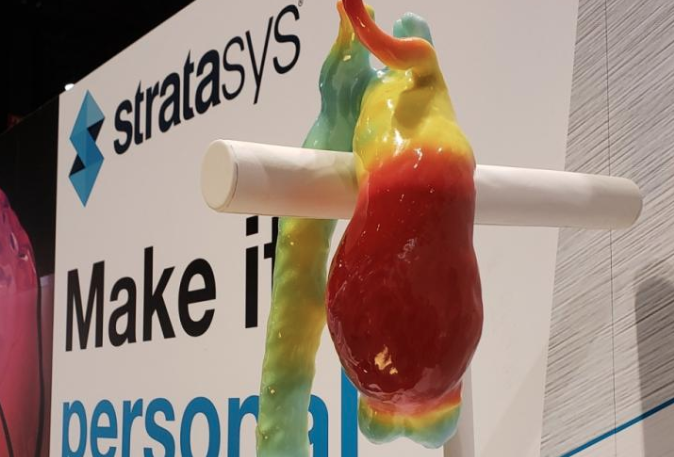
Feature | Enterprise Imaging | By Jeff Zagoudis
The central premise behind enterprise imaging (EI) is giving physicians the resources they need to provide the best care ...
April 11, 2019 Sponsored Content
Sponsored Content
Videos | Radiology Business
Radiology departments have many different needs and face a wide variety of challenges that can impact their departments ...
November 11, 2025 
Feature | Flat Panel Displays | By Melinda Taschetta-Millane
The flat panel display market shows signs of maturing, however many new applications are available that can help to ...
April 11, 2019 
Sponsored Content | Case Study | Artificial Intelligence
The Department of Radiology at Virginia Commonwealth University (VCU) Medical Center, the level 1 trauma center of VCU ...
April 11, 2019 
Feature | Radiation Oncology | By Jeff Zagoudis
Brain tumors are some of the most complicated forms of cancer to treat due to their extremely sensitive location ...
April 11, 2019 Sponsored Content
Feature | Breast Imaging
Despite decades of progress in breast imaging, one challenge continues to test even the most skilled radiologists ...
October 24, 2025 
Feature | Contrast Media Injectors | By Jeff Zagoudis
One of the most controversial issues in radiology in recent years has been the use of gadolinium as a contrast agent in ...
April 11, 2019 
News | Interventional Radiology
Johnson & Johnson Medical Devices Companies announced Ethicon has launched a new global registry to collect and analyze real-world data on patients with soft tissue liver lesions ablated with the company’s Neuwave Microwave Ablation System. The company made the announcement at the annual meeting of the Society of Interventional Radiology (SIR 2019), March 23-28 in Austin, Texas.
April 10, 2019 
News | Teleradiology
vRad (Virtual Radiologic), a Mednax Radiology Solutions practice, announced that the U.S. Patent and Trademark Office has issued the company’s 19thpatent. The new patent, Patent No. 10,198,816 B2, is entitled “Medical Evaluation Machine Learning Workflows and Processes.” The patent covers methods and systems for automated image recognition using artificial intelligence (AI) in an electronic workflow and for performing a diagnostic evaluation of a medical image study that can be modified, updated or prioritized.
April 10, 2019 Sponsored Content
Sponsored Content
Videos | Radiology Business
Bayer Radiology’s Barbara Ruhland and Thom Kinst discuss how radiology departments can address the many different ...
October 09, 2025 
News | Radiation Dose Management
Qaelum NV of Leuven, Belgium, and Toyo Corp. of Tokyo, Japan announced they have entered into a cooperation agreement for the distribution throughout Japan of Qaelum’s dose monitoring solution — Dose.
April 10, 2019 
News | Interventional Radiology
April 10, 2019 —Smart speakers customarily used in your living room can act as an aid to physicians in hospital ...
April 10, 2019 
News | Proton Therapy
Varian, in partnership with the University of Maryland School of Medicine’s Department of Radiation Oncology and the Maryland Proton Treatment Center, presented publicly the first pre-clinical results of its research on ultra-high-dose rate cancer treatments with protons. Known as Flash therapy, it is a non-invasive therapy for cancer delivering high doses of radiation in ultra-high-speeds (less than 1 second) and represents the potential for a major breakthrough in the treatment of cancer. The preclinical Flash therapy results — presented at the American Association for Cancer Research (AACR) annual meeting, March 29-April 3 in Atlanta — showed reduced toxicity in healthy tissues and organs.
April 09, 2019 Sponsored Content
Case Study | PACS
eHealth Saskatchewan plays a vital role in providing IT services to patients, health care providers, and partners such ...
February 03, 2025 
Technology | Cardiovascular Ultrasound
DiA Imaging Analysis announced the launch of LVivo SAX, a cardiac analysis tool that helps clinicians quickly and accurately interpret ultrasound images and assess heart functionality among patients suspected of suffering from acute coronary syndrome (ACS).
April 09, 2019 
News | Digital Pathology
Digital pathology company Deep Lens Inc. announced the closing of a $14 million Series A financing that will further expand the company’s artificial intelligence (AI) and platform product development activities. Deep Lens is focused on AI-driven digital pathology for clinical trial recruitment at the time of diagnosis.
April 09, 2019 
News | Enterprise Imaging
Cleveland Clinic Union Hospital (CCUH) recently selected Novarad to provide its facility with the Ncompass Enterprise Imaging System and specialized image management of both DICOM and non-DICOM with the company’s SnapView mobile app.
April 08, 2019 
News | Interventional Radiology
The Society of Interventional Radiology (SIR) presented its highest honor, the SIR Gold Medal, to Alan H. Matsumoto, M.D., FSIR; Daniel Picus, M.D., FSIR; and James B. Spies, M.D., MPH, FSIR, during its Annual Scientific Meeting, March 23-28 in Austin, Texas. These awards acknowledge distinguished and extraordinary service to SIR or to the discipline of interventional radiology.
April 08, 2019 
News | Artificial Intelligence
Radiology artificial intelligence (AI) company Enlitic announced the close of its $15 million Series B financing round. The investment was led by Marubeni, with whom the company has been developing the Japanese market since 2017. The round saw further investment from Capitol Health, who previously led the company's Series A in 2016, as well as new participation from several top investors in Australia. Approximately 10 percent of the round was set aside for individual radiologists and other physicians who have either trained or used the company’s medical AI solutions. Enlitic plans to use the funding to enhance its artificial intelligence product portfolio, expand its engineering and data scientist teams, and focus on regulatory approval for clinical use in the U.S., Australia, Japan, Europe, Canada and Brazil.
April 08, 2019 
News | Artificial Intelligence
NVIDIA and the American College of Radiology (ACR) announced a collaboration to enable thousands of radiologists nationwide to create and use artificial intelligence (AI) for diagnostic radiology in their own facilities, using their own data, to meet their own clinical needs.
April 08, 2019 
News | Interventional Radiology
Uterine fibroid embolization (UFE) effectively treats uterine fibroids with fewer post-procedure complications compared to myomectomy, according to new research presented at the Society of Interventional Radiology’s (SIR) 2019 Annual Scientific Meeting, March 23-28 in Austin, Texas. Women who received this minimally invasive treatment also had a slightly lower need for additional treatment than those who underwent surgery.
April 05, 2019 
Technology | Mobile Devices
Healthereum LLC released the beta version of the Healthereum Life Portfolio, or HELIO, a mobile application that allows patients to be rewarded digital tokens for interacting with their healthcare providers. With each action taken — “Promise to Show” for an appointment, complete quality care surveys after the visit, receive task messages from their doctors and view their current diagnoses — digital tokens are given to the patients’ “wallet” to reward them for time spent on their health using blockchain technology.
April 05, 2019 © Copyright Wainscot Media. All Rights Reserved.

Subscribe Now