March 24, 2011 – A new study by Craig Thiessen, M.D., director of radiology for West Houston Radiology L.L.P. and North ...
PET Imaging
Positron emission tomography (PET) is a nuclear imaging technology (also referred to as molecular imaging) that enables visualization of metabolic processes in the body. The basics of PET imaging is that the technique detects pairs of gamma rays emitted indirectly by a positron-emitting radionuclide (also called radiopharmaceuticals, radionuclides or radiotracer). The tracer is injected into a vein on a biologically active molecule, usually a sugar that is used for cellular energy. PET systems have sensitive detector panels to capture gamma ray emissions from inside the body and use software to plot to triangulate the source of the emissions, creating 3-D computed tomography images of the tracer concentrations within the body.

News
 March 24, 2011

Videos | Molecular Imaging
An interview with Peter Herscovitch, M.D., chief of the positron emission tomography (PET) department, senior attending ...
March 22, 2011 
Videos | PET Imaging
An interview with Peter Herscovitch, M.D., chief of the positron emission tomography (PET) department, senior attending ...
March 22, 2011 Sponsored Content

Blog | PET Imaging
Digital technology is opening remarkable opportunities for clinical positron emission tomography (PET) about which ...
December 11, 2018 
News
March 11, 2011 – U.S. Food and Drug Administration (FDA) and Lantheus Medical Imaging Inc. today reached agreement on a ...
March 11, 2011 
Technology
March 10, 2011 – The U.S. Food and Drug Administration (FDA) has granted an abbreviated new drug application (ANDA) for ...
March 10, 2011 News
March 4, 2011 – For the first time, quantitative—not qualitative—data analysis has demonstrated that time-of-flight (TOF ...
March 04, 2011 Sponsored Content

Blog | PET Imaging
Precision can have an enormous impact on patients. From diagnosis to patient monitoring (see “How Digital PET/CT Can ...
November 07, 2018 
News
March 3, 2011 – A positron emission mammography (PEM) scanner has been launched at two radiology conferences in Vienna ...
March 03, 2011 
Technology
March 3, 2011 – The U.S. Food and Drug Administration (FDA) has cleared a whole-body positron emission tomography (PET) ...
March 03, 2011 News
February 8, 2011 — The only direct National Institute of Standards and Technology (NIST) traceable dose calibrator ...
February 16, 2011 Sponsored Content

Podcast | PET Imaging
PET is getting ready to venture outside oncology, cardiology and mainstream neurology. High on the list of new clinical ...
November 07, 2018 
News
February 4, 2011 – Positron emission tomography (PET) can image metabolic changes following treatment with the protein ...
February 04, 2011 News
February 3, 2011 – Beginning Feb. 7, 2011, the Centers for Medicare and Medicaid Services (CMS) will reimburse sites ...
February 03, 2011 News
January 21, 2011 — The U.S. Food and Drug Administration's (FDA) Peripheral and Central Nervous System Drugs Advisory ...
January 21, 2011 Sponsored Content
Blog | PET-CT
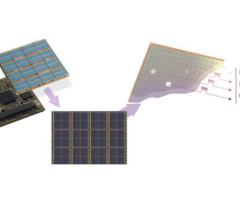
Analog is approximate. Digital is specific. Therein lies the fundamental difference between digital PET and its analog ...
October 17, 2018 News
January 3, 2011 – A registered radiopharmaceutical product has received a positive opinion for the mutual recognition of ...
January 03, 2011 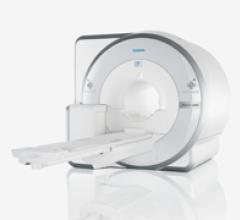
News
December 1, 2010 – One of the world's first whole-body MR/PET systems was introduced at the RSNA 2010 meeting. The ...
December 01, 2010 
News
November 30, 2010 - Breast-Specific Gamma Imaging/Molecular Breast Imaging (BSGI/MBI) is gaining momentum as a standard ...
November 30, 2010 News
November 22, 2010 – A new whole-body, integrated magnetic resonance imaging/positron emission tomography (MRI/PET) ...
November 22, 2010 News
November 17, 2010 — A five-year, $10 million grant supporting a leading-edge molecular imaging center at UCLA has been ...
November 17, 2010 News
November 15, 2010 — The Radiology journal released new data from an National Institutes of Health (NIH)-sponsored ...
November 16, 2010 News
November 10, 2010 – During RSNA 2010, GE Healthcare will announce the availability of the Discovery NM/CT 670, an ...
November 10, 2010 
Feature
Launching a new cancer center can be a long process, taking several months or even years to see a return on investment ...
November 10, 2010 © Copyright Wainscot Media. All Rights Reserved.

Subscribe Now