Wielding an assortment of high-energy photons, ultrasonic waves and radiofrequencies, radiology has made a practice of ...
PET Imaging
Positron emission tomography (PET) is a nuclear imaging technology (also referred to as molecular imaging) that enables visualization of metabolic processes in the body. The basics of PET imaging is that the technique detects pairs of gamma rays emitted indirectly by a positron-emitting radionuclide (also called radiopharmaceuticals, radionuclides or radiotracer). The tracer is injected into a vein on a biologically active molecule, usually a sugar that is used for cellular energy. PET systems have sensitive detector panels to capture gamma ray emissions from inside the body and use software to plot to triangulate the source of the emissions, creating 3-D computed tomography images of the tracer concentrations within the body.

News
July 19, 2011 – The study "Use of Florbetapir-PET for Imaging beta-amyloid Pathology," published in the Jan. 19, 2011 ...
 July 19, 2011
Feature | Roberto Aranibar, Frost & Sullivan Healt
Despite its first commercial appearance in the late 1970s, positron emission tomograpnhy (PET) did not begin gaining ...
July 18, 2011 Sponsored Content

Blog | PET Imaging
Digital technology is opening remarkable opportunities for clinical positron emission tomography (PET) about which ...
December 11, 2018 
Feature | Dave Fornell
The new imaging modality of positron emission tomography (PET)/magnetic resonance imaging (MRI) was introduced in the U ...
June 28, 2011 
Videos | SNMMI
Society of Nuclear Medicine (SNM) President George Segall, M.D., chief of the nuclear medicine service at the VA Palo ...
June 27, 2011 News
June 14, 2011 – Definitive proof of an adverse effect of chronic marijuana use revealed at SNM’s 58th annual meeting ...
June 14, 2011 Sponsored Content

Blog | PET Imaging
Precision can have an enormous impact on patients. From diagnosis to patient monitoring (see “How Digital PET/CT Can ...
November 07, 2018 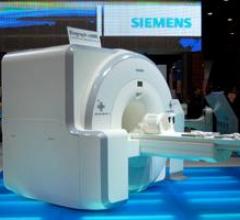
Technology
June 10, 2011 – The U.S. Food and Drug Administration (FDA) granted Siemens Healthcare 510(k) clearance for the Biograph ...
June 10, 2011 
News
June 10, 2011 — At the Society of Nuclear Medicine’s 58th Annual Meeting in San Antonio, June 4-8, Cardinal Health ...
June 20, 2011 
News
June 8, 2011 — GE Healthcare announced the release of its Optima PET/CT 560, which offers efficiency and investment ...
June 20, 2011 Sponsored Content

Podcast | PET Imaging
PET is getting ready to venture outside oncology, cardiology and mainstream neurology. High on the list of new clinical ...
November 07, 2018 
News
June 7, 2011 — Research presented at SNM’s 58th annual meeting is taking targeted molecular imaging to a new level by ...
June 20, 2011 
Technology
May 31, 2011 — UltraSPECT, a provider of nuclear medicine (NM) image reconstruction technology that reduces ...
May 31, 2011 
News
May 26, 2011 - With the deficiencies in knowledge of tuberculosis--as well as in the practices, programs and strategies ...
May 26, 2011 Sponsored Content

Blog | PET-CT
Analog is approximate. Digital is specific. Therein lies the fundamental difference between digital PET and its analog ...
October 17, 2018 
Technology
May 20, 2011 – Medrad Inc., a business of Bayer HealthCare, has announced the launch of the next generation Intego PET ...
May 20, 2011 
News
May 18, 2011 – Lantheus Medical Imaging Inc. announced data from a phase 2 clinical trial that demonstrated positron ...
May 18, 2011 News
May 6, 2011 – Naviscan has entered into a distribution agreement with Tecnologie Avanzate s.r.l. to market and service ...
May 06, 2011 News
May 4, 2011 – Researchers from the University of Cincinnati presented results from a prospective study at the American ...
May 04, 2011 
Technology
A new PET/CT scanner has been introduced that helps address the increasing cost pressures faced by healthcare providers ...
April 20, 2011 News
SNM's Clinical Trials Network (CTN) last week validated its 100th scanner, an important milestone in CTN's two-and-a ...
April 19, 2011 News
April 4, 2011 – The U.S. Food and Drug Administration (FDA) has given a complete response letter to Eli Lilly and its ...
April 04, 2011 
News
March 24, 2011 – A new study by Craig Thiessen, M.D., director of radiology for West Houston Radiology L.L.P. and North ...
March 24, 2011 © Copyright Wainscot Media. All Rights Reserved.

Subscribe Now