

News | Lung Imaging
June 3, 2016 — Novocure announced that the U.S. Food and Drug Administration (FDA) has approved its investigational ...
 June 03, 2016

According to data from a new survey, nearly all of the nation’s hospitals have adopted certified electronic health records (EHRs). The survey was released at the Office of the National Coordinator for Health Information Technology’s (ONC) 2016 annual meeting, May 31-June 2 in Washington, D.C.
June 03, 2016 
News | Neuro Imaging
A global team of scientists have shown that the brains of patients with schizophrenia have the capacity to reorganize and fight the illness. This is the first time that imaging data has been used to show that our brains may have the ability to reverse the effects of schizophrenia.
June 03, 2016 Sponsored Content
Sponsored Content
Videos | Radiology Business
Radiology departments have many different needs and face a wide variety of challenges that can impact their departments ...
November 11, 2025 
News | Radiation Therapy
June 3, 2016 — Elekta announced that its Leksell Gamma Knife Icon radiosurgery system has been cleared for clinical use ...
June 03, 2016 
Feature | PET Imaging | Dave Fornell
Positron emission tomography (PET) is a nuclear imaging technology (also referred to as molecular imaging) that enables ...
June 03, 2016 
Technology | Medical 3-D Printing
Artec 3D, a developer and manufacturer of professional 3-D hardware and software, announced the release of Artec Studio 11.
June 02, 2016 Sponsored Content

Feature | Breast Imaging
Despite decades of progress in breast imaging, one challenge continues to test even the most skilled radiologists ...
October 24, 2025 
News | Prostate Cancer
June 2, 2016 — Physicians have long used magnetic resonance imaging (MRI) to detect cancer, but a new study describes ...
June 02, 2016 
News | Proton Therapy
University Hospitals in Cleveland recently held a ceremony to mark the completion of its new $30 million proton therapy center, the first in the state of Ohio.
June 02, 2016 Technology | Enterprise Imaging
June 2, 2016 — Lexmark International announced the availability of several new and enhanced enterprise imaging and ...
June 02, 2016 Sponsored Content
Sponsored Content
Videos | Radiology Business
Bayer Radiology’s Barbara Ruhland and Thom Kinst discuss how radiology departments can address the many different ...
October 09, 2025 
Technology | Simulators
June 2, 2016 — VirtaMed introduced the ArthroS Hip Module at the EFORT Congress in Geneva, Switzerland, June 1-3. The ...
June 02, 2016 
Technology | Remote Viewing Systems
Intelerad Medical Systems announced the launch of Panorama, a zero-footprint enterprise viewer that provides seamless access to all medical images from any location at any time.
June 01, 2016 June 1, 2016 — Alzeca Biosciences announced successful preliminary results for ADx, its novel, proprietary diagnostic ...
June 01, 2016 Sponsored Content

Case Study | PACS
eHealth Saskatchewan plays a vital role in providing IT services to patients, health care providers, and partners such ...
February 03, 2025 
News | Cardiovascular Ultrasound
The American Society of Echocardiography (ASE) will host its 27th Annual Scientific Sessions, June 10-14, 2016, at the Washington State Convention Center in Seattle.
June 01, 2016 
Feature | Enterprise Imaging | Greg Freiherr
Predictions are usually based less on what will come than what has been. They are projections of the recent past. That realization makes me a little bit nervous when it comes to enterprise imaging.
June 01, 2016 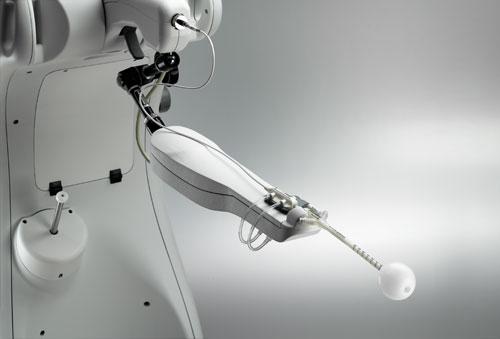
Feature | Women's Health | By Barbara Schwartzberg, M.D., FACS
In recent years, intraoperative radiation therapy (IORT) has been growing in acceptance in the U.S. as an alternative to traditional external beam radiation therapy (EBRT) for patients with early-stage breast cancer. For patients meeting appropriate selection criteria, the benefits are clear — shorter treatment times, added convenience, lower costs and fewer complications.[1, 2]
June 01, 2016 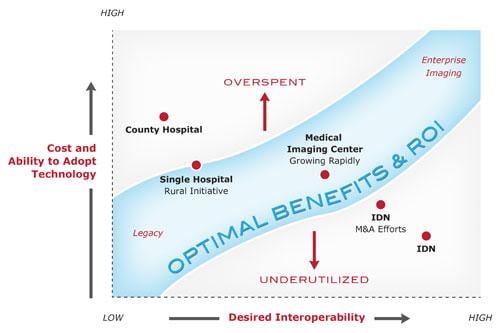
Feature | Radiology Business | By Hjalmer Danielson
“Presentism” is the idea and adherence to view current situations as inevitable and as status quo. Consider your medical imaging operations and the business requirements for further optimization and integration — they will be successful if you can chart where you are currently and navigate to the desired objective, which may or may not be enterprise imaging.
June 01, 2016 
Feature | Radiation Oncology | Jeff Zagoudis
As radiation therapy continues to evolve, new techniques and technologies are largely focused on maximizing the dose to the tumor site while protecting surrounding tissue as much as possible. Image guidance is a critical component of treatment planning for tumor delineation and gauging treatment response, and cone beam computed tomography (CBCT) has traditionally been the modality of choice.
June 01, 2016 
Feature | Computed Tomography (CT) | Jeff Zagoudis
ITN Associate Editor Jeff Zagoudis spoke with Richard Morin, Ph.D., Brooks-Hollern Professor of Medical Physics, Mayo Clinic, Jacksonville, Fla., and co-chair of the Image Wisely committee, about the latest efforts in computed tomography (CT) dose reduction:
June 01, 2016 
Feature | Remote Viewing Systems | Melinda Taschetta-Millane
The trend toward consolidation in the healthcare industry continues to climb, with U.S. hospital mergers and acquisitions at their highest since 1999.
June 01, 2016 
News | Prostate Cancer
A new Phase III clinical trial will look to evaluate if magnetic resonance imaging (MRI) can replace the current standard of care to diagnose prostate cancer.
June 01, 2016 © Copyright Wainscot Media. All Rights Reserved.

Subscribe Now