Getty Images
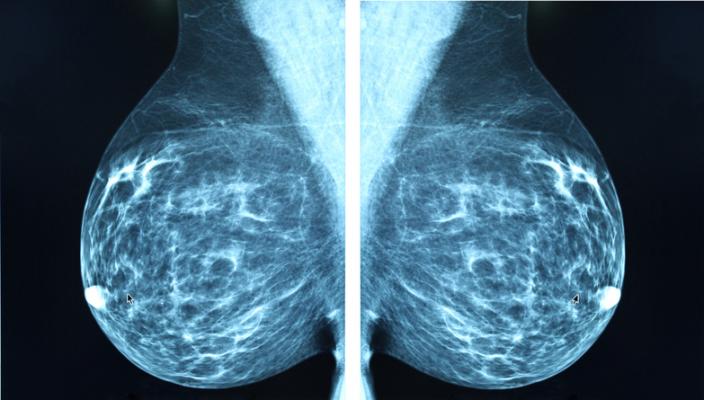
March 3, 2021 — Attendance at regular mammography screening substantially reduces the risk of dying from breast cancer, according to a large study of over half a million women, published in the journal Radiology. Researchers said women who skip even one scheduled mammography screening before a breast cancer diagnosis face a significantly higher risk of dying from the cancer.
Breast cancer screening with mammography has helped reduce disease-related deaths by enabling detection of cancer at earlier, more treatable stages. Despite mammography's well-established effectiveness, many women don't participate in recommended screening examinations.
In the new study, led by László Tabár, M.D., from Falun Central Hospital in Falun, Sweden, and funded by the American Cancer Society, a multinational team of researchers took a more detailed look at screening attendance patterns to further refine mortality risk estimates. They analyzed data from almost 550,000 women eligible for mammography screening in nine Swedish counties between 1992 and 2016. The women were divided into groups based on their participation in the two most recent scheduled screening exams prior to cancer diagnosis. Women who participated in both screening sessions prior to diagnosis were identified as serial participants, while those who did not attend either screening opportunity were categorized as serial nonparticipants.
Analysis showed that participation in the two most recent mammography screening appointments before a breast cancer diagnosis provides a higher protection against breast cancer death than participation in neither or only one examination.
The incidence of breast cancers proving fatal within 10 years of diagnosis was 50% lower for serial participants than for serial nonparticipants. Compared to women who attended only one of the two previous screens, women who attended both had a 29% reduction in breast cancer mortality.
"Regular participation in all scheduled screens confers the greatest reduction in your risk of dying from breast cancer," said the study's lead author, Stephen W. Duffy, M.Sc., professor of cancer screening at Queen Mary University of London.
Duffy said the results add further evidence to support regular screening with mammography as a means for reducing breast cancer-related deaths.
"While we suspected that regular participation would confer a reduction greater than that with irregular participation, I think it is fair to say that we were slightly surprised by the size of the effect," Duffy said. "The findings support the hypothesis that regular attendance reduces the opportunity for the cancer to grow before it is detected."
The researchers are continuing to study mammography data to develop a more comprehensive picture of screening benefits, including the impact on interval cancers that arise between screening mammography examinations.
"We are planning further prognostic research into the mechanism of this effect," Duffy said. "For example, we plan to investigate whether and--if so--to what extent regular attendance improves the prognosis of interval cancers as well as screen-detected cancers. Estimation of this by time since last screen may have implications for policy on screening frequency."
For more information: www.rsna.org
Related Mammography Screening Content:
Risk-based Breast Cancer Screening
Mammography Screening Also Saves Older Lives
Racial Disparities in Stage of Breast Cancer Diagnosis
Study Examines Causes of Death in U.S. Breast Cancer Survivors
 October 19, 2026