

Technology
September 24, 2014 — GE Healthcare announced U.S. Food and Drug Administration (FDA) 510(k) clearance of its Discovery IQ PET/CT (positron emission tomography/computed tomography) system.
 September 24, 2014

Videos | Computed Tomography (CT)
John Stevens, chairman and CEO of HeartFlow, explains his company's computed tomography (CT)-based fractional flow ...
September 24, 2014 
Technology
ScanMed of Resonance Innovations introduced a world's first to the magnetic resonance imaging (MRI) market: The PROCURE Coil.
September 23, 2014 Sponsored Content
Videos | Radiology Imaging
Contrast Diversification in CT Imaging Across imaging departments, supply variability and growing demand are creating ...
September 08, 2026 
News
Memorial Hermann Health System and The University of Texas MD Anderson Cancer Center announced a new partnership to provide a new level of specialized breast screening at a network of community breast care centers in the greater Houston area.
September 23, 2014 Technology
Hospitals and healthcare systems in need of a cost-effective, HIPAA-compliant solution for long-term archiving of healthcare data now have an alternative to on-site redundant archiving. ClearDATA Networks Inc. announced its new cloud-based Archive as a Service solution. It is the first offering of its kind created specifically to meet requirements of the Health Insurance Portability and Accountability Act (HIPAA) for archiving of healthcare data that does not need to be accessed immediately or regularly.
September 23, 2014 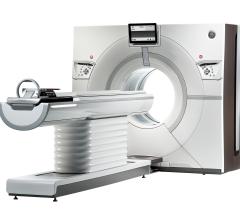
News
Oxford Instruments Healthcare, a division of Oxford Instruments that specializes in providing after-market GE computed tomography (CT) and magnetic resonance imaging (MRI) scanners, announced that it has recently received approval from the Korean Food and Drug Administration (KFDA) to import and market its refurbished GE CT equipment and parts to South Korea.
September 22, 2014 Sponsored Content
Sponsored Content
Videos | Radiology Imaging
Today’s radiology teams are faced with a wide range of growing complexities such as patient and procedure variabilities ...
June 24, 2026 News
ClearDATA Networks Inc. announced that it has successfully achieved Common Security Framework (CSF) Certified status from the Health Information Trust Alliance (HITRUST).
September 22, 2014 
News
Randomized trials from the 1970s and 80s suggested that mammography screening prevents deaths from breast cancer. But the methods used by some of these studies have been criticized, and this has raised doubts about the validity of the findings. Advances in technology and treatment have also led to questions about the reliability of older trials to estimate the benefits and harms of modern day screening.
September 22, 2014 
News
Imris Inc. announced that a recently published article in the journal Neurosurgery is the highest-level clinical evidence to show that the use of Visius intraoperative magnetic resonance imaging (iMRI) in brain tumor surgery results in complete tumor removal in more patients with glioma tumors.
September 19, 2014 Sponsored Content

Feature | Information Technology
AT A GLANCE Organization: Expert Radiology Management Services, LLC Specialty: Subspecialty teleradiology — neuro and ...
May 01, 2026 
News
Tops Comprehensive Breast Center, Houston was a part of a recent study conducted by Stephen L. Rose, M.D., Medical Director of Tops Comprehensive Breast Center, and colleagues (Andra L. Tidwell, BSRT (R)(M); Mary F. Ice, M.D.; Amy S. Nordmann, M.D.; Russell Sexton, Jr., DO; Rui Song, M.D.) conducted exclusively at Tops, leading to advancements in screening mammography and 3-D mammography.
September 19, 2014 
News
To support its humanitarian work, the Field Hospital of the Portuguese army opted for the OR Technology mobile complete X-ray solution, the Amadeo M-DRw with wireless flat panel detector.
September 19, 2014 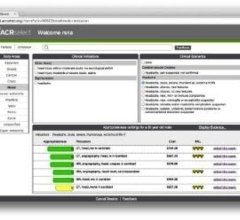
Technology
September 19, 2014 — National Decision Support Company (NDSC) has integrated the American College of Radiology's ACR Select decision support content with Epic's electronic health record (EHR) software. ACR Select can also be added as part of the Epic Foundation System, allowing customers to take an integrated approach to acquiring and implementing ACR Select within their overall EHR strategy.
September 19, 2014 Sponsored Content
Sponsored Content
Videos | Radiology Business
Radiology departments have many different needs and face a wide variety of challenges that can impact their departments ...
November 11, 2025 
News
September 19, 2014 — ACR 2015, the all-new annual meeting of the American College of Radiology (ACR), will offer a variety of engaging and interactive clinical education sessions that focus on hot-button topics such as lung cancer screening, breast tomosynthesis and the latest in radiation therapy. Open to ACR members and non-members, ACR 2015 will be held May 17-21, 2015, at the Marriott Wardman Park Hotel in Washington, D.C.
September 19, 2014 
News
September 19, 2014 — Five presentations from the 2014 Breast Cancer Symposium in San Francisco earlier this month focused on new studies exploring preventive mastectomy, compliance with recommended screening mammography and risk of recurrence after pre-surgery therapy for breast cancer.
September 19, 2014 
News
Fovia Medical Inc. and Voyager Imaging, a Australia-based international provider of radiology products for more than 20 years, have collaborated to make natively integrated High Definition Volume Rendering (HDVR) available throughout Voyager PACS (picture archive and communication system) products.
September 18, 2014 
Technology
Ikonopedia showcased its new MQSA management system along with four new breast imaging reporting modules at the Intensive Breast Ultrasound Meeting, Sept. 11-14, 2014.
September 18, 2014 Technology
The fifth edition of the American College of Radiology (ACR) Breast Imaging Reporting and Data System (BI-RADS) Atlas is now available in a convenient electronic format.
September 18, 2014 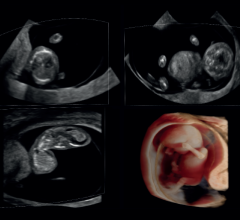
Technology
September 17, 2014 — The industry’s first ultrasound real-time 3-D volume enhancement product from ContextVision has been paired with brand new image visualization capabilities. The resulting product, REALiCE, will deliver photo-realistic and improved diagnostic-quality 3-D ultrasound images.
September 17, 2014 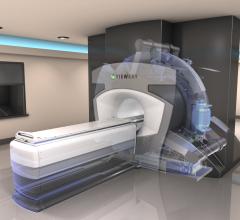
Technology
September 17, 2014 — ViewRay announced the world’s first on-table adaptive radiation treatment program using the MRIdian system began at Siteman Cancer Center at Barnes-Jewish Hospital and Washington University School of Medicine in St. Louis. The MRIdian system provides a patented combination of continuous magnetic resonance imaging (MRI) and simultaneous radiation therapy delivery for the treatment of cancer.
September 17, 2014 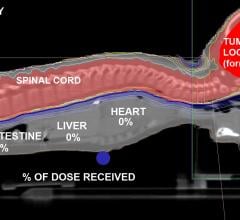
News
September 17, 2014 — Five-year-old Ashya King, the brain tumor patient whose case made headlines in Europe after his parents unlawfully took him from his hospital in Southampton, England, against the advice of doctors, began undergoing his prescribed treatment plan for proton therapy this week.
September 17, 2014 © Copyright Wainscot Media. All Rights Reserved.

Subscribe Now