

Blog | Radiology Imaging
Ever knock down a silo? You have to be quick. And lucky. Very … very … lucky. Maybe that’s why there are so many silos. Outdated. Counterproductive. Standing tall. In science. In business. In personal relationships (exemplified by Facebook pages and the “friends” who traffic them). And in medicine.
 October 05, 2016


Technology | PET-CT
GE Healthcare recently announced U.S. Food and Drug Administration (FDA) 510(k) clearance of its Discovery MI digital positron emission tomography (PET)/computed tomography (CT) system and shared a series of first clinical images. Built with technology allowing significantly better small lesion detectability, Discovery MI can help clinicians in their efforts to diagnose and stage disease earlier.
October 05, 2016 Sponsored Content
Sponsored Content
Videos | Radiology Business
Radiology departments have many different needs and face a wide variety of challenges that can impact their departments ...
November 11, 2025 
Feature
October 5, 2016 — Here is the list of the top 20 most popular pieces of content on the Imaging Technology News (ITN) ...
October 05, 2016 
Sponsored Content | Videos | Digital Radiography (DR)
Contributing Editor Greg Freiherr offers an overview of digital radiography (DR) advances at the Association for Medical Imaging Management (AHRA) 2016 meeting. Read the article “The Coming Push for DR.” Watch a technology report sidebar video on new DR Systems technology.
October 05, 2016 
Sponsored Content | Videos | Digital Radiography (DR)
Agfa highlights how its digital radiography (DR) systems capture analytics data to help improve management of the ...
October 05, 2016 Sponsored Content
Feature | Breast Imaging
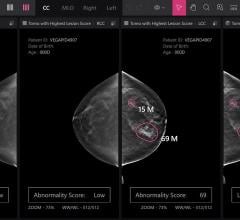
Despite decades of progress in breast imaging, one challenge continues to test even the most skilled radiologists ...
October 24, 2025 
Technology | Contrast Media
GE Healthcare announced that the U.S. Food and Drug Administration (FDA) has approved a label change for the ultrasound contrast agent Optison (Perflutren protein-Type A Microspheres Injectable Suspension, USP). The FDA removed the contraindications for use in patients with cardiac shunts and for administration by intra-arterial injection. Both contraindications have been revised and moved to the WARNINGS AND PRECAUTIONS section (5.3 : Systemic Embolization) of the Full Prescribing Information.
October 04, 2016 
Blog | Information Technology
Ask anyone from Pokemon Go players to BlackBerry diehards. Smartphones have a lot to offer. That potential may be expressed in high-tech apps or decidedly low-tech speech.
October 04, 2016 
Feature | Breast Imaging | Nancy M. Cappello, Ph.D.
The internet and social media have transformed our lives. It has literally opened up a global connection to those with similar interests and passions. In my focused world of patient advocacy for breast health, I meet innumerable women, fervent in their yearly breast cancer screening yet diagnosed with a missed, delayed and advanced stage cancer because of their dense breast tissue. Like me, these women never knew about the impact of dense breast tissue on the reliability of their mammogram until after their diagnosis. Our mission is to correct this fatal flaw in breast cancer screening.
October 04, 2016 Sponsored Content
Sponsored Content
Videos | Radiology Business
Bayer Radiology’s Barbara Ruhland and Thom Kinst discuss how radiology departments can address the many different ...
October 09, 2025 Feature | Breast Density | Jeff Zagoudis
Mammography has long been considered the gold standard for breast cancer detection, acting as the first line of defense for millions of women every year in hopes of catching cancer early. The true efficacy of the modality has come into question in recent years, however, due to increased understanding about the impact of dense fibroglandular breast tissue on screening. This has led to the emergence and/or increased use of other modalities in an effort to improve cancer detection rates above what is currently capable with mammography.
October 04, 2016 
Feature | Radiology Business | Clwyd Probert
With today’s widespread internet-savvy, purchasers will most likely research a product online first. Modern medical ...
October 04, 2016 
Sponsored Content | Case Study | Vendor Neutral Archive (VNA)
"The industry standard of imaging system availability is 99.999 percent uptime, but that’s not good enough for Broward Health. Our vendor neutral archive (VNA) is a critical system in our enterprise imaging environment. It serves as the brains of our operation, supporting a variety of clinical customers within high acuity settings. Broward Health Medical Center is a Level I Trauma Center where every minute counts. We need zero downtime.”
October 04, 2016 Sponsored Content

Case Study | PACS
eHealth Saskatchewan plays a vital role in providing IT services to patients, health care providers, and partners such ...
February 03, 2025 
Feature | Information Technology | Florian Schwiecker
The last two decades have brought a series of changes in medicine, technology and healthcare legislation that have impacted the field of diagnostic imaging and the role of the radiologist. Coupled with these changes, imaging volume is declining1 due to costs as well as concerns over patient radiation exposure.2 This environment often makes it challenging for radiology groups to protect their financial performance and ensure they deliver high-quality studies and readings. Fortunately, advances in imaging and information technology have emerged, helping radiologists increase the utilization of diagnostic imaging and moving the radiologist into a more central role in integrated patient care.3
October 04, 2016 
Sponsored Content | Case Study | Information Technology
Asante Health System provides comprehensive medical care to more than 580,000 people throughout Southern Oregon and Northern California. As the largest healthcare provider in nine counties, Asante knew seamlessly sharing patient information with affiliates would be key to better physician relationships and improved patient outcomes.
October 04, 2016 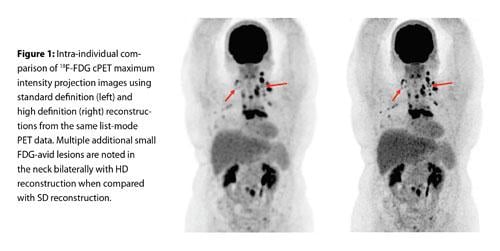
Feature | Radiation Oncology | By Michael V. Knopp, M.D., Ph.D., Chadwick L. Wright, M.D., Ph.D., Katherine Binzel, Ph.D. and Jun Zhang, Ph.D.
Precision medicine is not only a buzzword, it is a call to action to radically advance our capabilities in the era of molecular targeted medicine. Positron emission tomography (PET) has firmly established its leading role as a capable oncologic molecular imaging technique over the last two decades, however its technological advances have been modest at best.
October 04, 2016 
Sponsored Content | Case Study | Information Technology
Medical College of Wisconsin provides physician practice at three major affiliates — Froedtert Hospital, Children’s Hospital of Wisconsin and the Zablocki VA Medical Center — and many other hospitals and clinics in the Milwaukee area. Each year, its providers, physician assistants, nurse practitioners and psychologists care for more than 425,000 patients, representing more than 1.6 million patient visits.
October 04, 2016 
Feature | Digital Radiography (DR) | Greg Freiherr
The remaining users of film and computed radiography (CR) may get some carrot, if they transition to digital radiography (DR). It may come in the form of improved productivity, reduced X-ray dose to patients and better image quality. But the legislation that may spur the transition is all stick.
October 04, 2016 
Feature | Greg Freiherr
The remaining users of film and computed radiography (CR) may get some carrot, if they transition to digital radiography (DR). It may come in the form of improved productivity, reduced X-ray dose to patients and better image quality. But the legislation that may spur the transition is all stick.
October 04, 2016 
Feature | Enterprise Imaging | Jeff Zagoudis
Enterprise imaging as a concept has been around for several years, but many organizations are just turning their full attention to it now, according to Jef Williams, managing partner at Paragon Consulting Partners. This is because other health information technology (IT) endeavors have taken precedence, including electronic medical records (EMRs) and Meaningful Use. Now, as enterprise imaging comes to the forefront, Williams and other speakers at the 2016 annual meeting of the Association for Medical Imaging Management (AHRA) discussed the importance of having an enterprise imaging strategy and how to implement it.
October 04, 2016 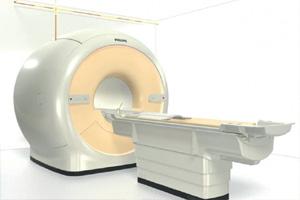
Feature | Magnetic Resonance Imaging (MRI) | Dave Fornell
The most recent big advances in magnetic resonance imaging (MRI) technology have been on the software side, enabling faster contrast scans, greatly simplified cardiac imaging workflows and allowing MR of the lung.
October 04, 2016 © Copyright Wainscot Media. All Rights Reserved.

Subscribe Now