
News | Breast Imaging
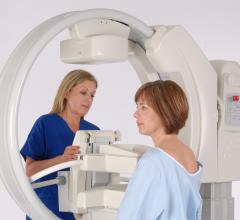
Gamma Medica announced that Henry Ford Health System (Detroit) has purchased Gamma Medica’s LumaGEM Molecular Breast Imaging system. The system is set to be installed by the end of 2016 at Henry Ford West Bloomfield Hospital. The MBI technology will be offered as a secondary screening and diagnostic tool following X-ray mammography, particularly for women with dense breast tissue. This will help improve cancer detection in women who are at greater risk of developing breast cancer.
 November 07, 2016

News | Enterprise Imaging
Vital Images Inc. (Vital) has entered into an agreement to acquire Karos Health (Karos), an innovative global healthcare informatics company.
November 07, 2016 
Technology | Flat Panel Displays
November 3, 2016 — Canvys, a division of Richardson Electronics Ltd., expands its product portfolio with a family of ...
November 03, 2016 Sponsored Content
Sponsored Content
Videos | Radiology Business
Radiology departments have many different needs and face a wide variety of challenges that can impact their departments ...
November 11, 2025 
News | Archive Cloud Storage
Dicom Systems announced that the company was awarded a vendor neutral archive (VNA) contract to deploy its Unifier Enterprise Archive at Dental Information Systems Center (DISC), located in Joint Base San Antonio — Fort Sam Houston in San Antonio, Texas.
November 03, 2016 
Blog | Radiology Imaging
At one time, there wasn’t much risk in medical imaging. A federal program called Medicare Pass-Through used to pay hospitals for new equipment based on their percentages of Medicare patients.
November 03, 2016 
Sponsored Content
Feature | Breast Imaging
Despite decades of progress in breast imaging, one challenge continues to test even the most skilled radiologists ...
October 24, 2025 News | Prostate Cancer
November 2, 2016 — A new report on Swedish men with non-aggressive prostate cancer suggests a lot more American men ...
November 02, 2016 
Lack of shrinkage in the area of the brain responsible for memory may be a sign people with thinking and memory problems may go on to develop dementia with Lewy bodies rather than Alzheimer’s disease, according to a new study. Shrinkage in this hippocampus area of the brain is an early sign of Alzheimer’s disease.
November 02, 2016 
News | Mammography
A study by University of North Carolina Lineberger Comprehensive Cancer Center researchers has found that younger, uninsured women in North Carolina had higher odds of missing a 60-day window for getting follow-up after an abnormal mammogram, even though research underscores the importance of timely follow-up.
November 02, 2016 Sponsored Content
Sponsored Content
Videos | Radiology Business
Bayer Radiology’s Barbara Ruhland and Thom Kinst discuss how radiology departments can address the many different ...
October 09, 2025 
November 2, 2016 — By the time unambiguous signs of memory loss and cognitive decline appear in people with Alzheimer’s ...
November 02, 2016 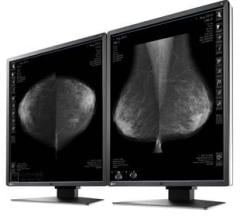
Technology | Flat Panel Displays
Eizo Inc. announced the release of the RadiForce GX550, a 21.3-inch, 5 megapixel monitor for viewing detailed digital breast tomosynthesis and mammography images. It is the successor model to the RadiForce GX540 and features superior imaging capability and ease-of-use.
November 02, 2016 
News | PET-CT
Researchers at Stanford University have demonstrated for the first time the use of a dual optical and positron emission tomography (PET)/computed tomography (CT) activity-based probe to detect atherosclerotic plaques. The study is published in the October issue of The Journal of Nuclear Medicine.
November 01, 2016 Sponsored Content
Case Study | PACS
eHealth Saskatchewan plays a vital role in providing IT services to patients, health care providers, and partners such ...
February 03, 2025 
News | Radiation Therapy
November 1, 2016 — Two new studies have documented the value of the BioZorb marker in improving the treatment of women ...
November 01, 2016 
News | Patient Engagement
Specifically training oncologists and their patients to have high-quality discussions improves communication, but troubling gaps still exist between the two groups, according to a new study in JAMA Oncology.
November 01, 2016 
Technology | Ultrasound Imaging
Konica Minolta announced it will be introducing a series of new ultrasound accessories and technologies at the 2016 annual meeting of the Radiological Society of North America, Nov. 27-Dec. 2 in Chicago.
November 01, 2016 
Blog | Radiology Imaging
For a long time, the ongoing joke on the floor of the McCormick Place after Thanksgiving was that RSNA stood for Real Systems Not Available. And, like all humor that lasts, there is truth to it. But that truth is changing.
November 01, 2016 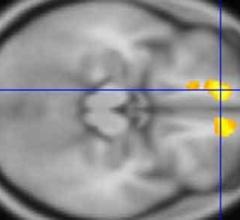
News | Neuro Imaging
Using magnetic resonance imaging (MRI), researchers at Washington University School of Medicine in St. Louis have identified areas in the brains of children with Tourette's syndrome that appear markedly different from the same areas in the brains of children who don't have the neuropsychiatric disorder.
November 01, 2016 
Feature | Breast Imaging | By Jeff Zagoudis
Mammography has been the gold standard for breast cancer screening ever since it was proven to reduce mortality in clinical trials in the 1960s. A 2015 report from the U.S. Department of Health and Human Services (HHS) revealed, however, that only 66.8 percent of women age 40 and over — the demographic traditionally targeted for screening — had received a mammogram in the previous two years.1 Understanding of fibroglandular breast density and its impact on cancer detection, as well as new screening guidelines that challenge conventional wisdom, are among the factors impacting compliance rates, and they suggest that screening has evolved beyond the one-size-fits-all approach of using mammography alone.
November 01, 2016 
Feature | Breast Biopsy Systems | By Laura Shepardson, M.D.
Recently, I was invited to participate in a roundtable discussion focused on uncovering the challenges and ...
November 01, 2016 
Feature | Radiology Business | By Jeff Zagoudis
Healthcare spending is on the rise. According to a 2014 forecast by FMI, a market research group, total global healthcare spending will reach $52 billion by 2018 — less than two years away. Further research shows that nearly half of the money (40 percent) will be spent on equipment, an encompassing term that includes everything from beds to gurneys to imaging equipment. Radiology actually makes up the lion’s share of equipment costs, accounting for approximately 1/5 (depending on the type of facility) of total equipment expenditures, per a 2015 report from market research firm Medical Architecture Planning Systems. At the same time, it is also a major revenue driver for hospitals, with radiology expected to account for $49 billion of total global medical imaging revenue by 2020, according to BCC Research, a market research company.
November 01, 2016 © Copyright Wainscot Media. All Rights Reserved.

Subscribe Now