Breast density notification is becoming a reality in many states across the nation by virtue of legislation. A detailed review of breast density is beyond the scope of this article, but there are a few points that bear emphasis.


The Radiological Society of North America (RSNA) annual meeting has transitioned in recent years from an imaging device focus to an imaging information technology focus. The interest in software continued at this year’s meeting, partly fueled by the need for healthcare organizations to meet Stage 1 and 2 meaningful use requirements. Two key trends seen throughout the show floor included remote viewing systems for radiology images and technology streamlined to aid workflow efficiency. 


As other industries turn to the virtual cloud for a variety of information technology (IT) solutions, those in healthcare — especially in radiology — continue to weigh in carefully on the pros and cons of running software tools, as well as hosting their data and medical images, on a third-party server. While the potential for lower costs, improved scalability and faster deployment of services is attractive to physicians and hospitals, concerns such as security issues and increased dependence on an external service provider can also factor into decisions regarding the cloud.


If you would have asked radiologists about the future of radiology information systems (RIS) five to 10 years ago, there is a good chance that they would have told you that RIS was a dying technology. Because RIS systems were merging with other technological platforms, many radiologists did not expect the systems to be around. But now many physicians are trying to meet the Stage 2 meaningful use (MU) criteria to take advantage of Medicare and Medicaid incentive payments and prepare themselves to be in compliance when the criteria become requirements. RIS and picture archiving and communications systems (PACS) are experiencing a technological rebirth that will usher the next generation of these products smoothly into 2013. 


The goal of radiation therapy is to deliver ionizing radiation to eradicate the tumor. Ionizing radiation, however, is indiscriminant and causes damage to both healthy tissues and disease volume along its path. A state-of-the-art treatment would employ intensity-modulated, irregularly shaped beams from various gantry angles to maximize the dose to the target volume and minimize the dose to the surrounding tissues. Accurate beam placement is thus critical to the success of radiation therapy. 


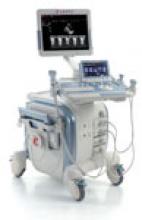
With ever-increasing concerns about radiation dose and the appropriate use of diagnostic imaging tests, doctors are continuously looking for ways to better image their patients. Advances in ultrasound are making the technology appear more attractive for certain clinical applications, from breast health to cardiology, thanks to their noninvasiveness, cost-effectiveness and lack of radiation. Some of the emerging innovations in ultrasound, such as real-time 3-D imaging and the development of wireless transducers, are set to keep the market going throughout 2013 and beyond.


Just a few years ago, the debate in radiology departments about workhorse X-ray systems was whether to convert from analog film to computed radiography (CR) cassettes and digital readers, or to direct imaging digital radiography (DR) systems. Today, there is no doubt DR has won that debate and is being widely adopted, and CR is falling out of favor. 


Nyack Hospital has been nationally recognized for exemplary performance in using evidence-based clinical processes that are shown to improve care for conditions such as heart attack, heart failure, pneumonia, surgical care, children’s asthma, stroke and venous thromboembolism, as well as inpatient psychiatric services. Its Center for Diagnostic Imaging performs more than 130,000 procedures a year with a staff of 20 radiologists.

Digisonics Cardiology PACS

Subscribe Now