GE Healthcare has received 510(k) clearance and CE marking of its magnetic resonance (MR) solution for head and neck imaging in the presence of radiation therapy (RT) immobilization devices.

According to a new survey by Etiam, hospitals see a significant need for an organized system to manage the sizable flow of medical images many receive from beyond the enterprise. Hospitals also expressed concern about the security of the cloud, which increasingly plays a role in cross-enterprise access to this patient data. 

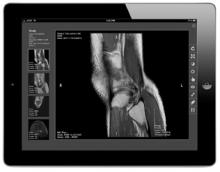
Fovia Medical Inc., and Softneta UAB are collaborating to deliver High Definition Volume Rendering to the telemedicine market.

Two-dimensional plus 3-D breast imaging increases cancer detection rates by 11 percent, and could be particularly useful in detecting cancer in women with dense breasts, a new study suggests.


In the 1970s when I studied at the University of Wisconsin-Madison, the UW had a reputation for being a hotbed of insurrection. I did my part in 1975 by wearing Gerald Ford’s WIN button upside down. It was a tacit repudiation of the idea that a public relations campaign could spawn a grassroots movement to “Whip Inflation Now” and an implied statement that there are “No Immediate Miracles.”


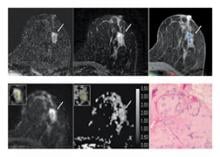
Magnetic resonance imaging (MRI) has emerged as a valuable imaging modality for breast cancer detection and staging. Dynamic contrast-enhanced MRI (DCE-MRI) is the most sensitive technique for screening high-risk women and for evaluating the extent of disease in patients with a recent diagnosis of breast cancer.[1,2] Despite its numerous advantages, the moderate specificity of DCE-MRI can result in a substantial number of false positive findings that translate to high recall rates and unnecessary biopsies. 


Multiple industries have undergone a complete metamorphosis as a result of advancing electronics, and the medical world is no exception. Perhaps a little late to recognize the technological transformation, the healthcare industry is finally catching on to the latest trends and incorporating the newest devices into everyday use. One device, in particular, is going to revolutionize medicine forever.


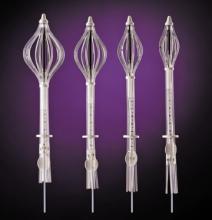
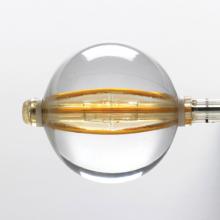
Treatment of early stage breast cancer continues to evolve as researchers investigate more novel and efficient methods of radiotherapy. Clinical trials on accelerated partial breast irradiation (APBI) are showing that these newer methods can offer carefully selected patients several advantages over traditional whole breast irradiation (WBI).


In the small rural town of Kingman, AZ — approximately 90 minutes southeast of Las Vegas — most of its 28,000-plus population are economically disadvantaged; some of them still work in local gold and silver mines. So for women living in the area, getting a mammogram every year isn’t a priority; in fact, notes Dr. Christopher Johansen, Kingman Regional Medical Center (KRMC) Radiologist and Director of its Breast Imaging Program, “Many of our residents don’t have health insurance. And many aren’t even aware of the importance of getting annual mammograms.”  

Subscribe Now