According to a study in the February issue of the Journal of the American College of Radiology, primary care physicians prefer to deliver the results of radiology examinations themselves and feel medico-legally obligated by recommendations within radiology reports.   


Accuray Inc. announced that the European CyberKnife Center Munich-Grosshadern (ECZM) has treated the world’s first patient with the new CyberKnife M6 System. With the installation of the new system, the Munich center, in close cooperation with the University Hospital of Munich, is the first to offer cancer patients treatment with the CyberKnife M6 System, the latest generation of the CyberKnife System. The new system is now able to provide enhanced quality, a streamlined user interface for treatment delivery and precision to radiation therapy treatments and continues to provide clinical capabilities including non-isocentric, non-coplanar robotic beam delivery and real-time tracking and automatic correction.


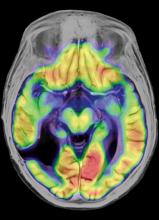
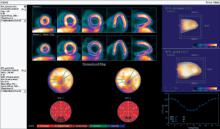
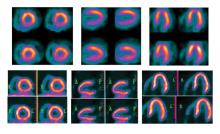
While amyloid imaging may now be most associated with detecting plaques in the brain, it has the potential to change the way cardiac amyloidosis is diagnosed. According to first-of-its-kind research published in the February issue of The Journal of Nuclear Medicinepositron emission tomography (PET) with 11-C PIB can positively visualize amyloid deposits in the heart. Currently there is no noninvasive test available for specific diagnosis.

Identive Group Inc. announced new radio frequency identification (RFID) labels for the medical industry that are specially designed to withstand the radiation processes commonly used to sterilize medical devices, equipment and supplies. Unlike standard RFID products that lose their memory content when exposed to radiation, Identive's new radiation-resistant labels enable critical identification, usage and tracking information to reside on medical components and storage containers throughout their useful lives.


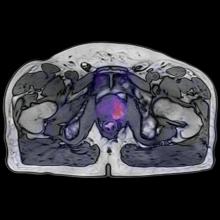
EDAP TMS SA announced the submission of its Pre-Market Approval (PMA) application to the U.S. Food and Drug Administration (FDA) on Jan. 31, 2013 for the Company's Ablatherm-HIFU (high intensity focused ultrasound) for treatment of low risk, localized prostate cancer. EDAP's PMA submission includes data from the ENLIGHT study, a multi-center U.S. Phase II/III clinical trial that completed the two year follow-up needed to evaluate its primary endpoint in August 2012, as well as data from the company's extensive worldwide database of treatment information and follow-up data from patients who have undergone HIFU therapy for prostate cancer.

Dr. John Peixotto of the Carol Milgard Breast Center remembers the old days — before Version 7.0 of the Hologic Physicians Report Writer DX software was installed this past spring — when he was still at the mercy of the dictaphone. Typically, he’d spend an average of three to five minutes per patient dictating bone densitometry test results generated from the Center’s Hologic Discovery system. That may not seem like much. But for a facility like the Milgard Center, which does an average of 20 tests a day, that translated into a lot of extra time crammed into an already busy day. 


Since my first RSNA meeting in 1984, I had been told the only radiologists who had patients were those who did interventions. The mainstream radiologist was a physicians’ physician, providing expert interpretation of medical images, identifying the subtle visual indicators of disease and ruling out diagnoses when signs of pathology were absent. This year was different. 


Subscribe Now