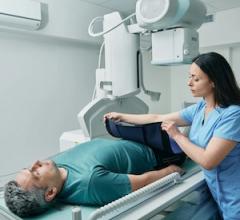
December 15, 2009 - Computed tomography (CT) scan use may make large contributions to the total cancer risk, and risk-reduction efforts may be warranted, according to an article published in the December 2009 issue of The Archives of Internal Medicine.1

According to researchers, the use of CT scans in the United States has increased more than three-fold since 1993 to approximately 70 million scans annually. This fact has prompted concern about the potential radiation-related cancer risk, despite the great medical benefits from this diagnostic tool.

Researchers estimated that approximately 29,000 (95 percent UL) future cancers could be related to CT scans performed in the United States in 2007. The largest contributions were from scans of the abdomen and pelvis (n = 14 000) (95 percent UL), chest (n = 4100) (95 percent UL), and head (n = 4000) (95percent UL), as well as from chest CT angiography (n = 2700) (95 percent UL). One-third of the projected cancers were due to scans performed at the ages of 35 to 54 years compared with 15 percent due to scans performed at ages younger than 18 years, and 66 percent were in females.

The study concluded: "These detailed estimates highlight several areas of CT scan use that make large contributions to the total cancer risk, including several scan types and age groups with a high frequency of use or scans involving relatively high doses, in which risk-reduction efforts may be warranted."3

1. Berrington de González A, Mahesh M, Kim K-P; et al. Projected cancer risks from computed tomographic scans performed in the United States in 2007. Arch Intern Med. 2009;169(22):2071-2077.
2. Ibid.
3.Ibid.


Related Content

News | Radiology Business

March 31, 2026 — Radon Medical Imaging, a medical imaging equipment maintenance and repair services company, has has ...

Time March 31, 2026
arrow
News | Radiology Imaging

March 26, 2026 — GE HealthCare has announced a renewed research collaboration with Stanford Medicine Department of ...

Time March 30, 2026
arrow
News | Cardiac Imaging

March 28, 2026 — When Ashley Perlow felt a sharp pain shoot across her chest and into both wrists, she didn't think it ...

Time March 30, 2026
arrow
News | FDA

March 24, 2026 — MARS Bioimaging, a New Zealand–headquartered medical device company, has received U.S. Food and Drug ...

Time March 25, 2026
arrow
News | Radiology Imaging

March 23, 2026 — Samsung Medison hsa announced that its U.S. medical imaging businesses, previously operating as ...

Time March 23, 2026
arrow
News | Breast Imaging

March 10, 2026 — QT Imaging Holdings has received U.S. Food and Drug Administration (FDA) 510(k) clearance for an ...

Time March 13, 2026
arrow
News | Lung Imaging

March 11, 2026 — Noah Medical has announced the publication of the MATCH 2 study in the international, peer-reviewed ...

Time March 12, 2026
arrow
News | Computed Tomography (CT)

March 5, 2026 — At ECR 2026, Royal Philips introduced Rembra, its next-generation radiology CT system designed for the ...

Time March 09, 2026
arrow
Feature | Artificial Intelligence | Kyle Hardner

Once considered an adjunct brain cancer therapy and a last-resort treatment, noninvasive radiosurgery has evolved ...

Time March 09, 2026
arrow
News | Artificial Intelligence

March 2, 2026 — RadNet, Inc. has acquired Gleamer SAS, a radiology AI company based in Paris, France. Gleamer will be ...

Time March 03, 2026
arrow
Subscribe Now