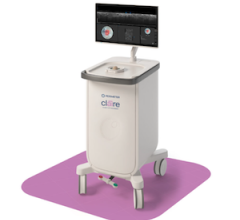
March 11, 2026 — Noah Medical has announced the publication of the MATCH 2 study in the international, peer-reviewed journal, Respiratory Medicine. The study reported on the accuracy of three-dimensional targeting during robotic-assisted bronchoscopy (RAB) procedures using embedded imaging technologies, including digital tomosynthesis (DT) and augmented fluoroscopy (AF). Successful tool-in-lesion was subsequently confirmed with cone-beam computed tomography (CBCT). All procedures in the study were performed using Noah Medical's Galaxy System.
"This publication adds to the growing body of evidence proving that we're at an inflection point in lung cancer diagnosis," said Jian Zhang, CEO of Noah Medical. "The MATCH 2 study demonstrates that when you lead by real-time imaging confirmation with robotic navigation, you get a new level of precision that fundamentally changes what was possible for clinicians and their patients. This is exactly the kind of evidence that will define the standard of care going forward."
Accurate biopsy of peripheral lung lesions remains a central challenge in minimally invasive lung cancer diagnosis. The MATCH 2 study evaluated the performance of RAB with embedded DT and integrated AF to achieve tool-in-lesion (TIL) during robotic bronchoscopy procedures. Thirty-one patients with peripheral pulmonary nodules underwent Robotic-Assisted Bronchoscopy using Noah Medical's Galaxy System.
Key findings included:
- 96.7% overall diagnostic yield under strict definition
- 96.7% tool-in-lesion confirmation using digital tomosynthesis
- 96.7% concordance between digital tomosynthesis with augmented fluoroscopy and cone-beam CT (CBCT) confirmation
Peripheral lung nodules are increasingly detected through screening programs and incidental imaging, yet obtaining a definitive diagnosis remains difficult. Traditional bronchoscopic approaches can struggle with navigation and confirmation, particularly for small or hard-to-reach lesions.
By incorporating real-time imaging enhancements and independent confirmation via cone beam CT, the MATCH 2 study provides additional clinical evidence supporting technology-enabled approaches that can improve diagnostic precision in minimally invasive pulmonary procedures.
"Our findings demonstrate that combining robotic navigation with embedded imaging tomosynthesis (DT) can achieve precise three-dimensional targeting of peripheral lung lesions," said Dr. Amit Mahajan, Medical Director at Inova Health System's Interventional Pulmonology and Complex Airway Disease Program and lead author of the study. He continued, "Reliable confirmation of lesion location is critical to improving diagnostic confidence and diagnosing lung cancer at earlier stages. Early diagnosis of lung cancer is our best chance for cure."
The MATCH 2 Study
MATCH 2 was designed to evaluate three-dimensional targeting accuracy during robotic bronchoscopy procedures using integrated imaging modalities. Accuracy was confirmed using cone-beam CT, which provides three-dimensional volumetric lung imaging during procedures.
The study, "The MATCH 2 Study: Robotic Assisted Bronchoscopy with Integrated Imaging with Assessment of Digital Tomosynthesis and Augmented Fluoroscopy: Three-Dimensional Accuracy as Confirmed by Cone Beam Computed Tomography (CBCT)," was authored by Ankit K. Mahajan, M.D., Duy K. Duong, M.D., Johanna Cortes, N.P. and Krish Bhadra, M.D. and is now available online .
To learn more, please visit www.noahmed.com.

 October 07, 2026