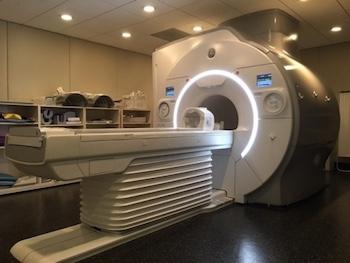
GE Healthcare SIGNA Premier 3T MRI at Stanford.
Photo Courtesy of Stanford Radiology
March 26, 2026 — GE HealthCare has announced a renewed research collaboration with Stanford Medicine Department of Radiology (Stanford Radiology) to establish a Center of Excellence that incorporates a portfolio of research and innovation programs aimed at defining the future of radiology. Programs will be across magnetic resonance (MR), computed tomography (CT), molecular imaging (MI), artificial intelligence (AI), pharmaceutical diagnostics and interventional radiology.
The expanded research collaboration is rooted in the Center of Excellence, focused on high performance imaging, advanced multimodality integration, and accelerated translational research. The Center of Excellence will leverage combined academic, clinical, and technical prowess between the organizations to create and translate innovations.
“GE HealthCare has long been a leader in imaging innovation, and our collaboration has consistently demonstrated how deeply their technological expertise can elevate scientific discovery and clinical practice,” stated Umar Mahmood, MD, PhD, Stanford Medicine Department of Radiology Chair. “Our renewed collaboration will enable us to push the boundaries of what advanced imaging can deliver for patients, aiming to set a new standard for what’s possible in radiology.”
Stanford Medicine Department of Radiology opened a second Cyclotron and Radiochemistry Facility in January 2025, reflecting the institution’s continued investment in academic research infrastructure.
“Stanford and GE HealthCare have a long-standing relationship achieving significant impact in medical imaging, translating bold ideas into clinical practice,” said Roland Rott, CEO and President of Imaging at GE HealthCare. “By combining Stanford’s world-class clinical expertise and pioneering mindset with our robust experience in advancing medical technology, we’re able to achieve more together and drive an integrated solutions approach to help shape the future of healthcare.”
Center of Excellence
The organizations will continue their legacy in MRI innovation through research projects that aim to drive accelerated and accurate neuro, cardiac, breast, body and pediatric imaging through advanced acquisition and reconstruction methods as well as advanced system hardware.
The program also encompasses multiple AI-driven initiatives, which include exploring advanced MR and CT software to help clinicians evaluate diagnostic images and using machine learning to advance protocoling and scheduling tools. Together, these efforts represent a deeply integrated, multidisciplinary program aimed at increasing diagnostic imaging accuracy and streamlining radiology workflows.
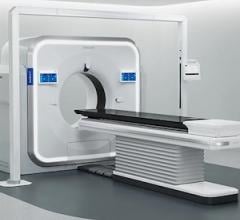
Stanford continues to collaborate with GE HealthCare scientists to help advance physics and clinical use of GE HealthCare’s Photonova Spectra1 photon-counting computed tomography (PCCT) system, recently cleared by the U.S. FDA, and built on GE HealthCare’s proprietary Deep Silicon detector technology. In addition, Stanford and GE HealthCare will collaborate in a clinical evaluation of new total body PET/CT technology2 to explore potential new clinical pathways that could aim to help improve patient outcomes.
Through collaborative efforts in interventional radiology, the research teams aim to help advance minimally invasive, image‑guided techniques to help improve experiences for clinicians and patients.
“Our collaboration with Stanford Radiology reflects a shared commitment to transforming scientific ideas into meaningful clinical translation,” commented Erin Angel, PhD, GE HealthCare Global Vice President, Research & Scientific Affairs. “Through the Center of Excellence, we are aligning research expertise and innovative technology to accelerate pioneering imaging techniques from the lab into real‑world clinical workflows that have the potential to genuinely improve patient care.”
A Productive History
GE HealthCare and Stanford Radiology have a long and productive history of advancing imaging through deep scientific collaboration and clinical translation. The collaboration has produced 153 funded research projects led by 44 Stanford faculty principal investigators, 184 peer‑reviewed manuscripts and 66 licensed patents, underscoring its sustained scientific impact.
Stanford has served as a key MR development and validation collaborator for GE HealthCare, contributing technical input and performance benchmarking that has influenced many innovations. For example, Stanford generated foundational research and clinical validation that helped develop the framework for GE HealthCare’s Sonic DL, innovative deep learning technology that can enable high-quality cardiac MRI in a single heartbeat. Additionally, Stanford conducted research to help shape key clinical features in GE HealthCare’s SIGNA Sprint 1.5T3, SIGNA Bolt 3T4, and SIGNA One5 AI-powered MRI workflow platform, all recently cleared by the U.S. FDA.
Previous CT research has delivered meaningful progress in protocol optimization, dose reduction, AI‑driven image quality, and evaluation and translation of emerging next‑generation CT technologies. Collaborative efforts in MI, particularly through advancements in PET/CT technology, including hybrid imaging and support of the Molecular Imaging Program at Stanford (MIPS), have significantly contributed to translational breakthroughs in oncology, cardiology, and neurology.
-
Photonova Spectra is 510(k) cleared with the U.S. FDA. Not CE Marked. Not available for sale in Europe, Canada, or any other region.
-
Omni with 128cm AFOV is CE marked. Available for sale in EU member states countries. Not approved or cleared by the U.S. FDA. Not available for sale in the U.S. and other non-EU member states countries.
-
SIGNA Sprint is 510(k) cleared by the U.S. FDA. Not CE marked. Not available for sale in all regions.
-
SIGNA Bolt is 510(k) cleared by the U.S. FDA. Not CE marked. Not available for sale in all regions.
-
SIGNA One represents features and content that are 510(k) cleared with SIGNA Bolt and SIGNA Sprint with Freelium by the U.S. FDA. Not CE marked. Not available for sale in all regions.
 October 05, 2026