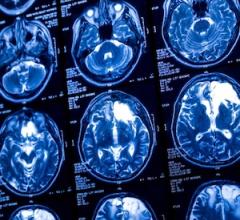
May 7, 2015 — New technology developed at the Martinos Center for Biomedical Imaging at Massachusetts General Hospital (MGH) may extend the benefits of magnetic resonance imaging (MRI) to many patients whose access to MRI is currently limited. A redesign of the wire at the core of the leads carrying signals between implanted medical devices and their target structures significantly reduces the generation of heat that occurs when standard wires are exposed to the radiofrequency (RF) energy used in MRI. The novel system is described in a paper published in the online Nature journal Scientific Reports.
"Clinical electrical stimulation systems such as pacemakers and deep-brain stimulators are increasingly common therapies for patients with a large range of medical conditions, but a significant limitation of these devices is restricted compatibility with MRI," says Giorgio Bonmassar, Ph.D., of the Martinos Center, senior and corresponding article of the paper. "The tests performed on our prototype deep-brain stimulation lead indicate a three-fold reduction in heat generation, compared with a commercially available lead; and the use of such leads could significantly expand how many patients may safely access the benefits of MRI."
For many years the primary limitation to the use of MRI in patients with implanted devices was the risk that the powerful magnetic fields would dislodge devices containing ferromagnetic (attracted by magnetic fields) metals, but the devices now available avoid using those metals. However, the RF energy used in MRI can increase the electrical current induced in the nonmagnetic metallic wires at the center of presently available device leads, producing heat that can damage tissues at the site where a stimulating signal is delivered. Even though the U.S. Food and Drug Administration (FDA) has authorized a group of "MR conditional" devices that can be used in some situations, those are limited to low-power scanners that cannot provide the information available from today's more powerful state-of-the-art MRI systems. It is estimated that around 300,000 patients worldwide are prevented from receiving MRI exams each year because of implanted devices.
The wires designed by the MGH/Martinos Center team use what is called resistive tapered stripline (RTS) technology that breaks up the RF-induced current increase by means of an abrupt change in the electrical conductivity of wires made from conductive polymers, a "cloaking" technique also used in some forms of stealth aircraft. After calculating the features required to produce an RTS lead that would minimize heat generation, the investigators designed and tested a deep-brain stimulation device with such a lead in a standard system used for MRI testing of medical implants - a gel model the size of an adult human head and torso. Compared with a commercially available lead, the RTS lead generated less than half the heat produced by exposure to a powerful MRI-RF field, a result well within current FDA limits.
Study co-author Emad Eskandar, M.D., of the MGH Department of Neurosurgery notes that the ability to conduct MR exams on patients with deep-brain stimulation implants would significantly improve the critical process of ensuring that the signal is being delivered to the right area, something that is not possible with computed tomography (CT) imaging. "For epilepsy patients and their providers, brain MRIs could provide much more accurate information about the sites where seizures originate and their relation to other brain structures, maximizing the effectiveness and improving the safety of implants that reduce or eliminate seizures. MR-compatible leads also would allow patients with brain implants to have MRIs of other parts of their body — knee, spine, breast — something that is currently prohibited," he said.
Bonmassar stressed that the team's RTS lead technology would be applicable to any type of active implant — including pacemakers, defibrillators and spinal cord stimulators. The research team is now pursuing an FDA Investigational Device Exemption that will allow clinical trials of devices with RTS leads. "The Obama administration's BRAIN initiative is sponsoring grant applications to study recording and/or stimulation devices to treat nervous system disorders and better understand the human brain," he said. "By pursuing these opportunities we hope that one day no patients will be denied access to state-of-the-art MRI examinations."
For more information: www.nmr.mgh.harvard.edu

 October 07, 2026