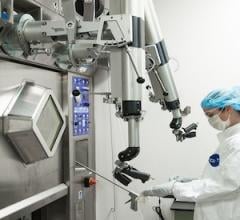
A strategic collaboration will focus on bringing advanced digital innovation and the newest generation of imaging technologies to UC San Diego Health to deliver high-quality, timely and consistent care that meets the individual patient’s health care needs. (Photo: Pixabay/UC San Diego Health)
Oct. 16, 2025 — A strategic collaboration between UC San Diego Health and GE HealthCare will focus on bringing advanced digital innovation and medical technologies to the health system to deliver high-quality, timely and consistent care that meets the individual patient’s health care needs.
"From early detection and diagnosis to seamless integration with the best treatment plan, each patient’s unique health journey can be propelled by leading-edge technologies and streamlined coordination of care,” said Patty Maysent, CEO of UC San Diego Health. “This collaboration will bring our patients advanced equipment, imaging clarity and data integration. By provisioning our expert care teams with these new tools, we are enhancing access, accelerating decision-making and delivering more personalized, timely care for every patient.”
Through the joint effort, UC San Diego Health will leverage the newest generation of imaging systems, including X-ray, ultrasound, computed tomography (CT), positron emission tomography (PET), magnetic resonance imaging (MRI), in combination with artificial intelligence (AI) tools to help optimize efficient processes.
“By equipping our clinicians and imaging teams with advanced technology and training, we empower our teams to deliver more accurate diagnoses with shorter wait times — driving more precise, more efficient and more effective treatment across all service lines,” said Christine Chung, MD, professor of radiology at University of California San Diego School of Medicine and radiologist at UC San Diego Health.
“When a patient is undergoing screening for a diagnosis related to a life-threatening disease, they want to know the results as quickly as possible so we can work together for the right individualized treatment plan. Having access to state-of-the-art equipment leads to an overall better experience for doctors and their patients.”
The latest in technologies will be integrated across facilities and clinical teams, including pioneering theranostics, which combines diagnostics and therapeutics to provide a more precise approach to treating diseases, particularly cancer.
“Strategic hospital alliances allow us to take important steps for new solutions that deliver better results for the patients who rely on us,” said Brendan Kremer, chief operating officer at UC San Diego Health. “Standardizing future-focused technology for greater system interoperability sets new standards for academic medical centers and broadens our care service offerings in our growing network across the San Diego region.”
UC San Diego Health, the region’s only academic health system, is dedicated to delivering outstanding patient care through commitment to community, groundbreaking research and inspired teaching. For 2025-26, U.S. News & World Report ranked UC San Diego Health as the best hospital system in San Diego and among the nation’s best in nine adult medical and surgical specialties, including cancer, cardiology, geriatrics, neurology and pulmonology. The 1,011-bed health system includes three hospitals — Hillcrest Medical Center, Jacobs Medical Center and East Campus Medical Center — as well as Sulpizio Cardiovascular Center, Moores Cancer Center, Shiley Eye Institute, Koman Family Outpatient Pavilion, McGrath Outpatient Pavilion, and Altman Clinical and Translational Research Institute. The health system also includes primary care and same-day services at clinics throughout Southern California.
For more information, please visit https://health.ucsd.edu

 October 09, 2026