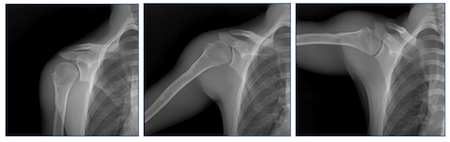
Researchers compared two well-established surgical treatment options to identify which technique most effectively restores native shoulder biomechanics to help inform pre-surgical planning. Using DDR to non-invasively image the shoulder while in motion, they aimed to quantify the scapular contributions to shoulder elevation in patients after anatomic total shoulder arthroplasty and reverse total shoulder arthroplasty.
March 2, 2026 — Emory Healthcare researchers, led by Dr. Eric R. Wagner, recently published a study comparing two well-established treatment options for cuff-intact glenohumeral osteoarthritis in the shoulder. Using Konica Minolta's Dynamic Digital Radiography (DDR), the team evaluated which surgical technique most effectively restores native shoulder biomechanics. The alterations in scapular motion and their clinical significance in patients with glenohumeral osteoarthritis following total shoulder arthroplasty is poorly understood.
Using DDR to non-invasively image the shoulder while in motion, the researchers aimed to quantify the scapular contributions to shoulder elevation in patients after anatomic total shoulder arthroplasty (aTSA) and reverse total shoulder arthroplasty (rTSA). The study is available in the Journal of Shoulder and Elbow Surgery.
While it is well known that after undergoing shoulder arthroplasty, patients have a reduced scapulohumeral rhythm (SHR) compared to healthy subjects, it remains unclear whether the lower SHR is related to preoperative pathology or surgical intervention. Deciding between the aTSA and rTSA techniques may be difficult in younger, more active patients. In a retrospective analysis of 71 shoulders treated with either arthroplasty technique compared to 32 normal controls, the authors report similar SHR for aTSA and rTSA, although neither achieved physiologic biomechanics. They also found that while the rTSA cohort had a fairly constant SHR throughout shoulder elevation, aTSAs had a higher SHR in the second half of shoulder motion compared to the first half, suggesting higher glenohumeral involvement as abduction progresses.
“While our study reports a significant improvement in scapular motion post-arthroplasty using either aTSA or rTSA, native scapulohumeral biomechanics is not restored by either surgical technique,” says Sameer R. Khawaja, MD, orthopaedic surgery resident at Baylor College of Medicine. “Our findings suggest that scapular contributions to overall joint biomechanics is partially and equally restored following aTSA and rTSA, however, additional studies are needed to explore the clinical significance. Our goal is to help inform pre-surgical planning regarding selection of technique and implant positioning, particularly for younger active patients where restoring shoulder function and native kinematics may be more desired. We are currently finalizing a study examining the correlation between scapular motion and patient outcomes using DDR.”
“By using DDR to measure SHR and quantify the glenohumeral and scapulothoracic contributions to humerothoracic abduction, the Emory team has demonstrated a method to quantify functional outcome post-arthroplasty and laid the foundation for enhanced range of motion in future shoulder arthroplasties,” says John Sabol, PhD, Clinical Research Manager at Konica Minolta Healthcare.
DDR is a novel, low-dose X-ray imaging technique available from Konica Minolta Healthcare that captures as series of static images acquired in quick succession, known as a cinegrams, providing an innovative way to obtain detailed images of complex joints like shoulders while in motion. By acquiring a series of images at high speed, DDR generates a cineloop that enables clinicians to visualize anatomical motion over time (cineradiography), enhancing the system’s diagnostic capabilities.
Konica Minolta Healthcare will showcase DDR during the American Academy of Orthopedic Surgeons (AAOS) 2026 Annual Meeting, March 2-6, 2026, in New Orleans, in booth 2813.
To learn more, please visit https://healthcare.konicaminolta.us.
 October 09, 2026