January 26, 2010 - Preoperative computed tomography (CT) may help reduce unnecessary surgeries in women of reproductive age with suspected acute appendicitis, according to a new study appearing in the February issue of the journal Radiology.
“We found that rising utilization of preoperative CT over the past decade, along with advances in CT technology, coincided with a significant decrease in negative appendectomies among women 45 years and younger,” said Courtney A. Coursey, M.D., a radiologist at Emory University in Atlanta, who co-authored this study while a radiology fellow at Duke University Medical Center in Durham, N.C.
Acute appendicitis is inflammation of the appendix, a fingerlike organ attached to the large intestine in the lower right area of the abdomen. An inflamed appendix can perforate, resulting in a life-threatening infection.
While surgical removal of the appendix is the common treatment for acute appendicitis, diagnosis is not always clear clinically. Prior to the advent of CT, in inconclusive cases, physicians would often remove the appendix as a precaution. Historically, this resulted in a high rate of negative appendectomies with negative appendectomy rates of 20 percent to 25 percent and as high as 40 percent in women considered acceptable. Negative appendectomy rates are generally higher in women due to gynecologic pathology that can confound appendicitis diagnosis. For instance, symptomatic ovarian cysts can cause lower abdominal pain similar to that from appendicitis.
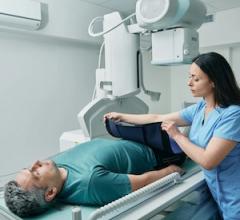
CT is now often used in the evaluation of suspected appendicitis and has the potential to reduce the negative appendectomy rate. An acutely inflamed appendix appears thick-walled on CT, and adjacent inflammatory changes are often visible. If the appendix is perforated, fluid next to the appendix may be visible on CT.
There have been contradictory reports in the medical literature regarding whether or not the increased use of CT has resulted in a lower negative appendectomy rate. To determine the impact of CT on negative appendectomy rates, Dr. Coursey and colleagues reviewed a surgical database of 925 patients who underwent urgent appendectomy at Duke between January 1998 and September 2007.
The percentage of patients who had preoperative CT increased significantly over the 10-year period, from 18.5 percent in 1998 to 93.2 percent in 2007. The increased use of CT corresponded with a lower negative appendectomy rate for women age 45 years or younger. The negative appendectomy rate among those women dropped from 42.9 percent in 1998 to 7.1 percent in 2007. The shift from single- detector CT to multidetector CT and other advances in CT technology also correlated with a reduction in false-positive diagnoses.
“CT is a very helpful test for women 45 years and younger based on the overall trends we observed during the 10-year period,” Dr. Coursey said.
Increased use of preoperative CT at Duke did not coincide with a lower negative appendectomy rate in men, regardless of age, or in women older than 45 years. Dr. Coursey suggested that the lack of a decline might be attributable to a very low negative appendectomy rate in those groups at the beginning of the study period.
“Although it’s a terrific test, CT and our interpretation of CT images are not 100 percent perfect,” Dr. Coursey said. “Therefore, it may be difficult to improve significantly upon diagnosis in groups with an already low negative appendectomy rate.”
Reference: “Making the Diagnosis of Acute Appendicitis: Do More Preoperative CT Scans Mean Fewer Appendectomies? A 10-year Study.” Collaborating on this paper with Dr. Coursey were Rendon C. Nelson, M.D., Mayur B. Patel, M.D., Courtney Cochran, B.S.R.T., R.D.M.S., Leslie G. Dodd, M.D., David M. DeLong, Ph.D., Craig A. Beam, Ph.D., and Steven Vaslef, M.D., Ph.D.
Radiology is edited by Herbert Y. Kressel, M.D., Harvard Medical School, Boston, Mass., and owned and published by the Radiological Society of North America, Inc. (http://radiology.rsnajnls.org/).
For more information: www.rsna.org

 October 07, 2026