June 17, 2009 - Sanford Children’s Hospital is the first children’s facility in the U.S. to offer new CT technology to patients that significantly reduces a child’s radiation exposure during a CT scan.
The new Adaptive Statistical Iterative Reconstruction (ASIR) technology works with GE’s 64-slice CT scanner to reduce radiation levels by 30-40 percent while still providing quality images. Prior to adding the technology, Sanford Children’s physicians and radiologists were already manually reducing radiation levels by 30 percent. Combining ASIR with these Sanford protocols means around a 60 percent reduced exposure to patients compared to the original CT scanner.
“Although available to adults and children alike, this new technology is especially groundbreaking for children and young adults whose cells pose some differences when compared to adult cells,” said Charles P. O’Brien, M.D., president, Sanford USD Medical Center and Sanford Children’s Hospital. “Children and young adults’ cells are dividing rapidly, which makes them more vulnerable and susceptible to harm. With this new technology, we can administer just the dose needed to achieve quality images.”
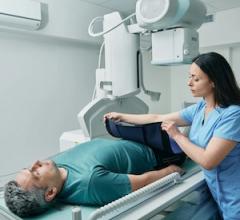
Not only will this new technology be located with the 64-slice CT scanner in Sanford Children’s Hospital, but also with the 64-slice CT scanner in Sanford’s emergency department, Trauma 5. A CT scan, also called computerized tomography or just CT, is an X-ray technique that produces internal images in cross section rather than the overlapping images typically produced by conventional X-ray exams.
“We believe in ‘imaging gently’ to achieve quality images,” added O’Brien. “Having this technology in two locations is another example of the quality investments Sanford Children’s makes for the future and health of our young patients.”
ASIR is a new, advanced reconstruction technique that reduces image noise and improves low contrast detectability and image quality. This technology produces an enhanced image and scan and a reduced radiation dose to patients, providing improved patient care.
For more information: www.sanfordchildrens.org

 October 07, 2026