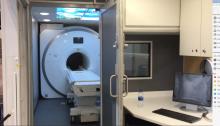
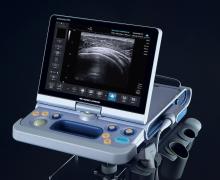
Diagnostic procedures have always been a cornerstone of early prognosis and patient triaging. With a mass preference shift to noninvasive disease diagnosis as well as treatment, molecular imaging has been gathering remarkable momentum over the past few decades. Although a relatively new area in the world of biomedical research, molecular imaging technology has traversed faster over the years to where it stands today, which prominently attributes to its readiness for noninvasive diagnosis.


As we close this issue, the ITN team is packing their bags to head out to Colorado to meet with industry leaders and learn about the latest in technology at the Society for Imaging Informatics in Medicine (SIIM) conference in Aurora. This year’s theme of Explore. Empower. Engage. encourages attendees to explore innovative products and solutions, empower themselves in transformative learning, and engage with innovators, educators and entrepreneurs.


A mobile C-arm is a medical imaging device that is based on X-ray technology and can be used flexibly in various ORs within a clinic. The name is derived from the C-shaped arm used to connect the X-ray source and X-ray detector to one another. Since the introduction of the first C-arm in 1955, the technology has advanced rapidly.


Providing cancer patients an opportunity for increased participation in their treatment, Varian announced its collaboration with Tennessee Oncology for the implementation of Noona, a software application for managing patient symptoms and capturing patient reported outcomes (PROs) in cancer care. As part of this collaboration, Noona will be deployed at more than 30 centers across Tennessee, with the goal of reaching approximately 25,000 patients per year.

Springfield Clinic implemented 14 Carestream DRX-Evolution Plus Systems, two Carestream DRX-Ascend Systems and one Carestream DRX-1 System to deliver high-quality imaging for its patients. The medical group’s radiology staff performs 65,000 imaging exams on these systems annually.

New Cleveland Clinic-led research shows that artificial intelligence (AI) can use medical scans and health records to personalize the dose of radiation therapy used to treat cancer patients.


Incidental findings often are not afforded the weight of primary ones. But not following up on these incidentals can lead to disaster for the patient and provider. Low-level artificial intelligence can help.


Blue Earth Diagnostics, a molecular imaging diagnostics company, announced that a definitive agreement has been signed for Bracco Imaging S.p.A. to acquire all outstanding shares of privately-held Blue Earth Diagnostics from leading healthcare company Syncona for $450 million plus closing adjustment estimated at $25 million.


Radiology reports may contain information essential to figuring out a patient’s condition. But this information is often locked in free text, which can make it difficult to search, analyze and summarize report data.  That’s where natural language processing (NLP) might come in.


Subscribe Now