

Blog | Information Technology | July 01, 2019
Explore, Empower and Engage in AI

As we close this issue, the ITN team is packing their bags to head out to Colorado to meet with industry leaders and learn about the latest in technology at the Society for Imaging Informatics in Medicine (SIIM) conference in Aurora. This year’s theme of Explore. Empower. Engage. encourages attendees to explore innovative products and solutions, empower themselves in transformative learning, and engage with innovators, educators and entrepreneurs.
Leading up to this event, contributing editor Greg Freiherr highlighted some of its key content, including conversations with industry luminaries, on itnonline.com. And once again, we are seeing the recurring theme of artificial intelligence (AI) prevail. Freiherr said, in his conversation with Charles E. Kahn, Jr., M.D., MS, professor and vice chair of radiology at the University of Pennsylvania Perelman School of Medicine in Philadelphia in the podcast Making AI Safe, Effective and Humane For Imaging, “that it has, in fact, been widely used in medical imaging for decades and can be seen today not only in computer-aided detection systems in mammography but in the speech recognition systems that radiologists depend on daily to report their findings.”
As radiologists learn more about what AI can and can’t do, they are coming to embrace this technology, Kahn tells Freiherr. “In many ways AI will be a tool that will help us practice more effectively,” he said in the podcast. “That will reduce some of the cognitive workload; will reduce some of the tedium of dealing with medical images.”
But Kahn noted in the podcast that to be widely accepted, AI must hurdle certain obstacles. One is trust; another is effectiveness. The trick to achieving both, he said, is to show “that an algorithm that you built in your setting will actually work in my setting.”
In the podcast, Kahn elaborated on the need for these algorithms to be “humane.” Kahn, who has authored more than 110 scientific publications and edits RSNA’s online journal about AI in radiology, says that to be humane, AI must improve “the care of our patients” while preserving the “dignity, beneficence and autonomy” of physicians.
AI in Women’s Health
This issue also delves into AI as it relates to personalized care in women’s health. Author Samir Parikh points out that contrary to what many people believe, AI has played a role in breast screening technology for a number of years. In his article, Artificial Intelligence: The Key to Personalized Care, he discusses how some companies have been leveraging AI in device development as early as 2006, when Hologic trained its first piece of technology to classify a patient’s breast density through breast tissue pattern and texture analysis. More than a decade later, AI has continued to progress. “The benefit of time has not only allowed R&D professionals to learn more about the technology, but has also allowed the AI technology to become more precise thanks to the growing body of images in the database,” Parikh stated in the article. “The industry has carefully watched AI’s technological evolution, slowly showing its support as more benefits are realized, and today we’re seeing many radiologists lean in and embrace AI with open arms.
“There are countless possibilities to impact the future of global healthcare and our journey in AI is the first big step toward breakthrough that will change the landscape of personalized medicine,” he continued. “It’s not a matter of ‘if,’ it’s a matter of when.”
You can listen to Freiherr’s podcast at https://bit.ly/2XpkuVm, and follow other SIIM show coverage, at https://bit.ly/2wA9EzZ. Parikh’s article can be found on page 40 of this issue.
Smart Algorithm Extracts Data from Radiology Reports
PODCAST: Why Blockchain Matters In Medical Imaging
PODCAST: How to Fix Your Enterprise Imaging Network
PODCAST: 5 Low-Cost Ways To Slow Hackers
Related Content

Feature | Artificial Intelligence | Kyle Hardner
A radiologist pulls up a chest CT scan flagged for a pulmonary nodule. One artificial intelligence (AI) tool writes its ...
 September 09, 2026

Feature | Artificial Intelligence | Kyle Hardner
Could the era of the empowered patient change how imaging reports are structured and presented? It’s a question on the ...
August 03, 2026 
News | PACS
July 8, 2026 — Freeland Systems, a cloud PACS and clinical imaging software company, has launched its new customer ...
July 10, 2026 
News | Digital Pathology
June 15, 2026 — Leica Biosystems is expanding the availability of its Aperio GT Elite digital scanner into the EMEA ...
June 15, 2026 
News | Imaging Software Development
June 10, 2026 — DeepHealth, Inc., a wholly owned subsidiary of RadNet, has launched Reporting Pro, an AI-powered ...
June 12, 2026 
News | Artificial Intelligence
April 20, 2026 — DeepTek, provider of the Augmento platform and deepc, the company behind deepcOS, have introduced a ...
April 23, 2026 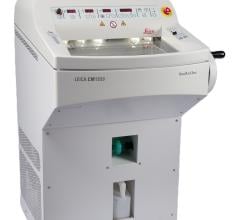
News | Digital Pathology
Feb. 11, 2026 — Leica Biosystems has announced the global launch of the Leica CM1950 Cryostat with DualEcoTec Cooling ...
February 11, 2026 
Feature | Cybersecurity | Kyle Hardner
As radiology practices shift toward cloud-based platforms and integrate AI-powered tools, will practices become more ...
January 14, 2026 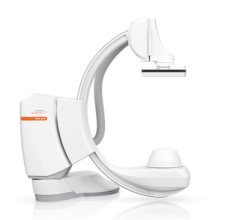
Nov. 30, 2025 — At RSNA 2025, Siemens Healthineers is presenting its new imaging chain Optiq AI1, which is powered by ...
December 01, 2025 
News | Archive Cloud Storage
Nov.18t, 2025 — Gradient Health recently announced its Atlas platform is now available on Google Cloud Marketplace ...
November 18, 2025 © Copyright Wainscot Media. All Rights Reserved.

Subscribe Now