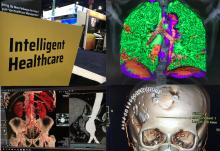
The global teleradiology market is served by a broad range of vendors, including international players with operations in multiple countries, and local vendors significant in their domestic country/sub-region, many producing 100,000+ teleradiology readings of diagnostic images annually. 


One year ago, the ITN team was literally packing our bags and preparing to get on a plane heading toward the Healthcare Information and Management Systems Society (HIMSS) annual conference in Orlando. COVID-19 had recently become a global topic of growing concern. But we held our breath.


Dense breast tissue can hide cancers in mammograms in about half of women. Supplemental imaging is often needed to accurately diagnose these patients, avoid false positives and avoid needless tissue biopsies. Breast ultrasound and breast magnetic resonance imaging (MRI) can be used to see through dense tissue to better identify cancers and avoid the need for many biopsies, however, MRI offers more specificity.  


More than a decade ago, there was an alarming, rapid rise in ionizing radiation exposure in the U.S. population that was mainly driven the increased use of medical imaging. One of the biggest drivers was the rapid expansion of computed tomography (CT). However, radiology society driven campaigns to lower doses and new technologies developed by imaging systems vendors have succeeded in cutting radiation exposure rates in the most recent assessment.


Recent advances in ultrasound image systems seen over the past year include the integration of artificial intelligence (AI), automation of functions and measurements, introduction of very specialized tool sets, the rapid growth in point-of-care systems, improved ergonomics, and on the horizon, the development of therapeutic ultrasound systems for cardiovascular and cancer therapies.


March 4, 2021 — Twisted Ceptors, Inc. announced University Diagnostic Institute (UDI) has completed integration with the MIMIC Diagnostic Sharing Network. All UDI patients’ images and reports are now safely stored and shareable within the patient centric eco-system. Integration was completed and fully operational within one week.

Subscribe Now