Guerbet announced that the U.S. Food and Drug Administration (FDA) has approved Dotarem (gadoterate meglumine), a gadolinium-based contrast agent (GBCA) indicated for intravenous use with magnetic resonance imaging (MRI) in brain (intracranial), spine and associated tissues in adult and pediatric patients (2 years of age and older) to detect and visualize areas with disruption of the blood brain barrier (BBB) and/or abnormal vascularity.
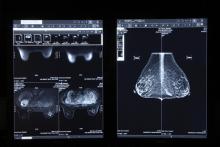
Carestream announced new measurement tools for chiropractic professionals that make its computer radiography (CR) systems with acquisition/mini-PACS (picture archive and communications system) software an even more attractive and efficient digital image capture and management solution. These systems can be purchased from Carestream or through their authorized Carestream dealers.

Calgary Scientific Inc. has entered into a partnership with Clinisys, to develop electronic medical record (EMR) solutions for healthcare practitioners. The agreement between the two Alberta-based companies will see Calgary Scientific’s Health Canada and U.S. Food and Drug Administration (FDA) diagnostically-cleared medical imaging solution, ResolutionMD, integrated into Clinisys’s cloud-based EMR solution. The integration of powerful visualization, collaboration and mobile tools with the patient record helps clinics to realize many benefits including high quality diagnostics and improved workflows, resulting in a complete circle of care for healthcare practitioners and their patients.

From athletes to individuals suffering from osteoporosis, bone fractures are usually the result of tiny cracks accumulating over time — invisible rivulets of damage that, when coalesced, lead to that painful break.


Northwest Community Healthcare (NCH) is unveiling new imaging and lab results functionality for its mobile app, MyNCH, which allows NCH Medical Group patients to view their lab and imaging results with just the tap of a finger on their smartphone.


For many years mammographers have been saddled with low reimbursements. Recognizing this, women’s health advocates lobbied successfully last decade for higher rates for mammograms produced with digital equipment.  


United Medical Center (UMC) is a non-profit, full-service community hospital serving Southeast Washington, D.C. and nearby Maryland communities. Though rich in African-American heritage, the community faces many economic challenges. 


In an era of healthcare reform and a push to meet appropriate use guidelines for tests, imaging and therapy amid declining reimbursements, there has been much discussion about implementation of clinical decision support (CDS) software. There is apprehension by some physicians who view CDS as technology telling doctors how to practice medicine. There are others in healthcare who are concerned about adding cost with the implementation of this software and how it will be updated based on the most current clinical data and practice guidelines. However, if implemented in a way where it is integrated with workflow and accepted by the physicians and hospital leadership, CDS has helped some hospitals meet appropriate use criteria and reduce unnecessary tests, which in turn helped reduce healthcare costs.


The benefits of computer-aided detection (CAD) for mammography images can be a polarizing topic for many radiologists. The technology has proven to be beneficial in detecting breast calcifications, and today’s CAD software has nearly perfect accuracy in detecting these calcifications. The software has also been noted to help inexperienced radiologists with detecting suspicious areas of breast tissue that may require special attention. However, CAD has not yet proven to be as accurate in its detection of tumors, and for radiologists with a more experienced eye, the software has not made itself as useful. CAD developers are making specific changes to the software that allows for increased visual clarity, context and medical history to make this technology more effective for radiologists across the board.


Subscribe Now