
Sept. 29, 2026 — Visiana has announced that the U.S. Food and  Drug Administration (FDA) has granted 510(k) clearance for BoneXpert, software that uses machine learning to determine bone age from hand radiographs. BoneXpert is cleared to support pediatric radiologists in assessing bone age in patients aged 2 to 21 years according to the Greulich-Pyle method.
Sept. 23, 2026 — GE HealthCare has announced a new collaboration with a research team at Mass General Brigham to explore how generative artificial intelligence (AI) could help radiation oncology teams quickly access and interpret the information involved in planning and delivering cancer treatment that is often spread across various systems.


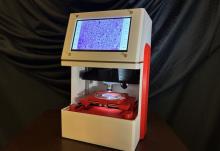
As recently as a decade ago, pathology technology was expected to become more expensive, larger and more precise. Yet in the era of artificial intelligence (AI), the opposite seems to be holding true.

“There’s this new trend of innovation, precisely the opposite of what you would expect, which is courting imperfections,” says Michael John Fanous, PhD, founder and CEO of FanousPhotonics. “Because of deep learning, you’re allowed to make certain concessions or compromises, and then compensate for them after the fact.”


Sept. 29, 2026 — A recently published study shows that using artificial intelligence to track which pathologies radiology residents saw each day made it possible to identify gaps in their clinical exposure and provide supplemental, targeted teaching cases. This approach helped ensure that residents were exposed to the full breadth of pathology needed for training, the study authors said. 

Sept. 27, 2026 — Siemens Healthineers recently launched Accela, a radiotherapy solution engineered around NeoArc, combining speed and precision for a broad range of cases while improving the scalability of complex treatments and reducing the time patients spend in radiotherapy treatment.

Sept. 29, 2026 — A research team at the University of Virginia (UVA) led by Timothy Bullock, PhD, has published results from a Focused Ultrasound Foundation-funded preclinical study examining whether targeting immunosuppressive immune cells could enhance thermally ablative focused ultrasound for the treatment of triple-negative breast cancer (TNBC). The approaches did not improve focused ultrasound–mediated tumor control, but the results revealed several biological and safety challenges that could inform future combination strategies.

Sept. 29, 2026 — Prenuvo has launched the Prenuvo Research Network (The Network) to shift the healthcare paradigm from reactive to proactive. The Network is an initiative bringing together Prenuvo's AI tools, internal R&D teams, scientists and academic institutions to build the evidence base for proactive, preventive medicine.

Sept. 29, 2026 — The American Society for Radiation Oncology (ASTRO) has named Siemens Healthineers the inaugural recipient of its Corporate Partner Award, a new recognition honoring an organization whose extraordinary commitment, generosity and collaboration have made a lasting impact on the field of radiation oncology and patients worldwide.

Imaging in Switzerland 2027

Sept. 28, 2026 — Penn Medicine and Ion Beam Applications (IBA) have formed Noventra Oncology Alliance, a new joint venture designed to help healthcare providers successfully develop, implement, and optimize proton therapy and advanced radiation oncology programs. The new company will provide an integrated service offering spanning strategic and financial planning, clinical readiness, program implementation and long-term operational performance.

Subscribe Now