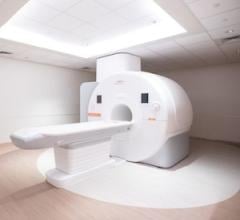
March 13, 2017 — The Pharmacovigilance Risk Assessment Committee (PRAC) of the European Medicines Agency recently released new recommendations on procedures employing gadolinium-based contrast agents, in which the committee recommended suspension of marketing authorization for four agents.
The EMA initiated a review last March of the risk of gadolinium deposition in brain tissue following the repeated use of gadolinium contrast agents in patients undergoing magnetic resonance imaging (MRI) scans.1 After carrying out an almost year-long, in-depth review of the risk of brain deposits and of the overall safety of these products, the PRAC recommendations2 are as follows:
“EMA’s Pharmacovigilance and Risk Assessment Committee (PRAC) has recommended the suspension of the marketing authorizations for four linear gadolinium contrast agents because of evidence that small amounts of the gadolinium they contain are deposited in the brain.
The agents concerned are intravenous injections of gadobenic acid, gadodiamide, gadopentetic acid and gadoversetamide, which are given to patients to enhance images from magnetic resonance imaging (MRI) body scans. (...)
The four agents recommended for suspension are referred to as linear agents. Linear agents have a structure more likely to release gadolinium, which can build up in body tissues.
Other agents, known as macrocyclic agents, are more stable and have a much lower propensity to release gadolinium. The PRAC recommends that macrocyclic agents3 be used at the lowest dose that enhances images sufficiently to make diagnoses and only when unenhanced body scans are not suitable.
Some linear agents will remain available: gadoxetic acid, a linear agent used at a low dose for liver scans, can remain on the market as it meets an important diagnostic need in patients with few alternatives. In addition, a formulation of gadopentetic acid injected directly into joints is to remain available because its gadolinium concentration is very low – around 200 times lower than those of intravenous products. Both agents should be used at the lowest dose that enhances images sufficiently to make diagnoses and only if unenhanced scans are not suitable. (...)”
The recommendations also note that “the companies concerned by this review have the right to request the PRAC to re- examine its recommendations.
The PRAC’s final recommendations will be sent to the Committee for Medicinal Products for Human Use (CHMP) for its opinion. Further details will be published at the time of the CHMP opinion.”
Guerbet, which markets the macrocyclic gadolinium-based contrast agents Dotarem and Artirem, as well as Optimark, a product belonging to the class of linear gadolinium-based contrast agents, voiced its agreement with the PRAC recommendations and said it does not intend to request a re-examination. The company said it is strongly committed to providing healthcare professionals with a comprehensive range of effective and safe contrast media in order to improve diagnosis, prognosis and quality of life for patients.
Watch the ITNtv video “MRI Gadolinium Contrast Retention in the Brain.”
Read the ITN feature story “Gadolinium May Remain in Brain After Contrast MRI.”
For more information: www.ema.europa.eu
References
1. http://www.ema.europa.eu/ema/index.jsp?curl=pages/medicines/human/referrals/Gadolinium- containing_contrast_agents/human_referral_prac_000056.jsp&mid=WC0b01ac05805c516f
2. Gadolinium Article-31 referral - PRAC concludes assessment of gadolinium agents used in body scans and recommends regulatory actions, including suspension for some marketing authorisations. 10/03/2017

 October 07, 2026