
Philips
222 Jacobs St.,
Cambridge, MA 02141
Product Categories:
Fusion Imaging Software, Angiography, Treatment Planning, PET-CT, Radiation Dose Management, Computed Tomography (CT), Magnetic Resonance Imaging (MRI), Ultrasound Imaging, Cardiovascular Ultrasound, Information Technology, Artificial Intelligence, Mobile Devices, Enterprise Imaging, Cardiac PACS, PACS
Fusion Imaging Software, Angiography, Treatment Planning, PET-CT, Radiation Dose Management, Computed Tomography (CT), Magnetic Resonance Imaging (MRI), Ultrasound Imaging, Cardiovascular Ultrasound, Information Technology, Artificial Intelligence, Mobile Devices, Enterprise Imaging, Cardiac PACS, PACS
RELATED CONTENT
Sponsored Content | Videos | Artificial Intelligence
In Artificial Intelligence 2018: What Radiologists Need to Know About AI, ITN Contributing Editor Greg Freiherr offers ...
 January 15, 2019
Sponsored Content | Videos | Cardiac Imaging
Robert Quaife, M.D., director of advanced cardiac imaging, University of Colorado Hospital, explains why advanced ...
January 09, 2019 
News | Artificial Intelligence
At the 2018 Radiological Society of North America (RSNA) Annual Meeting, Philips announced radiologists at the University of Utah Health are leveraging Philips Illumeo with adaptive intelligence to interact with imaging data to enhance physician expertise and efficiency. Initial results include productivity benefits in turnaround time, same-day readings and context-driven tool selection.
November 30, 2018 Sponsored Content | Videos | Artificial Intelligence
Here is an example of how artificial intelligence (AI) is helping radiologists with faster workflow to improve care ...
November 28, 2018 
Technology | Artificial Intelligence
Ahead of the 2018 Radiological Society of North America Annual Meeting (RSNA), Nov. 25-30 in Chicago, Royal Philips announced the introduction of the IntelliSpace Discovery 3.0 platform. IntelliSpace Discovery 3.0 is a comprehensive, open platform to enable the development and deployment of artificial intelligence (AI) assets in radiology, with the aim to support radiologists in their clinical and translational research.
November 20, 2018 
Feature | By Greg Freiherr
For the first time at the RSNA meeting, vendors of interventional products will have a dedicated area in which to ...
November 16, 2018 
Sponsored Content | Case Study | Enterprise Imaging
“The only constant in healthcare these days is change,” said Samantha E. Sizemore, chief operating officer/director of ...
November 07, 2018 
Feature | PET Imaging | By Greg Freiherr
Positron emission tomography (PET) is getting ready to venture outside oncology, cardiology and mainstream neurology. High on the list of new clinical turf is sports medicine.
November 07, 2018 
Sponsored Content | Case Study | Computed Tomography (CT)
The following is a summary of a study published in the European Journal of Radiology, 105 (2018) 216–220, by Victor ...
November 06, 2018 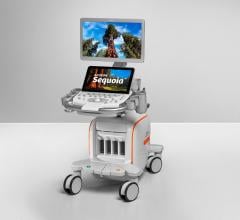
Feature | Ultrasound Imaging | By Jeff Zagoudis
As the world’s most utilized medical imaging modality, ultrasound is likely to be featured heavily at the 2018 Radiologi ...
November 05, 2018 © Copyright Wainscot Media. All Rights Reserved.

Subscribe Now