
RELATED CONTENT
News
Radiologists can earn American Board of Radiology Maintenance of Certification (MOC) credit, engage referring physicians and demonstrate value in emerging healthcare delivery systems by using American College of Radiology (ACR) Value-Based Radiology Practice Quality Improvement (PQI) Project tools and resources.
 April 16, 2015
News
The Centers for Medicare and Medicaid Services (CMS) has renewed the status of the American College of Radiology’s (ACR) National Radiology Data Registry (NRDR) as a Qualified Clinical Data Registry. With the renewal, radiology professionals can continue to use the NRDR to meet quality reporting requirements under the Physician Quality Reporting System (PQRS).
April 01, 2015 
News
By downloading the American College of Radiology (ACR) 2015 Annual Meeting App, radiology professionals can access up-to-the-minute meeting information. This includes CME session details, featured faculty and exclusive offers.
March 30, 2015 
News
The sixth Image Wisely Radiation Safety Case —Optimizing Radiation Use During a Difficult IVC Filter Retrieval — is now available to help radiologists, imaging technologists and medical physicists to assess their understanding of important radiation safety concepts — including dose monitoring and optimization. This is the latest in a series of free, online and mobile-compatible Image Wisely educational offerings, developed with the assistance of the American College of Radiology (ACR).
March 20, 2015 
Feature
Providers can now meet Medicare quality reporting requirements to receive payment for computed tomography (CT) lung cancer screening by submitting data to the new Centers for Medicare & Medicaid Services (CMS)-approved American College of Radiology (ACR) Lung Cancer Screening Registry.
March 09, 2015 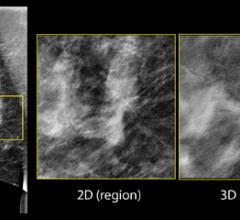
Feature | Lynn Tangorra
Breast density may be one of the strongest predictors of the failure of mammography to detect cancer, according to an educational session presented at the 2014 Radiological Society of North America (RSNA) conference in December. The topic of breast density was a prominent one at the meeting, and many healthcare providers are beginning to look beyond just using traditional mammography to assess whether or not a woman has breast cancer. The push for additional screening is becoming prevalent, and many states are enacting laws that require women to be notified if they have dense breast tissue and what that means in terms of the ability to accurately find cancer.
March 03, 2015 
Technology
New and updated American College of Radiology (ACR) Appropriateness Criteria now help healthcare providers choose the most appropriate medical imaging exam or radiation therapy for more than 1,000 clinical indications. These continually updated criteria are a national standard developed by expert panels of physicians from many different medical specialties.
March 02, 2015 
Feature | Dave Fornell
Cardiac imaging accounts for about one-third of the source of X-ray radiation dose for all medical imaging. Expanding use of computed tomography (CT) for cardiac evaluations, use of nuclear imaging for myocardial perfusion exams and more complex transcatheter procedures in the cath lab have all increased patient exposure in recent years.
February 18, 2015 News
Quality and safety sessions at the 2015 annual meeting of the American College of Radiology (ACR 2015) can help radiology professionals address hot-button issues, including radiation dose optimization, mammography value, quality metrics and pay-for-performance measures. The all-new ACR 2015, The Crossroads, will be held May 17–21 at the Marriott Wardman Park Hotel in Washington, D.C.
February 18, 2015 
Feature
A set of guidelines developed to help standardized lung cancer screening would have generated considerably fewer false-positives than the National Lung Screening Trial produced, according to a new retrospective study.
February 11, 2015 © Copyright Wainscot Media. All Rights Reserved.

Subscribe Now