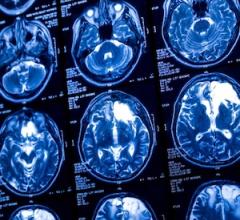
May 25, 2017 — A U.S. Food and Drug Administration (FDA) review of the safety ramifications of gadolinium-based contrast agents for magnetic resonance imaging (MRI) has not identified adverse health affects from gadolinium retained in the brain. The FDA released a drug safety communication regarding all gadolinium-based contrast agents (GBCAs) earlier this week.
The FDA said GBCAs may be associated with some gadolinium retention in the brain and other body tissues. However, the FDA said there is no evidence to date that gadolinium retention in the brain from any of the GBCAs is harmful. The agency said this includes GBCAs associated with higher retention of gadolinium. These findings prompted the FDA say restricting GBCA use is not warranted at this time. FDA said it will continue to assess the safety of GBCAs and plan to have a public meeting to discuss this issue in the future.
The agency said it evaluated scientific publications and adverse event reports submitted to FDA. Some human and animal studies looked at GBCA use over periods longer than a year. These publications and reports show that gadolinium is retained in organs such as the brain, bones and skin. The publications show that linear GBCAs retain more gadolinium in the brain than macrocyclic GBCAs. However, the review did not identify adverse health effects related to this brain retention.
The FDA continues to assess the safety of GBCAs. FDA’s National Center for Toxicological Research is conducting a study on brain retention of GBCAs in rats. Other research is also being conducted about how gadolinium is retained in the body. FDA will update the public when new information becomes available, and a public meeting to discuss results will be held in the future.
The intravenous gadolinium contrast media specifically mentioned in the safety communication includes:
• Ablavar (gadofosveset trisodium)
• Dotarem (gadoterate meglumine)
• Eovist (gadoxetate disodium)
• Gadavist (gadobutrol)
• Magnevist (gadopentetate dimeglumine)
• MultiHance (gadobenate dimeglumine)
• Omniscan (gadodiamide)
• OptiMARK (gadoversetamide)
• ProHance (gadoteridol)
The FDA recommendations for healthcare professionals and patients remains unchanged from July 2015, when FDA first informed the public that it was investigating this potential risk with GBCAs.
The agency said the agents should be used as is appropriate when considering the use of any medical imaging agent. It also stated healthcare professionals should limit GBCA use to circumstances in which additional information provided by the contrast agent is necessary and to assess the necessity of repetitive MRIs with GBCAs.
The FDA said retention of gadolinium affects only GBCAs and does not apply to other types of scanning agents used for other imaging procedures, including iodine-based contrast used in X-ray and computed tomography (CT) imaging or radioisotopes used in PET or SPECT nuclear imaging.
For more information, watch the VIDEO “MRI Gadolinium Contrast Retention in the Brain.” This is an interview with Emanuel Kanal, M.D., director of MRI services and professor of radiology and neuroradiology at the University of Pittsburgh Medical Center, at RSNA 2016. He was involved in the key studies regarding gadolinium retention in the brain.
Read the article Gadolinium May Remain in Brain After Contrast MRI
Read the article MRIs During Pregnancy Are Safe, But Gadolinium Scans May Increase Risk to Fetus
For more information: www.fda.gov/Safety/MedWatch/SafetyInformation/SafetyAlertsforHumanMedicalProducts/ucm559709.htm

 October 07, 2026