

Blog | Artificial Intelligence
The Radiological Society of North America’s (RSNA) 2018 conference continued its theme of artificial intelligence (AI) ...
 January 29, 2019
Feature | Vendor Neutral Archive (VNA) | By Jeff Zagoudis
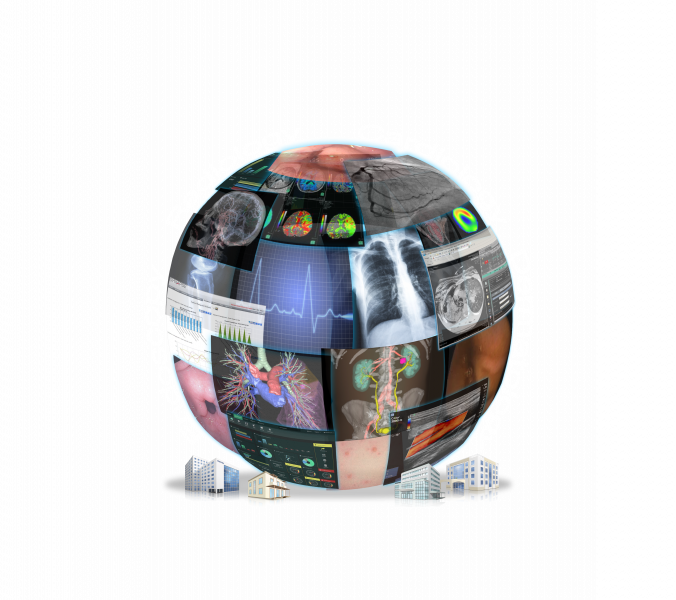
As healthcare technology continues to evolve at a rapid pace, the amount of patient data being collected continues to ...
January 29, 2019 
Videos | Artificial Intelligence
ITN Editor Dave Fornell takes a tour of some of the most interesting new artificial intelligence (AI) imaging ...
January 28, 2019 Sponsored Content
Videos | Radiology Imaging
Contrast Diversification in CT Imaging Across imaging departments, supply variability and growing demand are creating ...
September 08, 2026 
News | Proton Therapy
IBA (Ion Beam Applications SA) announced the opening of the Apollo Proton Cancer Centre in Chennai, India, and the first treatment of a patient with proton therapy in Southern Asia.
January 28, 2019 
News | Digital Radiography (DR)
The Radiological Society of North America (RSNA) presented its seventh Alexander R. Margulis Award for Scientific Excellence to Paras Lakhani, M.D., from Thomas Jefferson University Hospital (TJUH) in Philadelphia, for the article, “Deep Learning at Chest Radiography: Automated Classification of Pulmonary Tuberculosis by Using Convolutional Neural Networks.” Lakhani was presented with the award at the 2018 RSNA annual meeting, Nov. 25-30 in Chicago.
January 28, 2019 
News | Pediatric Imaging
RadiologyInfo.org recently launched RadInfo 4 Kids, a new section of the website with videos, stories, games and activities to help children prepare for radiology exams.
January 28, 2019 Sponsored Content
Sponsored Content
Videos | Radiology Imaging
Today’s radiology teams are faced with a wide range of growing complexities such as patient and procedure variabilities ...
June 24, 2026 
Technology | Mobile Devices
January 28, 2019 — RamSoft Inc. showcased three mobile apps for radiology information system/picture archiving and ...
January 28, 2019 
News | Artificial Intelligence
French startup company Wefight unveiled the English version of its Vik Breast chatbot for breast cancer patients at the 2019 Consumer Electronics Show (CES), Jan. 8-11 in Las Vegas. Vik Breast is a virtual companion that uses artificial intelligence (AI) to respond to almost any patient question 24 hours a day, 7 days a week.
January 25, 2019 
News | Digital Pathology
January 25, 2019 — The College of American Pathologists (CAP) published the first-ever evidence-based clinical practice ...
January 25, 2019 Sponsored Content

Feature | Information Technology
AT A GLANCE Organization: Expert Radiology Management Services, LLC Specialty: Subspecialty teleradiology — neuro and ...
May 01, 2026 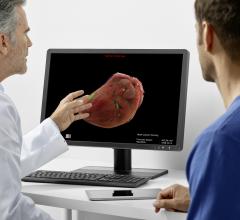
News | Artificial Intelligence
Siemens Healthineers presented its first intelligent software assistant for radiology, the AI-Rad Companion Chest CT, at the 2018 Radiological Society of North America (RSNA) annual meeting, Nov. 25-30 in Chicago. The software brings artificial intelligence (AI) to computed tomography (CT). Using CT images of the chest, it can differentiate between various structures in that region of the body, highlighting them individually, and mark and measure potential abnormalities in the lungs, heart, aorta and coronary arteries. AI-Rad Companion Chest CT automatically translates its findings into structured reports.
January 25, 2019 
Videos | RSNA
ITN Editor Dave Fornell takes a tour of some of the most interesting new medical imaging technologies displayed on the ...
January 25, 2019 
Technology | Computer-Aided Detection Software
Telerad Tech recently announced the launch of MammoAssist, a new artificial intelligence (AI) product to analyze and detect breast cancer. The software analyzes a mammogram and processes the imaging data to recognize radiologic features of breast cancer and categorizes it for Breast Imaging-Reporting and Data System (BIRADS) Scoring with a fully detailed structured report. This report is then made available to a radiologist, who corroborates/validates the AI findings and signs the official report.
January 25, 2019 Sponsored Content
Sponsored Content
Videos | Radiology Business
Radiology departments have many different needs and face a wide variety of challenges that can impact their departments ...
November 11, 2025 
Technology | Magnetic Resonance Imaging (MRI)
Perspectum Diagnostics received 510(k) clearance from the U.S. Food and Drug Administration (FDA) for its MRCP+ advanced biliary visualization software.
January 24, 2019 
Technology | Remote Viewing Systems
Medical image management and teleradiology company NucleusHealth debuted the next milestone in the Nucleus.io cloud platform with their StatStream+ technology at the 2018 Radiological Society of North America (RSNA) annual meeting, Nov. 25-30, 2018, in Chicago. StatStream+ represents a major improvement, according to the company, over the existing StatStream technology first launched within Nucleus.io to deliver medical images from the cloud quickly.
January 24, 2019 
Technology | Digital Pathology
Roche announced the launch of its new uPath enterprise software for digital pathology. The software improves on the previous version, known as Ventana Virtuoso, with new personalization capabilities for pathology workflows.
January 24, 2019 
News | Breast Imaging
International medical imaging IT and cybersecurity company Sectra will install its enterprise breast imaging solution throughout the fifteen North Carolina-based breast centers of Charlotte Radiology. Upon project completion, radiologists will experience enhanced workflow productivity through multimodality viewing on one workstation with the end goal of improved cancer care.
January 23, 2019 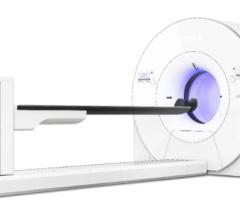
Technology | PET-CT
January 23, 2019 — United Imaging Healthcare (United Imaging) announced U.S. Food & Drug Administration (FDA) clearance ...
January 23, 2019 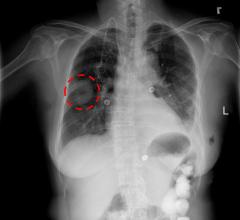
News | Digital Radiography (DR)
An artificial intelligence (AI) system can interpret and prioritize abnormal chest X-rays with critical findings, according to a study appearing in the journal Radiology. This could potentially reduce the backlog of exams and bringing urgently needed care to patients more quickly.
January 23, 2019 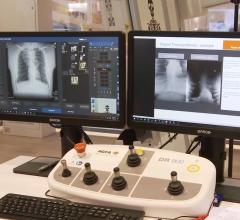
Sponsored Content | Videos | Digital Radiography (DR)
ITN Contributing Editor Greg Freiherr interviewed several specialists involved in the development and marketing of Agfa ...
January 23, 2019 
Sponsored Content | Videos | Contrast Media
ITN Contributing Editor Greg Freiherr speaks with Guerbet Chief Commercial Officer David Hale about the latest advanced ...
January 22, 2019 © Copyright Wainscot Media. All Rights Reserved.

Subscribe Now