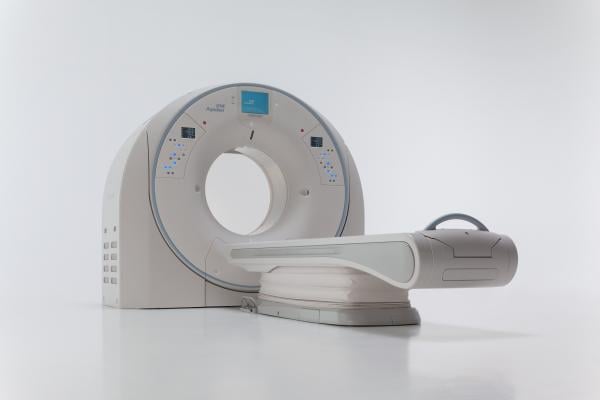
December 12, 2018 — In stroke, time saved on imaging is time gained in the treatment window. The recently updated guidelines from the American Heart Association and American Stroke Association expand the window of time for clinicians to treat stroke.1 The Gates Vascular Institute in Buffalo, N.Y., has begun using protocols like Neuro One on the Aquilion One/Genesis Edition computed tomography (CT) system from Canon Medical Systems USA Inc. combined with Vitrea's 4-D Neuro Perfusion software to adapt to the new guidelines.
“The Aquilion One/Genesis Edition is enhancing treatment of stroke,” said Ken Snyder, M.D., professor of neurosurgery, radiology and neurology in the Jacobs School of Medicine and Biomedical Sciences at the University at Buffalo and Gates Vascular Institute. “One of the greatest challenges used to be the ability to effectively treat patients with wake-up stroke. The evolution of imaging provided by this technology has given the field the power to appropriately select and treat patients with a mechanical thrombectomy and treat those that were previously deemed untreatable.”
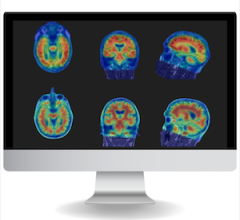
The Aquilion One/Genesis Edition is capable of imaging the entire brain with a single 640-slice rotation with coneXact technology, covering up to 16 cm. The 4-D Neuro Perfusion package from Vital Images evaluates flow and perfusion deficits to help physicians identify affected brain tissue. The scanner’s Neuro One Protocol allows the acquisition of multiple low-dose volume scans of the entire brain during contrast infusion to provide whole-brain perfusion and whole-brain dynamic vascular analysis in one exam. To round out the system’s stroke capabilities, its Forward projected model-based Iterative Reconstruction SoluTion (FIRST) MBIR (model-based iterative reconstruction) improves high-contrast spatial resolution and low-contrast detectability in the brain, opening doors for the possibility of seeing early signs of stroke with CT.
“The new guidelines reinforce the importance of time when it comes to the diagnosis and treatment of stroke, it’s a common theme throughout the guidelines,” said Adnan H. Siddiqui, M.D., Ph.D., director, Neurosurgical Stroke Service, Gates Vascular Institute and vice-chair and professor of neurosurgery in the Jacobs School. “We know the value of time when it comes to mechanical thrombectomies and the importance of advanced diagnostic imaging to improve outcomes in patients who present symptoms beyond six hours. The guidelines fortify what we’ve been studying and practicing for years.”
A CT system that can quickly map the brain to help locate the clot is what helps doctors meet the demands of time during these critical moments. The Aquilion One/Genesis Edition makes use of intensive, clinically focused research and innovative technological developments. The system’s advanced perfusion maps assist in diagnosis and therapy response verification of stroke.
Canon Medical showcased its CT technology at the 2018 Radiological Society of North America (RSNA) annual meeting, Nov. 25-30 in Chicago.
For more information: www.us.medical.canon
Reference
1. Powers W.J., Rabinstein A.A., Ackerson T., et al. 2018 Guidelines for the Early Management of Patients With Acute Ischemic Stroke: A Guideline for Healthcare Professionals From the American Heart Association/American Stroke Association. Stroke, published online Jan. 24, 2018.

 October 07, 2026