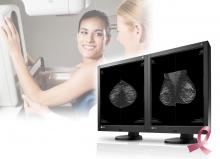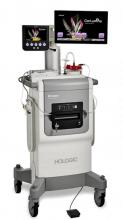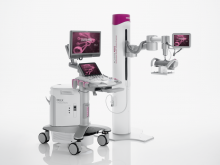
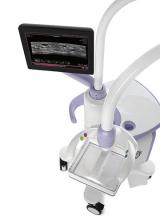
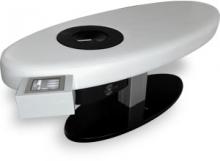
According to a new Market Study Report,1 the automated breast ultrasound system (ABUS) market will see a 21 percent compound annual growth rate (CAGR) from 2017-2024, driven by rising incidence of breast cancer and volume scanner segment dominating this growth.


Over the years, significant progress has been made educating women, men and families about breast cancer — the pink ribbon has become the universal symbol of breast health and awareness, and more women than ever before know about the disease, the risks it poses and the necessary steps to take to prevent and detect it early.


In an era of population health consciousness and uncertainty regarding regulations, healthcare facilities need to be able to rely on technology as a constant in a sea of change. As healthcare facilities move to value-based care, they need to be able to rely on their healthcare technology partner. This extends beyond the initial equipment investment to continued service and support. The service and support a partner provides after the sale can be more important than the sale itself.


The healthcare analytics market is witnessing a phenomenon of sorts, with an increasing number of remote consultations and monitoring practices across the globe. The surging adoption of smartphones and tablets will favorably attribute the product demand across a myriad of medical application arenas such as financial, clinical and operations management. 


Over the past decade, several clinical studies have shown gadolinium-based magnetic resonance imaging (MRI) contrast agents accumulate in tissues inside patients. This has raised concern because prolonged, elevated levels of gadolinium in the body may cause a nephrogenic systemic fibrosis in patients with severe kidney disease. Adding to this concern were three studies in 2015, which raised new gadolinium safety concerns after it was found the agent also accumulates in the brain


October 3, 2017 — Healthcare information technology (IT) experts at Logicalis Healthcare Solutions say in a new whitepaper that now is the time for healthcare organizations to develop IT cloud strategies for deployment of critical patient care applications and provider administrative systems. The paper identifies five reasons why healthcare providers need a strong cloud strategy now for employees, partners and patients (also the title of the paper).

A new study finds that immune response in prostate cancer may be able to forecast how patients will respond to radiation therapy, as well as their likelihood of disease recurrence and survival outcomes. The analysis of more than 9,000 prostate tumors also found evidence that PD-L2, not PD-L1, may provide a key route for targeted therapies, such as immunotherapy, to slow disease progression. Findings were presented at the 59th Annual Meeting of the American Society for Radiation Oncology (ASTRO), Sept. 24-27 in San Diego.

October 3, 2017 — The American Society for Radiation Oncology (ASTRO) awarded $275,000 in research awards to four early-career scientists as part of the Society’s efforts to retain and foster the intellectual research talent currently entering the field of radiation oncology. For 2017, the Research Grants committee selected one Junior Faculty Award and three Resident Seed Grant recipients. All winners were recognized at ASTRO’s 59th Annual Meeting, taking place Sept. 24-27 in San Diego.


When it comes to breast imaging, mammography has long been the gold standard among breast cancer detection technologies. But as the cancer-masking effects and increased risks of dense fibroglandular breast tissue become better understood by both healthcare professionals and patients, mammography is no longer feasible as a one-size-fits-all approach to breast cancer screening. Radiologists of all subspecialties are also having to become more efficient as workloads continue to increase


October 3, 2017 — The latest release of RamSoft PowerServer, version 6.0, offers improvements to the Peer Review feature that simplifies the review process by integrating with ACR’s RADPEER program. Starting with RamSoft PowerServer 6.0, users can now peer review any signed radiology report.

Subscribe Now