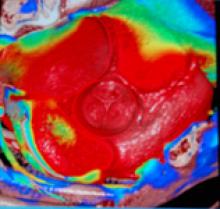
Advancements in newer 64-slice computed tomography (CT) systems and the introduction of 256- and 320-slice systems are helping to significantly reduce exposure to ionizing radiation.


November 10, 2010 – The U.S. Food and Drug Administration (FDA) has concluded that radiation over-exposure during computed tomography (CT) scans was due to user error, not the scanner manufacturers. The finding comes after the FDA investigated more than 300 reports of over-exposure during brain perfusion scans.

November 10, 2010 – New 4-D functional analytic advanced visualization software will be introduced at the Radiological Society of North America (RSNA) meeting in Chicago. PhyZiodynamic, by Ziosoft, is based upon a supercomputing foundation and provides cutting-edge algorithms for functional imaging analysis across multiple dimensions.


The turn of the century has brought disruptive technological changes to the medical industry. 3-D/4-D advanced visualization offered cutting-edge technology that introduced a new dimension of glitz to the radiology department. No hospital purchased a 64-slice computed tomography (CT) scanner without a 3-D workstation included.


November 10, 2010 – Software for a mobile C-arm X-ray system will be on display at the Radiological Society of North America (RSNA) meeting in Chicago. SmartVascular, by Ziehm Imaging, is designed to speed the surgeon’s workflow during vascular procedures.


Over the past decade, multiple-detector computed tomography (MDCT) scanners have transformed the imaging field. Systems such as the Toshiba Aquilion 64 provide physicians and patients with many diagnostic benefits, since they are a faster, less invasive modality for diagnosing various conditions.


Launching a new cancer center can be a long process, taking several months or even years to see a return on investment. But a new approach that includes the immediate introduction of radiation therapy services delivered in a relocatable unit is helping new cancer centers start building a patient base long before a permanent facility is complete.


A number of vendors offer digital radiography (DR) systems. They include the following:


November 10, 2010 – A new version of a medical decision support solution will be unveiled at the Radiological Society of North America (RSNA) meeting in Chicago. OderRight 2.0, by MedCurrent, gives physicians the information they need at the time radiologic tests are ordered so that the most appropriate study is performed.


Hospitals everywhere are starting to convert from computed radiography (CR) to digital radiography (DR) in order to achieve better image quality, improved productivity and higher patient output. While DR is infiltrating the radiography market, CR still dominates due to its lower price, portability and flexibility in retrofitting older X-ray equipment.


Subscribe Now