Agfa HealthCare will introduce its expanded portfolio of Cloud and Managed Services offerings at RSNA 2011. The company has evolved its portfolio of Managed Services models to better help healthcare facilities of varied sizes achieve their performance and cost objectives with reliable and trusted solutions. Reinforcing the company’s theme of "Imaging Excellence, Clinical Confidence," Agfa HealthCare will demonstrate these new offerings in booth #8350.

If your enterprise is similar to most current hospital health information technology (HIT) architecture, you have clinical/data silos everywhere. This is nothing to be ashamed of; you are normal. But in the coming age of healthcare delivery, silos must be replaced with interoperability. One key to interoperability will be an integrated medical image archive.


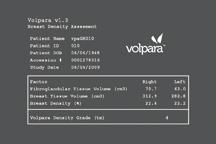
Sutter Pacific Medical Foundation Women’s Health Center is in Santa Rosa, Calif., a community of 160,000 located an hour north of San Francisco in an area that is perhaps most prominently known as the Sonoma wine country.  Our breast center, which screens 10,000 women per year, has established a regional reputation as a center of excellence in the detection and diagnosis of breast disease.


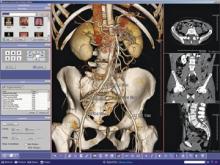
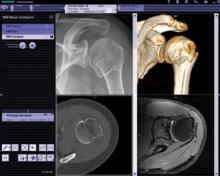
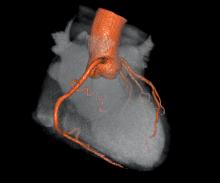
Once an emerging technology confined to early adopters, server-based advanced visualization has gradually become a more popular solution in the medical imaging informatics marketplace in the last few years. This has carried on to the point that it can today be deemed the de facto standard for advanced visualization in medical imaging enterprises.


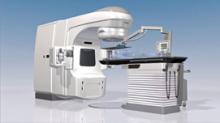
Five leading cancer institutions are taking part in the first multi-institutional Phase II study of hypofractionated stereotactic body radiation therapy (SBRT) using continuous real-time evaluation of prostate motion.


Stereotactic body radiation therapy (SBRT) is an investigational radiotherapy modality for the treatment of localized prostate cancer. Conventional radiotherapy options include prolonged schedules of daily treatment using relatively low radiation doses over a period of six to nine weeks. SBRT offers promise of an expedient, well-tolerated and effective schedule of only five treatments of larger doses for selected patients for whom current conventional treatment options would be either medically contraindicated or refused by the patient for reasons of inconvenience.


As 2011 draws to a close, ITN looks ahead to 2012 and what’s in store for medical imaging. We asked experts from organizations industry-wide to offer a best guess. Their answers focused on how their segment could be impacted in three areas: technology, government/regulatory and business/workflow. They also offered their take on the imaging industry as a whole.


As the year draws to a close, ITN asked a few industry veterans to share their views about current issues shaping medical imaging today and what they foresee for the industry in 2012. Following are their responses to our Q&A.


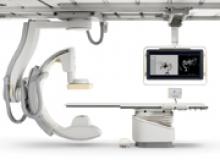
Over the last 10 years, hospitals have phased out analog image intensifiers for flat-panel, digital detector angiography systems in their cath labs. As hospitals look to purchase current-generation digital angiography systems, buyers should be aware of several new technologies.


Subscribe Now