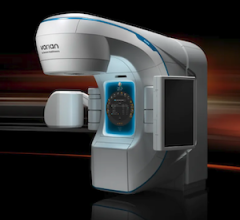
Five leading cancer institutions are taking part in the first multi-institutional Phase II study of hypofractionated stereotactic body radiation therapy (SBRT) using continuous real-time evaluation of prostate motion. Principal investigator Daniel A. Hamstra, Ph.D., M.D., assistant professor, department of radiation oncology at the University of Michigan Health System, Ann Arbor, Mich., along with 10 co-investigators, is evaluating the safety of SBRT with Calypso Medical’s GPS for the Body technology (used for real-time tracking of cancerous tumors during prostate radiotherapy), and comparing it to conventional radiation treatment. Participating institutions include Washington University, St. Louis, Mo.; The Fox Chase Cancer Center, Philadelphia; Cedars Sinai Medical Center, Los Angeles and Radiation Oncology Centers, Sacramento, Calif.
A number of randomized trials have indicated higher doses of radiation result in improvements in prostate cancer outcomes, but at the cost of an increased rate of toxicity. 1,2,3,4 Recent evidence suggests that larger daily radiation fractions may provide an improvement in biochemical control of prostate cancer and that delivering a lower total dose of radiation therapy may also result in a decrease in expected toxicities of radiation therapy. 5-10 Using a smaller number of larger fractions of RT requires accurate targeting of the prostate gland. To date, targeting of the prostate gland has been done prior to the start of radiation; therefore, motion of the prostate during the course of radiation may not be accounted for.
The 39-month Phase II study is enrolling 66 patients who will receive five 30-minute fractions of 7.4 Gy, with at least two days in between fractions for a total of 37 Gy. The shortened five-fraction treatment will range from 15-19 calendar days in comparison to conventional treatment protocol of 40-45 daily treatments. This is the first multi-institutional study to incorporate use of the Calypso real-time tumor tracking technology and investigators are optimistic that use of the technology in concert with a small number of dose-intensified treatment sessions may optimize SBRT.
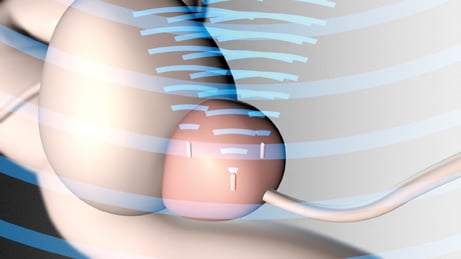
The Calypso system uses GPS for the Body technology to safely guide radiation delivery during prostate cancer treatment. Beacon electromagnetic transponders, smaller than a grain of rice, are permanently placed in a patient’s prostate or prostatic bed. Each transponder emits a unique radiofrequency signal to the system, which then determines the exact location and motion information about the tumor target. Because the tumor can be accurately tracked and monitored, precise targeted radiation can be delivered to the tumor while sparing surrounding healthy tissue and organs.
The primary goals of this study are to assess the safety of patient treatment utilizing more sophisticated tools for planning, setup and monitoring using a hypofractionated radiation regimen for prostate cancer, and to assess the practical ability to deliver a hypofractionated treatment with small treatment margins and a limited degree of movement before interruption of treatment. Another goal is to generate sufficient preliminary evidence about the relationships between the technologies and patient toxicity, both clinically evaluated and self-reported on quality-of-life (QOL) scales, and biochemical response to inform design of a potential subsequent confirmatory study.
The protocol requires treatments to be performed with a stereotactic technique using a 3-D coordinate system defined by implanted transponders. Only electromagnetic localization and tracking with the Calypso system will be permitted. According to investigators, the Calypso technology enables physicians to localize the prostate in real-time, providing necessary information regarding motion that occurs due to normal bladder and bowel filling. With this information, physicians are able to use tighter treatment margins, which should lessen the risk for both acute and late toxicities. The use of the Calypso system in performance with a small number of dose-intensified fractions may be a way to augment hypofractionated radiation therapy. Combining Calypso with SBRT also may create a treatment approach allowing patients to maintain their quality of life while spending much less time away from family and work.
Currently, single-institution studies have reported on the ability of utilizing hypofractionated RT, yet the ability to translate this technique to a more broad-based setting has not yet been reported. In addition, prostate localization and the corresponding treatment margins are critical in obtaining optimal results. Investigators of this study suggest that data from this multi-institutional Phase II trial should provide sufficient basis for evaluation in a subsequent Phase III trial if the data are supportive of the previous single-institutional studies.
For more information: www.calypso.com
References:
1. Kuban DA, Tucker SL, Dong L, et al. “Long-term results of the M.D. Anderson randomized dose-escalation trial for prostate cancer.” Int J Radiat Oncol Biol Phys, 2008; 70:67-74.
2. Al-Mamgani A, van Putten WL, Heemsbergen WD, et al. “Update of Dutch multicenter dose-escalation trial of radiotherapy for localized prostate cancer.” Int J Radiat Oncol Biol Phys, 2008; 72:980-988.
3. Zietman AL, DeSilvio ML, Slater JD, et al. “Comparison of conventional-dose vs. high-dose conformal radiation therapy in clinically localized adenocarcinoma of the prostate: a randomized controlled trial.” JAMA, 2005; 294:1233-1239.
4. Dearnaley DP, Sydes MR, Graham JD, et al. “Escalated-dose versus standard-dose conformal radiotherapy in prostate cancer: first results from the MRC RT01 randomised controlled trial.” Lancet Oncol, 2007; 8:475-487.
5. Fowler JF. “The radiobiology of prostate cancer including new aspects of fractionated radiotherapy.” Acta Oncol, 2005; 44:265-276.
6. Miles EF, Lee WR. “Hypofractionation for prostate cancer: a critical review.” Semin Radiat Oncol, 2008; 18:41-47.
7. Tang C, Loblaw DA, Cheung P, et al. “Condensing external beam radiotherapy to five fractions for low risk localized prostate cancer: Early results of pHART3. 2008 Genitourinary Cancers Symposia.” San Francisco, Calif.; 2008.
8. Ritter M. “Rationale, conduct and outcome using hypofractionated radiotherapy in prostate cancer.” Semin Radiat Oncol, 2008;18: 249-256.
9. King CR, Brooks JD, Gill H, et al. “Stereotactic Body Radiotherapy for Localized Prostate Cancer: Interim Results of a Prospective Phase II Clinical Trial.” Int J Radiat Oncol Biol Phys, 2008.
10. Madsen BL, His RA, Pham HT, et al. “Stereotactic hypofractionated accurate radiotherapy of the prostate (SHARP), 33.5 Gy in five fractions for localized disease: first clinical trial results.” Int J Radiat Oncol Biol Phys, 2007; 67:1099-1105.

 October 13, 2026