London Imaging Centre has partnered with Mach7 Technologies to streamline image management and workflow through implementation of the Mach7 Enterprise Imaging Platform.
EOS imaging announced dual EOS imaging system installations at two of the leading, and largest, academic hospitals in Germany – Heidelberg University Orthopedic Hospital and the Medical Center of the University of Munich.
The Dr. Samadi Prostate Cancer Center in New York City is now offering a full suite of new genetic testing methods for diagnosing prostate cancer. The new methods are intended for men with an elevated prostate specific antigen (PSA) level or who have had a biopsy.
IBA (Ion Beam Applications S.A.) has signed three separate binding term sheets with Proton Partners International (PPI) to install three of its Proteus One compact proton therapy solutions in private clinics in the United Kingdom. The agreements contain significant and immediate down-payments.
Ten weeks of intensive reading intervention for children with autism spectrum disorder (ASD) strengthened loosely connected areas of their brains that comprehend reading, University of Alabama at Birmingham researchers found. At the same time, the reading comprehension of those 13 children, whose average age was 10.9 years, also improved.
Medraysintell released its updated World Market Report and Directory on Nuclear Medicine, Edition 2015, in late June, providing a description and analysis of the latest developments in nuclear medicine. The 920-page document covers 335 radiopharmaceuticals and radionuclides and 160 companies and institutions active in nuclear medicine.
Years ago in Vegas I came face-to-face with the strain of radiology. On-site, at an imaging practice built around managed care, I sat from 9 in the morning until 7 that night observing (as unobtrusively as possible) a radiologist. At day's end he retreated to his office, dragging me with him for a recap of the day, his eyes puffy and bloodshot.
If you enjoy this content, please share it with a colleague
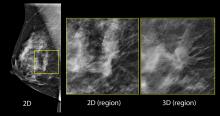
Just a few short years ago, the only options for breast imaging were 2-D mammography, but thanks to rapidly advancing technology to address accuracy concerns in reading dense breast images, today there several options, including 3-D tomosynthesis.
If you enjoy this content, please share it with a colleague
With radiology departments generating so much imaging data on a daily basis, and as medical imaging technology continues to advance, many existing picture archiving and communication systems (PACS) and other storage solutions simply do not have the capacity to handle multiple terabytes of data on-site. As a result, hospitals and other healthcare organizations are turning to cloud solutions. It is a buzzword that many are familiar with, but one that many still do not fully understand.
If you enjoy this content, please share it with a colleague
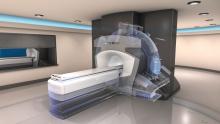
Image-guided radiation therapy (IGRT) affords greater accuracy of dose distribution during cancer treatment, allowing the radiation oncologist to see how a tumor is responding over the course of treatment. This has traditionally been accomplished with computed tomography (CT) or X-ray scans, which requires extra radiation exposure for the patient, with relatively poor contrast in soft tissue due to uniform electron density. Since treatment is only as good as the images provided, efforts are under way to find a better modality — and magnetic resonance imaging (MRI) may hold the answer.
If you enjoy this content, please share it with a colleague