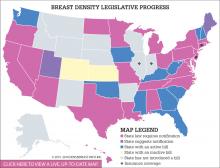
Breast density notification is an ongoing topic that gained a lot of momentum in 2015, and continues to do so in 2016.


Radiology is undergoing a major overhaul in terms of the business model practices used for the past several decades, due to new challenges from healthcare reform and increased competition for hospital contracts.


There is a growing need to exchange and share imaging studies with outside entities. Hospitals that have foregone the traditional merger and acquisition route to become affiliates, for example, have a need to share both individual patient and population health data, though their modalities for exchange and viewing may be very different.


As the enterprise imaging market matures, the technology used to access and view images is rapidly changing.


The U.S. healthcare system’s ongoing transformation from a volume-based payment model to a value-based one is being guided by one central principle: better coordination of patient care. 


Stanford Health Care recently released a new app that allows patients using Android smartphones to easily access their own medical information anywhere in the world.

The nuclear medicine, proton therapy and brachytherapy markets represent less than 0.1 percent of global health expenditures but are expected to grow more than twice as fast, according to a new report from MEDraysintell.


The American Society for Radiation Oncology (ASTRO) annual meeting held last October drew a crowd of more than 11,000 attendees.


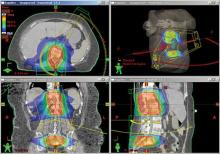
Computed tomography (CT) has long been the gold standard for image acquisition during radiation therapy treatment planning, as the ability to visualize tumor position and volume in 3-D is integral for prescribed dose calculations.


Healthcare providers will need to start preparing for the next big healthcare information technology (IT) implementation — clinical decision support (CDS) software. Under congressional legislation based on a compromise between numerous medical societies to accept required CDS documentation for Medicare reimbursements, large scheduled cuts in reimbursements were suspended in the 2014 Protecting Access to Medicare Act (PAMA). A deadline was originally set for providers to begin required use of CDS starting in 2017, but it is likely this will be pushed back to 2018 or later. 


Subscribe Now