Feature | January 28, 2015

Researchers say if history and physical exams find no persistent neurologic signs CT scan is not necessary

CT systems, Clinical trial/study, ARRS

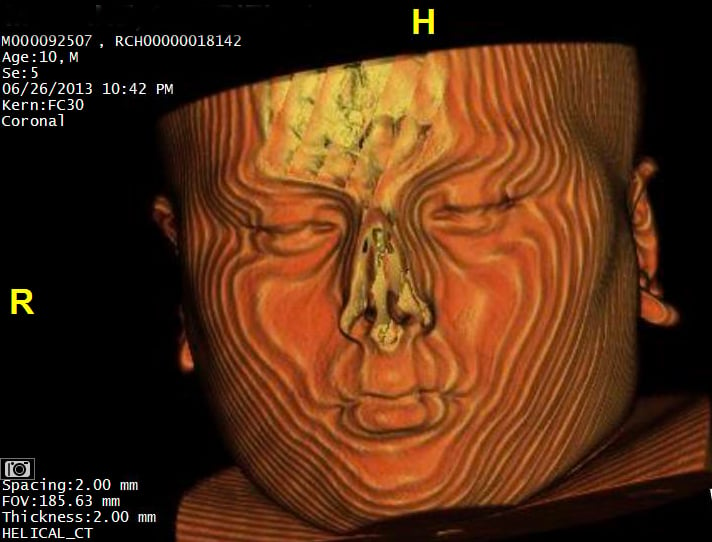
January 28, 2015 — Less than 7.1 percent of patients presenting to the emergency department with dizziness and 6.4 percent complaining of syncope or near-syncope benefited from head CT, say researchers at Kaiser Foundation Hospital in Honolulu. The use of head CT as part of a screening examination, rather than as a diagnostic tool, likely stems from increased pressure on emergency physicians to evaluate and differentiate between benign and life-threatening causes of dizziness and syncope.

Head CT scans are not recommended unless the loss of consciousness is suspected not to be syncope. Using CT in cases of uncomplicated syncope should be avoided unless physical or historical features of CNS dysfunction are present. However, use of head CT scans obtained to evaluate patients with syncope in the emergency department appears to be a common practice with little evidence of benefit.

"Most patients with mild symptoms of dizziness or syncope do not require a head CT," says Myles M. Mitsunaga, principal investigator and resident at the John A. Burns School of Medicine, University of Hawaii. "If a careful history and physical examination do not find persistent neurologic signs, then a follow-up clinic visit the next day may be all that is necessary."

The study, "Head CT Scans in the Emergency Department for Syncope and Dizziness," was published in the American Journal of Roentgenology.

For more information:www.arrs.org



Related Content

News | Magnetic Resonance Imaging (MRI)

Feb. 9, 2026 — MRIguidance, a MedTech company developing BoneMRI, a radiation-free bone imaging solution, has appointed ...

Time February 09, 2026
arrow
Feature | Cardiac Imaging | Kyle Hardner

Advances in coronary CT angiography (CCTA) have reached the point where image quality and AI capabilities are creating ...

Time February 06, 2026
arrow
News | Magnetic Resonance Imaging (MRI)

Jan. 27, 2026 — Hyperfine has announced results from the largest data set to date evaluating stroke detection with its ...

Time January 28, 2026
arrow
News | PET Imaging

Jan. 26, 2026 — Nuclidium, a clinical-stage radiopharmaceutical company developing a proprietary copper-based ...

Time January 27, 2026
arrow
News | Magnetic Resonance Imaging (MRI)

Jan. 20, 2026 — Hyperfine, the developer of the first FDA-cleared AI-powered portable MRI system for the brain — the ...

Time January 20, 2026
arrow
News | Artificial Intelligence

Dec. 1, 2025 — Researchers at the University of California, Berkeley and University of California, San Francisco have ...

Time December 10, 2025
arrow
News | FDA

Nov. 26, 2025 — a2z Radiology AI has received U.S. FDA clearance for a2z-Unified-Triage, a single device that flags and ...

Time December 03, 2025
arrow
News | RSNA 2025

Nov. 13, 2025 — Nano-X Imaging Ltd., a medical imaging technology company, will showcase its Nanox.ARC X multi-source ...

Time November 25, 2025
arrow
News | Interventional Radiology

Nov. 12, 2025 — On Nov. 11, Huntsman Cancer Institute at the University of Utah (the U) opened its first specialized ...

Time November 13, 2025
arrow
Feature | Teleradiology | Kyle Hardner

Once viewed as a solution for after-hours coverage, teleradiology is rapidly expanding into a critical part of radiology ...

Time November 06, 2025
arrow
Subscribe Now