The integrated software application verifies correct alignment of external anatomy with surface tracking and internal anatomy with stereoscopic X-Ray imaging at breath hold. (Source: UZ Brussel)
May 19, 2022 — Brainlab announced that clinicians at UZ Brussel are the first to treat patients with the company’s new Deep Inspiration Breath Hold (DIBH)* technology designed to streamline image guided and surface guided radiation therapy (IGRT and SGRT) and deliver the highest quality of care for breast cancer patients. UZ Brussel is a university hospital at the Vrije Universiteit Brussel with 721 hospital beds and almost 4,000 employees. UZ Brussel successfully validated the technology and presented research at the Novalis Circle Symposium at ESTRO on May 8, 2022. The research demonstrates that Brainlab ExacTrac Dynamic DIBH streamlines the process and increases positioning confidence through “on-the-fly” X-Ray confirmation. Internal anatomy verification at the breath hold level may increase confidence in dose sparing of critical structures like the heart.
Deep Inspiration Breath Hold is a well-established technique and standard of care in treating breast cancer with radiation therapy. When a patient takes a deep breath, the distance between the heart and the chest cavity is increased, reducing the risk of cardiac toxicity during breast cancer treatment. The new Brainlab technology takes traditional surface tracking methodology and augments it with a thermal signature, delivering a fourth dimension to reduce ambiguities otherwise associated with surface tracking systems. Adding synchronized X-ray images to the workflow increases accuracy and clinician confidence by incorporating insights derived from internal bony anatomy. Brainlab DIBH workflow is CE marked and FDA cleared.
“The incorporation of ‘on-the-fly’ X-Ray confirmation streamlines the process and delivers the confidence that the heart is outside of the treatment beam,” said Stefan Vilsmeier, President and CEO, Brainlab. “This solution delivers correlation between internal and external anatomy in one shot, revealing any misalignment that would otherwise remain undetected and could result in delivering excess dose to the heart. Partnering with UZ Brussel on new technologies demonstrates our combined interest in expanding personalized digital treatment innovation to other indications requiring high precision radiotherapy.”
“This is next generation technology and UZ Brussel is proud to work in close collaboration with our long-time partner Brainlab to validate and present our findings showing the superior speed, innovative postural patient positioning and seamless integration into our therapeutic radiation program,” said Prof. Mark de Ridder, Head of the Radiotherapy Department at UZ Brussel. “We’re excited to be the first to use this game changing positioning and breath hold control in breast cancer patients without skin marks. The positive effect on reducing cardiotoxicity on population level is significant. This becomes even more important with the increasing incorporation of neo-adjuvant chemotherapy and new HER2-directed monoclonal antibodies in the treatment strategy.”
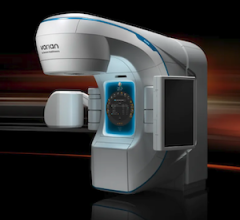
In 2020, Brainlab installed new ExacTrac Dynamic Patient Positioning and Monitoring systems at UZ Brussel. The system’s deep integration with most linear accelerators enables thermal-surface triggered beam gating and repositioning. ExacTrac IGRT has always been the gold standard in frameless cranial, and high-precision spine stereotactic radiosurgery, enabling ablative treatments with minimal target margins.
With the introduction of the DIBH workflow, Brainlab is delivering the power of integrated IGRT to radiation therapy treatments for breast cancer patients. “We implemented this new workflow over the course of a few days,” explained Prof. Thierry Gevaert, Coordinator of the Medical Physics Radiotherapy Department at UZ Brussel. “The use of surface guided technology generates a more stable breathing curve compared to traditional surrogate marker technology. And the system’s X-Ray imaging allows for fast and low-dose internal anatomy verification at breath hold. The accurate triggering and correlation of anatomical verification with ExacTrac kV imaging will be the key differentiator to further margin reduction in breast radiotherapy.”
Please access the Dr. de Ridder presentation here and the Dr. Gevaert presentation here.
*Not yet commercially available in all countries. Please contact your sales representative.
For more information: www.brainlab.com

 October 09, 2026