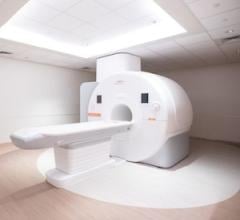
July 7, 2026 — Imagion Biosystems, Ltd. recently announced it has renewed and extended its collaboration agreement with Siemens Healthineers to support the company’s Phase 2 clinical trial of the MagSense imaging agent in patients with HER2+ breast cancer.
The extended collaboration comes on the heels of a series of milestones for the company, which recently announced FDA clearance for a Phase 2 clinical trial with MagSense.
“We are very appreciative of the collaboration with Siemens Healthineers and grateful for their continued interest in the MagSense technology,” said company president Ward Detwiler. “Having the expertise and support of the world’s leading MRI manufacturer not only helps position us for success but also underscores the importance of molecular MRI to the broader diagnostic imaging market.”
Siemens Healthineers will make in-kind contributions of expertise and provide technical support to clinical sites, working with Imagion, clinical advisors and investigators to optimize MRI protocols. Notably, the collaboration will facilitate implementation of the advanced quantitative imaging techniques the company developed through its research collaboration with Wayne State University.
Collaborators expect quantitative imaging techniques will provide improved image quality and reduce imaging time even with lower doses of MagSense imaging agent. The company is optimistic that the combination of MagSense® and advanced quantitative imaging will lay the groundwork for future development of AI diagnostic and imaging interpretation tools.
MagSense Imaging Agent Technology
MagSense technology is a new class of MRI imaging agents that improves cancer detection compared to conventional imaging technologies by adding molecular specificity without using radioactivity. MagSense agents will be the first imaging technology to use targeted magnetic nanoparticles to tag and detect cancers allowing for visualization using MRI. This new class of imaging agents does not use ionizing radiation or radioactive tracers and improves how medical imaging can be used compared to conventional imaging methods which only identify a region of interest using anatomical or morphological features but cannot differentiate benign tumors from malignant cancer.
Imagion has developed MagSense imaging agents for three different types of cancer. The lead product has completed a Phase 1 study for the detection of nodal metastases (spread) in HER2+ breast cancer and is now advancing into a Phase 1b/2 study. The MagSense technology is also extendable, with two additional agents for prostate cancer and ovarian cancer having been identified and could progress into IND-enabling studies as resources become available.
Clinical Trials
In the completed Phase 1 study, where the company also worked with Siemens Healthineers, a panel of independent radiologists determined that the MagSense HER2 Imaging Agent produced a readily identifiable change in MRI images to differentiate between tumor-involved nodes and non-involved nodes.
The Phase 1b/2 clinical trial will establish the optimum dose and imaging timing as well as evaluate diagnostic performance. Entering into a Phase 1b/2 trial represents a significant milestone for Imagion, providing multiple data outputs as the MagSense technology progresses toward commercialization.

 October 07, 2026