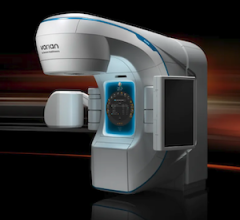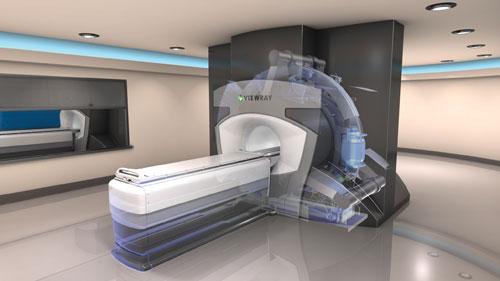
August 9, 2016 — ViewRay Inc. announced highlights from the recent 2016 Annual Meeting of the American Association of Physicists in Medicine (AAPM), which featured extensive clinical experience with the company's MRIdian System. This included the first data from the company's MRIdian linear accelerator (Linac) technology, which is currently under development.
For the first time, researchers from the Siteman Cancer Center at Barnes-Jewish Hospital and Washington University School of Medicine in St. Louis and the University of California, Los Angeles (UCLA) gave presentations on the MRIdian Linac technology. The oral presentations, given during the "MR-Linac Design" session at the AAPM meeting, focused on the design and characteristics of the MR-guided Linac technology and summarized data from recent testing performed in ViewRay's Mountain View, Calif. facility. Speakers highlighted ViewRay's patented magnetic and radio frequency shielding technology that ensures minimal interaction between the linear accelerator and the magnetic resonance imaging (MRI) magnetic field, addressing the fundamental incompatibility of the two technologies that has previously made it impossible to combine them. Quantitative data were presented demonstrating the ability of this compact system to image and deliver radiation simultaneously.
ViewRay's MRIdian System was also featured in oral presentations in the "Imaging Assessment of Treatment Response" session at the AAPM meeting. Researchers from UCLA have successfully developed a diffusion MRI technique on the MRIdian System, which quantifies tissue density inside tumors to gauge their response to radiation.
The research presented demonstrates MRIdian's capabilities for on-table anatomical and biological imaging during the course of radiation therapy, reinforcing its role in delivering personalized, adaptive cancer treatment.
MRIdian users from UCLA; University of Miami; Washington University in St. Louis; and University of Wisconsin, Madison, presented on their first-hand clinical experience treating cancer patients with the system.
The MRIdian Linac technology is presently available for non-clinical research use only. ViewRay expects to complete its U.S. FDA and European CE Mark submissions for MRIdian Linac in the second half of 2016.
For more information: www.viewray.com

 October 07, 2026