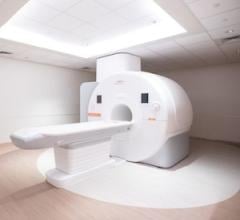
November 10, 2009 – Covidien said yesterday it will voluntarily contraindicate the use of its Optimark gadoversetamide injection, a gadolinium-based contrast agent (GBCA), in magnetic resonance imaging (MRI) procedures involving patients with severe renal impairment.
The company is modifying the product’s label to reflect a contraindication for this small patient population, which constitutes less than 0.5 percent of the U.S. population. Mallinckrodt Inc., a Covidien company, has submitted this label change to the U.S. Food and Drug Administration (FDA) and is implementing the new label in the United States effective immediately. The revised label contraindicates the product’s use in patients with acute or chronic severe renal insufficiency (glomerular filtration rate of less than 30 mL/min/1.73m2) or acute renal insufficiency of any severity due to hepato-renal syndrome or in the perioperative liver transplant period.
The company is implementing this label change in all other countries where Optimark contrast agent has been approved for sale, in accordance with local regulatory requirements. Covidien also will update its educational materials to help physicians make informed decisions regarding the appropriate use of this product.
GBCAs are important tools to aid physicians seeking to diagnose and treat patients. In 2008, more than 9.5 million patients in the U.S. were given GBCAs to help improve the diagnostic quality of MRI scans.
When used as directed in appropriately screened patients, GBCAs have a favorable safety profile, with the majority of any adverse reactions in this class being mild and usually transitory, the company said. A possible relationship, however, has been asserted between the use of GBCAs and nephrogenic systemic fibrosis (NSF) among patients with severe renal impairment. This subset of patients can be easily identified by obtaining patient history and/or laboratory tests.
“We have concluded that Optimark contrast agent should be reserved for the vast majority of the population – more than 99 percent – where the risk/benefit profile is well established,” said Herbert Neuman, M.D., vice president, medical affairs and chief medical officer, pharmaceuticals, Covidien. “For the small percentage of the U.S. population – less than 0.5 percent – with severe renal impairment, we believe it is prudent to act now, rather than wait for a causal link between GBCAs and NSF to be established. Although the label already advises caution when using GBCAs with these patients, we are voluntarily taking this next step to help ensure this small, at-risk population does not receive administration of a contrast agent that could pose a risk of NSF.”
In 2007, the FDA recommended that use of all GBCAs should be avoided in patients with severe renal impairment unless the diagnostic information is essential and only available with a contrast-enhanced MRI procedure, resulting in a boxed warning for each GBCA. In addition, the FDA will hold a joint advisory committee meeting on Dec. 8 to discuss whether other steps are necessary to ensure the safe use of all GBCAs.
For more information: www.covidien.com

 October 07, 2026