
Philips
222 Jacobs St.,
Cambridge, MA 02141
Product Categories:
Fusion Imaging Software, Angiography, Treatment Planning, PET-CT, Radiation Dose Management, Computed Tomography (CT), Magnetic Resonance Imaging (MRI), Ultrasound Imaging, Cardiovascular Ultrasound, Information Technology, Artificial Intelligence, Mobile Devices, Enterprise Imaging, Cardiac PACS, PACS
Fusion Imaging Software, Angiography, Treatment Planning, PET-CT, Radiation Dose Management, Computed Tomography (CT), Magnetic Resonance Imaging (MRI), Ultrasound Imaging, Cardiovascular Ultrasound, Information Technology, Artificial Intelligence, Mobile Devices, Enterprise Imaging, Cardiac PACS, PACS
RELATED CONTENT

News | PET-CT
Philips announced that it will be showcasing molecular imaging solutions highlighting Philips’ commitment to innovation and more personalized care at the Society of Nuclear Medicine and Molecular Imaging (SNMMI) 2017 Annual Meeting.
 June 12, 2017

Feature | Enterprise Imaging | By Jef Williams
Much has been documented about the role of enterprise imaging as part of the larger effort to integrate a single longitudinal patient record. Despite the many ways an imaging effort reflects an organization’s electronic medical record (EMR) effort, there remain some distinct differences. For one, an enterprise imaging effort requires more careful understanding of peripheral and disparate systems. As an initiative, this primarily will serve as a support technology to the EMR and will be successful based on how it optimizes existing systems. Second, departmental workflow must remain uncompromised as part of an efficacious care delivery ecosystem. The challenges associated with deploying an EMR and the well-documented dissatisfaction on clinical workflow cannot, and should not, characterize enterprise imaging.
June 07, 2017 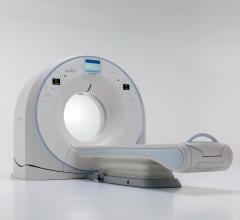
Feature | Computed Tomography (CT) | By Jeff Zagoudis
Perhaps no issue has taken on more prominence in radiology than radiation safety for both patients and hospital staff. Several regulatory bodies have enacted guidelines in recent years to improve radiation dose monitoring and reporting for computed tomography (CT), including the Medical Imaging and Technology Alliance (MITA), which created the XR-29 “Smart Dose CT” standard. Beginning Jan. 1, 2016, the standard levied a reduction in Medicare reimbursement on the technical component of all diagnostic CT exams conducted on a non-compliant scanner. The initial reduction was set at 5 percent, but it jumped to 15 percent as of Jan. 1, 2017, giving providers and vendors even more incentive to closely monitor and manage dose.
June 06, 2017 
News | Information Technology
Philips announced the introduction of IntelliSpace Radiology Analytics 1.2, the latest innovative solution for driving operational, financial and clinical insights within radiology departments.
June 05, 2017 Sponsored Content | Videos | Enterprise Imaging
Philips' mission is to build intuitive, scalable and customizable products that can be easily adapted to customers' needs. This approach is the foundation for the new Philips IntelliSpace Enterprise Edition.
May 10, 2017 
News | Ultrasound Women's Health
Philips announced the debut of its TrueVue, GlassVue and aRevealA.I. capabilities on the company’s Epiq 7 and 5 and Affiniti 70 and 50 ultrasound systems. The new visualization tools work together to enable photorealistic, transparent and 3-D visualization in one touch, delivering more reproducible and lifelike ultrasound images than traditional technologies.
May 10, 2017 
Feature | Remote Viewing Systems | By Dave Fornell
The implementation of electronic health records (EHR) has created an expectation that all patient data, including images, should be available in one location. Today, reports describing images are not enough, as many referring physicians want to see the images, and many use them to help guide therapies. This has caused an increased demand to exchange medical images in the various departments of healthcare settings.
May 05, 2017 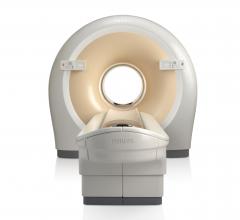
Feature | Radiation Oncology | By Lola Koktysh
The continuum of personalized care, covering individualized prevention and therapy, translates into multiple changes to patient data sources. One of the primary sources is medical imaging that evolves into various multimodalities, allowing simultaneous acquisition of clinical images. Positron emission tomography/computed tomography (PET/CT) systems have been around for more than a decade, and now PET/magnetic resonance imaging (MRI) scanners are working to reach the market.
May 05, 2017 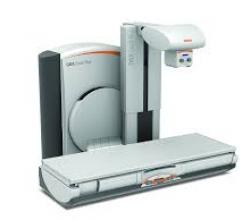
Feature | Radiographic Fluoroscopy (RF) | By Melinda Taschetta-Millane
The U.S. Food and Drug Administration (FDA) defines radiographic/fluoroscopy (R/F) as a type of medical imaging that shows a continuous X-ray image on a monitor, much like an X-ray movie. During a fluoroscopy procedure, an X-ray beam is passed through the body. The image is transmitted to a monitor so the movement of a body part or of an instrument or contrast agent through the body can be seen in detail.
May 05, 2017 
Philips announced that it will feature the company’s latest magnetic resonance (MR) solutions and neurology-focused clinical applications at the International Society for Magnetic Resonance in Medicine’s (ISMRM) 25th annual meeting and exhibition, April 22-27 in Hawaii. As part of its newest suite of MR-based software applications dedicated to neurology, Philips will be showcasing MultiBand SENSE, which was developed in collaboration with several partners, including the Larner College of Medicine at the University of Vermont.
April 24, 2017 © Copyright Wainscot Media. All Rights Reserved.

Subscribe Now