

News | Radiation Dose Management
March 3, 2016 —Nancy Turner, M.D., a Texas A&M University AgriLife Research scientist, was one of a team of researchers ...
 March 03, 2016

News | Medical 3-D Printing
March 3, 2016 — Materialise NV announced the launch of the Materialise Mimics Care Suite, a full suite of software and ...
March 03, 2016 
News | Remote Viewing Systems
Vital Images Inc. is bringing its comprehensive diagnostic and clinical viewing tools to Nuance Communications Inc.’s PowerShare solutions, providing a seamless workflow to their customers.
March 03, 2016 Sponsored Content
Sponsored Content
Videos | Radiology Business
Radiology departments have many different needs and face a wide variety of challenges that can impact their departments ...
November 11, 2025 
Technology | Flat Panel Displays
NEC Display Solutions of America announced U.S. Food and Drug Administration clearance of its MultiSync MD211G5 medical-grade monitor for use in tomosynthesis applications and full field digital mammography (FFDM). The 21-inch NEC display is built for the displaying and viewing of digital images for diagnosis by trained physicians.
March 03, 2016 
Technology | Teleradiology
Philips announced four leading U.S. health systems have signed multi-year telehealth deals to implement the company’s remote intensive care unit (eICU) program.
March 03, 2016 
News | PET Imaging
Participating dementia specialists may now enroll patients in the Imaging Dementia—Evidence for Amyloid Scanning (IDEAS) Study at IDEAS-Study.org. Primary care and other doctors not taking part in the IDEAS Study are encouraged to refer eligible patients to participating physicians.
March 03, 2016 Sponsored Content

Feature | Breast Imaging
Despite decades of progress in breast imaging, one challenge continues to test even the most skilled radiologists ...
October 24, 2025 Technology | Remote Viewing Systems
Vital Images Inc. launched their personalized viewing platform to the global marketplace, and it will be one of several solutions featured at the Healthcare Information and Management Systems Society (HIMSS) annual conference and exhibition, Feb. 29 – March 4 in Las Vegas.
March 02, 2016 
News | Clinical Decision Support
IBM Watson Health announced plans Feb. 18 to acquire Truven Health Analytics, a leading provider of cloud-based healthcare data, analytics and insights, for $2.6 billion. Truven will bring more than 8,500 clients, including U.S. federal and state government agencies, employers, health plans, hospitals, clinicians and life sciences companies, to the IBM Watson Health portfolio.
March 02, 2016 
News | PACS Accessories
eHealth Technologies and Chesapeake Regional Information System for our Patients (CRISP), a regional health information exchange (HIE) serving the state of Maryland and the District of Columbia, have successfully begun the implementation of eHealth Connect Image Exchange across the state of Maryland.
March 02, 2016 Sponsored Content
Sponsored Content
Videos | Radiology Business
Bayer Radiology’s Barbara Ruhland and Thom Kinst discuss how radiology departments can address the many different ...
October 09, 2025 
News | Analytics Software
March 2, 2016 — GE Healthcare announced two large systems integrators (SIs) and seven leading-edge independent software ...
March 02, 2016 Sponsored Content
Case Study | PACS
eHealth Saskatchewan plays a vital role in providing IT services to patients, health care providers, and partners such ...
February 03, 2025 
Technology | Archive Cloud Storage
Philips announced the introduction of a secure data recovery service, built in collaboration with Amazon Web Services (AWS), that rapidly captures and backs up an entire healthcare organization's data repository in the cloud.
March 02, 2016 
News | Information Technology
At the 54th Health Information and Management Systems Society (HIMSS), Siemens Healthcare will demonstrate customized and scalable IT solutions that optimize workflows and increase clinical efficiency across the enterprise. The company is featuring three new solutions this year: teamplay, sense and syngo.share.
March 02, 2016 
Feature | Artificial Intelligence | Greg Freiherr
Artificial intelligence (AI) may soon be routine in radiology. It won’t take the shape of robots that clank and whir. Or animated heads of the Max Headroom variety. Or disembodied voices à la HAL 9000.
March 02, 2016 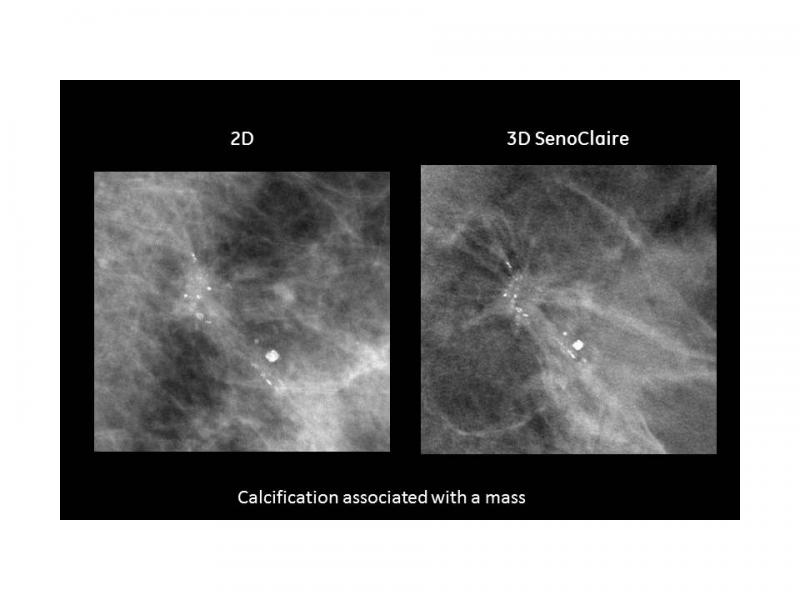
Feature | Breast Imaging | Melinda Taschetta-Millane
The digital breast tomosynthesis (DBT) market continues to evolve, with reportedly no less than six new systems prepping to hit the market in the near future. At the 2015 Radiological Society of North America (RSNA) annual meeting, Liane Philpotts, M.D., professor of diagnostic radiology and chief of breast imaging at Yale University, discussed how tomosynthesis is revolutionizing breast imaging.
March 02, 2016 
Feature | Enterprise Imaging | Brandon Taggart
In the midst of increased mergers and industry acquisitions, healthcare leadership is becoming more cognizant of the need to have enterprise imaging strategies in place that answer a long-standing question in medical imaging: “How will we get our providers the images and data they need when and where they need it most?”
March 02, 2016 
Feature | Radiation Therapy | Jeff Zagoudis
Like with many other aspects of healthcare, technology has been the driving force behind the evolution of radiation therapy. New advancements have given rise to new, more precise techniques for delivering maximum radiation dose to tumor volumes with minimum effect to surrounding tissue.
March 02, 2016 
Feature | Computed Tomography (CT) | Jeff Zagoudis
Computed tomography (CT) has evolved significantly since its debut in the 1970s. While the basic principles have stayed the same, manufacturers have been able to expand on these principles to offer enhanced performance and image quality, as ITN contributing editor Greg Freiherr discovered during the 2015 Radiological Society of North America (RSNA) annual meeting, Nov. 29-Dec. 3 in Chicago.
March 02, 2016 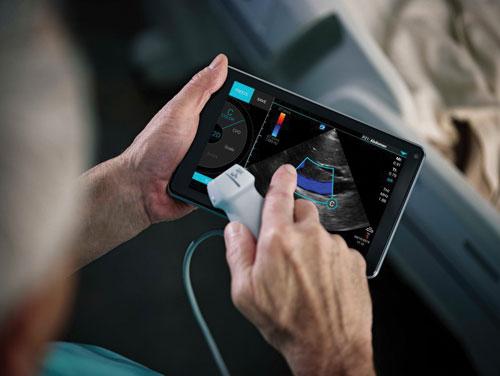
Feature | Ultrasound Imaging | Jeff Zagoudis
Ultrasound imaging took some major steps forward in 2015, with innovative new systems and technologies debuting across multiple market segments. From new premium-tier systems to the expansion of handheld, point-of-care (POC) solutions, vendors focused on improvements in image quality, productivity and ergonomics — “all those things the customers need to do quality work, diagnostics work at a rapid pace,” said Jon Brubaker, MBA, RCVT, ultrasound technology analyst for MD Buyline.
March 02, 2016 © Copyright Wainscot Media. All Rights Reserved.

Subscribe Now