
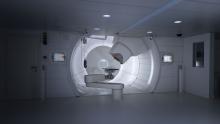
The Alliance for Proton Therapy Access (APTA) released a national report in late May revealing the heavy emotional and financial burden that many cancer patients endure when trying to get their insurer’s approval for physician-recommended proton radiation therapy. The report — “Cancer Care Denied: The Broken State of Patient Access to Proton Therapy” — calls on insurance commissioners in all 50 states to adopt and enforce the principles of a Cancer Patients’ Timely Treatment Bill of Rights and hold insurers accountable for providing fair, timely and transparent access to cancer treatment.


According to ResearchAndMarkets.com’s new industry report, the “Medical Imaging Market: Global Industry Analysis, Trends, Market Size and Forecasts up to 2024,” the global medical imaging market is predicted to grow with a compound annual growth rate (CAGR) of 6.56 percent over the forecast period of 2018-2024.


A new software developed and recently tested at the MD Anderson Cancer Center demonstrated the ability to largely automate the entire workflow of radiotherapy treatment planning. Such a system may offer a solution to a looming shortage of qualified radiation oncology professionals identified by the research team.


Researchers at The University of Kansas Cancer Center have launched a clinical trial that eliminates radiation from the treatment protocol for an invasive type of breast cancer that accounts for one-fifth of all breast cancer patients.

A large Norwegian study using automated breast density measurements found that women with mammographically dense breast tissue have higher recall and biopsy rates, and increased odds of screen-detected and interval breast cancer. The study, published online in the journal Radiology, supports automated measurements as a future standard to ensure objective breast density classification for breast cancer screening, the researchers said.

In the battle against metastatic castrate-resistant prostate cancer, studies have demonstrated a high response rate to radionuclide therapy targeting prostate specific membrane antigen (PSMA) with the radionuclide lutetium-177 (177Lu). At the 2018 Annual Meeting of the Society of Nuclear Medicine and Molecular Imaging (SNMMI), researchers reported on a phase II prospective trial. Using gallium-68 positron emission tomography (PET) imaging, men who had exhausted conventional therapies were screened. Those with high PSMA-expression proceeded to 177Lu-PSMA617 (LuPSMA) therapy and experienced high response rates, which is clearly demonstrated in the PSMA PET imaging figure selected as the 2018 SNMMI Image of the Year.

Embolx Inc. has received 510(k) clearance from the U.S. Food and Drug Administration (FDA) for its next-generation family of Sniper Balloon Occlusion Microcatheters for pressure-directed arterial embolization therapy. Now commercially available in the United States, the next-generation family of Sniper devices offers physicians enhanced performance features to improve access and allow easy navigation through small complex vascular structures.

Sniper Balloon Occlusion Microcatheters

Subscribe Now