Hospitals can economically increase storage space by 40 percent or more with IRSG’s Overhead High-Density Mobile Storage System.

The system’s benefits include added efficiency and inventory control by positioning more supplies near the point of use. The overhead track allows little chance for dirt and dust to accumulate and the open wire design allows maximum air and light circulation. The manufacturer said the quick installation requires no drilling or bolting into the floor and makes this system practical and easy to use.

April 2008

Guided by customer input, B. Braun has developed a range of products to help reduce medication errors. At the 2008 AACN exposition B. Braun will present the next generation IV safety infusion systems, including the Outlook ES and Space Systems, as well as the Curlin 6000 Ambulatory Infusion System.

The company will demonstrate its Outlook Safety Infusion System, which uses bar-code technology to help ensure the right patient gets the right dose of medication every time.

Hollister Inc. will display its Zassi Bowel Management System at the 2008 AACN exhibition. The device diverts and contains potentially infectious stool and is the only indwelling rectal catheter that provides access for rectally administered medications.

It is designed to minimize external contact with fecal matter on the patient’s skin. The device also provides access for colonic irrigation, and to administer enemas.

April 2008

April 24, 2008 - AngioDynamics reported that the first human clinical use employing irreversible electroporation (IRE) to ablate soft tissue was completely successful based on analysis of biopsies performed on five patients two weeks after their treatment.

April 24, 2008 - Keystone Healthcare Management Inc., a physician staffing, management and consulting company specializing in emergency department (ED) operations, has consolidated its charting needs with T-System Inc.

By moving from two other charting systems to The T-System for Physicians, Keystone said it has lowered operational costs, increased coding accuracy, shortened reimbursement time, and simplified compliance procedures for its client hospitals.

April 24, 2008 - GE Healthcare IT and DeJarnette Research Systems entered into a partnership aimed to accelerate customer migration needs and will include DeJarnette's migration services as a preferred vendor for GE PACS implementations.

The company's migration services are based on a Microsoft Windows toolkit, PACSware Migration Gateway 3.0. The toolkit has been used by DeJarnette and its partners to migrate nearly 200 North American legacy PACS over the past seven years.

For more information: www.gehealthcare.com

April 24, 2008 - Transolutions Inc. and M*Modal are partnering to offer integrated services to Transolutions’ transcription clients, aiming to streamline the ability to share patient data by bringing structured and encoded data from dictation into Electronic Health Records (EHRs).

April 24, 2008 - ProSolv CardioVascular, a FUJIFILM company, will interface its cardiovascular image and information system (CVIIS) with QLAB, 2D and 3D ultrasound quantification tools software from Philips.

Facilities using Philips ultrasound systems will now have access to Philips' QLAB advanced 2D and 3D ultrasound quantification tools within the ProSolv CardioVascular application, designed to deliver efficiency benefits for clinicians and enhancing the accuracy of diagnosis.

April 24, 2008 - Using 3D ultrasound technology they designed, Duke University bioengineers can compensate for the thickness and unevenness of the skull to see in real time the arteries within the brain that most often clog up and cause strokes.

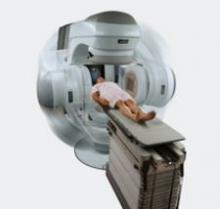
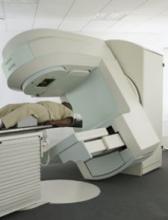
April 24, 2008 – Varian Medical Systems filled over 60 orders from North America, Europe and Asia for its RapidArc radiotherapy product created for image-guided intensity-modulated radiotherapy (IMRT), since its release in January 2008.

According to the company, RapidArc delivers a complete volumetric IMRT treatment in a single arc of the treatment machine around the patient and makes it possible to deliver advanced image-guided, intensity-modulated radiation therapy (IMRT) two to eight times faster than is possible with conventional IMRT, including helical Tomotherapy.

Subscribe Now