Imagine being told that complete removal of your left eye was required to stop your spreading cancer. Kathy Kelly of New Milford, Conn., was told just that. An initial biopsy confirmed cancer of her eyelid. In April 2011, surgery revealed Kelly had squamous cell carcinoma, and the disease was not completely removed.


The last decade has seen a significant advancement in imaging technology due to developments in the hardware and software space. It was clear to the radiologists, clinicians and imaging scientists very early on that no single imaging modality, be it magnetic resonance imaging (MRI), computed tomography (CT) or positron emission tomography (PET) could meet all the needs of a clinician treating a patient. 


The introduction of hybrid technology — positron emission tomography/computed tomography (PET/CT) and single-photon emission computed tomography (SPECT)/CT -— has revolutionized the imaging world. This technology allows the combination of the exquisite anatomic details provided, for example, by CT, with the important and much needed functional, physiologic or metabolic information provided by molecular imaging. 


A typical magnetic resonance imaging (MRI) system includes a cryogenic magnet (that creates a static magnetic field), a radiofrequency (RF) coil and resistive electromagnetic gradient coils. The examination time and spatial resolution of MRI are determined by the gradient coils’ speed and strength. 


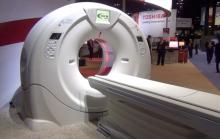
Computed tomography (CT) vendors have introduced several advancements in hardware and software in 2012. “You want lower dose, better accuracy, and you also want more special and temporal resolution,” said Elliot Fishman, M.D., FSCCT, professor of radiology and oncology, director, diagnostic radiology and body CT, Johns Hopkins University, Baltimore, Md. He said all CT vendors have created next-generation CT scanners to accomplish these goals. New technologies include use of iterative reconstruction, more sensitive detectors that emit less electronic noise, and new software and hardware features to lower dose. New detectors have increased quantum detector efficiency (QDE). The higher QDE, the better the sensitivity of the detector to receive more photons, so lower radiation doses are needed, he explained. 


November 19, 2012 — CoActiv debuts at RSNA 2012 exciting new service and pricing options for its cloud-based, vendor neutral archiving (VNA) system, with more than nine years of proven superior performance. One of the first DICOM storage companies in the cloud, CoActiv provides ultra-secure, HIPAA-compliant, scalable and fail proof archiving backed by a 100% SLA guarantee. Thanks to the system’s advanced, redundant architecture, CoActiv clients have not experienced a second of down time throughout the product’s history.

November 15, 2012 — Carestream extended its leadership in the wireless digital radiography market by demonstrating a smaller-format 25 cm x 30 cm CARESTREAM DRX 2530C Detector as a work in progress. The new cesium iodide detector is designed to offer high efficiency for dose-sensitive pediatric, orthopedic and general radiology exams. 

November 13, 2012 — BridgeHead Software said its file archiving data and storage management system for PACS image data protection has been successfully tested by Fujifilm at a leading U.S. hospital. Fujifilm conducted extensive testing with BridgeHead’s solution which, in addition to offering an archiving system, provides unique and critical protection of PACS images against image loss. The testing exercise was carried out to ensure that such protection does not disrupt the PACS cardiology system’s workflow. The BridgeHead solution is the only modern protection offering specifically designed for healthcare data management.


November 1, 2012 – The American Institute of Ultrasound in Medicine (AIUM) will recognize The American Registry of Radiologic Technologists’ (ARRT) general sonography certification earned by individuals after January 1, 2013, as an accepted credential for sonographers in practices accredited by AIUM in general abdominal, obstetrics and/or gynecologic ultrasound. Sonographers earning ARRT’s general sonography certification – R.T.(S)(ARRT) – after that date will satisfy AIUM practice accreditation standards.

 
Subscribe Now