September 15, 2014 — A secondary analysis of the National Surgical Adjuvant Breast and Bowel Project B-32 trial (Krag 2010) indicates that radiation therapy does not increase the incidence of lymphedema in patients with node-negative breast cancer, according to research presented this week at the 56th annual meeting of the American Society for Radiation Oncology (ASTRO).

High-risk prostate cancer patients who receive radiation therapy and an 18-month course of androgen deprivation therapy recover a normal testosterone level in a shorter amount of time compared to those who receive a 36-month course of ADT, thus resulting in a better quality of life and without detriment to long-term outcomes, according to research presented at ASTRO 2014.


Patient-reported data indicates that when Manuka honey is prescribed for esophagitis pain during radiation therapy (RT), it is not more effective than standard medical care, according to research presented at the American Society for Radiation Oncology’s (ASTRO’s) 56th Annual Meeting.


Patients with stage I and II Hodgkin’s Disease who receive consolidated radiation therapy (RT) have a higher 10-year survival rate of 84 percent, compared to 76 percent for patients who did not receive RT; and, the data also shows a decrease in utilization of RT, according to research presented today at the American Society for Radiation Oncology’s (ASTRO’s) 56th Annual Meeting.


Radiation therapy (RT) alone is as effective in decreasing swallowing complications experienced by advanced esophageal cancer patients as RT combined with chemotherapy, thus allowing patients to forgo chemotherapy, according to research presented today at the American Society for Radiation Oncology’s (ASTRO’s) 56th Annual Meeting.


September 12, 2014 — Civco Medical Solutions will be featuring an expansive solution lineup at the upcoming annual meeting of the American Society for Radiation Oncology (ASTRO) in San Francisco, including more advanced patient positioning options for stereotactic body radiation therapy (SBRT) and SRS/SRT (stereotactic radiosurgery/stereotactic radiotherapy) treatments.

September 12, 2014 — Mevion Medical Systems introduced Hyperscan for the Mevion S250 modular single-room proton therapy system. Benefiting from direct and efficient proton beam generation, Hyperscan’s patented technology allows radiation to be precisely delivered using a sharp beam of radiation, with the tumor being volumetrically scanned in a matter of seconds.

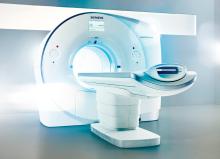
September 12, 2014 — Varian Medical Systems and Siemens Healthcare will showcase a variety of solutions that bring together Siemens' diagnostic imaging technologies with Varian's advanced therapeutic systems for treating cancer with image-guided radiotherapy (IGRT), radiosurgery, proton therapy and brachytherapy at the 55th annual meeting of the American Society for Radiation Oncology (ASTRO).

When OSF Saint Francis Medical Center in Peoria, Ill., was looking for a cost-effective way to upgrade its portable X-ray fleet, the facility considered a number of alternatives in its capital equipment search.

A large teaching hospital that performs about 125,000 diagnostic imaging procedures annually, St. Francis has a radiology department that includes a variety of imaging modalities.

By upgrading its CR-based portable X-ray devices, the department was searching for a way to bring a mature but much-needed imaging modality into the digital arena to improve throughput and efficiency, said Juanita Reader, Manager of Diagnostic Radiology In-Patient and Informatics.

“We wanted to go to a more digital environment but still be as cost-effective as possible,” Reader said.

The hospital considered several different vendors in its search, but ultimately selected Carestream Health of Rochester, N.Y., for its DRX mobile X-ray units. St. Francis purchased one DRX-Revolution Mobile X-ray as well as two retrofit kits that allowed insertion of DRX detectors into two of its older, analog, portable GE AMX 4 X-ray machines.

By inserting new DRX detectors into its existing inventory of equipment, St. Francis saved money over the cost of buying new systems, added new functionality to some of its workhorse devices, and helped improve its operations on a number of levels, Reader said.

Subscribe Now