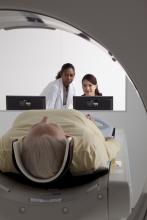
The sale and use of CT scanners could ramp up this year, thanks at least in part to lung cancer screening. Low-dose computed tomography (CT) screening programs are popping up from coast to coast. The feds are picking up the tab for Medicare patients. And, while third-party payers have not been so forthcoming, the cost of a screening exam is within many peoples’ reach.


The U.S. healthcare industry was rocketed into the 21st century with the passage of the Patient Protection and Affordable Care Act (ACA) in 2010. The legislation and its focus on reducing healthcare costs while expanding insurance coverage has generated a great deal of controversy in the four years since, and an expert panel in a special session at the 2014 Radiological Society of North America (RSNA) meeting warned radiologists to brace themselves for more changes in 2015. 


Having been active in the age of transformation which manufacturing, retail, finance, high-tech, oil and gas all experienced in the late 1980s and into the 1990s, I realized that healthcare would have its date with enterprise-wide change. Healthcare as an industry has existed for too long in an environment of stasis. Now with the rapid pace of technology, competition and exorbitant costs, it is evident to the patient, the competition, the government and the rest of the world that it must adapt to survive. Medical imaging is a profit center for most healthcare providers and has historically been the hotbed for technology advancement and innovation. 


A new era of telehealth has arrived. According to HIMSS Analytics 3rd Annual Mobile Survey, 83 percent of physicians use mobile technology to provide care. Because doctors are so mobile, patient information has to be mobile as well. The goal of telehealth is to eliminate geographic constraints and deliver quality patient care at any time, in any location.1 Many healthcare providers have shown an increasing interest in telehealth because of the benefits it can provide, among them, greater access to patient data and images, lower costs and higher quality of care. Offerings of telehealth include consumer online access to providers for diagnosis and treatment of common ailments, real-time video-based virtual consults between providers and patients, in-home monitoring of chronically ill patients, and primary care physicians’ access to specialists for consultation and diagnosis.


Imaging is pivotal for detection, staging and evaluation of tumor response to treatment. It is instrumental in determining which treatment is best suited to a patient and may be used to help guide surgery and radiation therapy. With chemotherapy, follow-up imaging exams are used to track tumor response and determine if different drugs should be used. 


Angiographic imaging system vendors have developed several new technologies to address emerging cath lab trends, including the need to reduce radiation dose, improve image quality and enable advanced procedural image guidance. All three of these points have become increasingly important as more complex procedures are attempted in interventional labs and hybrid ORs. These procedures include embolic coiling, neuro-interventions, thrombectomy, aortic repair, transcatheter aortic valve replacement (TAVR), mitral clip valve repairs, left atrial appendage (LAA) occlusions, atrial and ventricular septal defect closures, and new interventions for both electrophysiology (EP) and heart failure.


The future of ultrasound looks auspicious, according to Jonathan M. Rubin, M.D., Ph.D., director of the division of ultrasound in the department of radiology at the University of Michigan in Ann Arbor, who presented on “The Future of Ultrasound” at the 2014 Radiological Society of North America (RSNA) conference in Chicago this past December. His lecture highlighted emerging techniques for volume blood flow and shear wave imaging. 


The exhibit floor at RSNA 2014 reflected a new era of austerity, one in which efficiency and effectiveness ruled. From South to North halls — Toshiba America to Siemens, Hologic to Samsung — new products and works in progress were distinguished by how they improved the lot of medical imaging among the various “ologies”.


The Radiological Society of North America (RSNA) 2014 meeting in December showcased many new digital radiography (DR) products. In today’s fairly stagnant economy, medical facilities are looking for ways to do more with what they already have, and stretch their budgets. In searching for new DR systems, cost-effectiveness, ease of use and flexibility top their list. Many vendors debuted solutions to meet this demand.


With more than 60 years of experience in the field of radiology, Zwanger-Pesiri is one of the largest non-hospital based radiology practices in the United States today. Its staff of 60 radiologists comprises a number of specialties including vascular imaging, interventional radiology, neuroradiology, musculoskeletal imaging, abdominal radiology, cardiovascular radiology and breast imaging.  

Subscribe Now